
Livraison le jour même ou le lendemain

Qualité garantie

Débloquez vos offres de bienvenue: Livraison GRATUITE | Jusqu'à -80 % | 30 jours d'essai gratuits à JoyPlus
Téléchargez l'application
Short on kitchen space, but not on ideas for new and exciting meals? It's a common dilemma. From student dorms and first apartments to already-crowded family kitchens, every square inch is precious. The electric multi-cooker (or electric pot) emerges as the ideal solution to simplify meal prep without cluttering your countertops with appliances.
Our mission? To help you navigate the jungle of available models. This guide provides our expert advice and top picks to help you find the electric cooker that perfectly fits your lifestyle and culinary needs.
Before diving into our selection, let's review the essential criteria that will guide your choice.
The capacity of the pot should, of course, be suited to the number of people you cook for on a daily basis.
Their greatest strength is their ability to replace multiple appliances. Be sure to check the available cooking modes:
Expressed in watts (W), power directly affects heating speed. While 600W is sufficient for individual use, aim for 1000W or more for family-sized models to ensure rapid heat-up times.
Finally, a quality non-stick coating is non-negotiable. It prevents food from sticking, radically simplifies cleaning (a quick wipe is often all it takes), and allows for healthier cooking with less fat.
Here are the models that caught our eye, each tailored to a specific user profile.
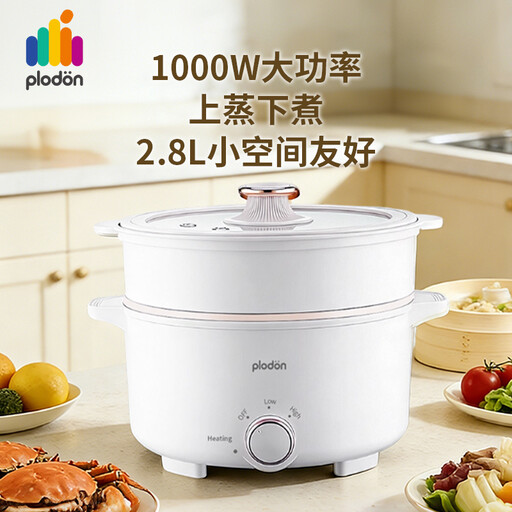
Why this model stands out This Plodon model offers an excellent compromise between a compact design and enough capacity for two or three people. Its dual-layer design, complete with a steamer basket, makes it particularly versatile for daily use.
Highlights:
Who is it for? Ideal for young couples or those in small shared apartments looking for an all-in-one appliance to add variety to their meals without cluttering the countertop.
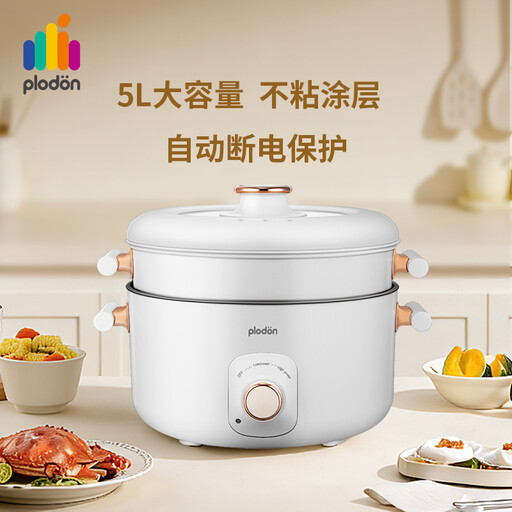
Why this model stands out With its generous 5-litre pot, this multi-cooker is built for family meals and dinners with friends. Its 1200W power ensures fast and even heating, even when fully loaded.
Highlights:
Who is it for? For families of 3 to 6 people and anyone who loves to entertain and prepare large-quantity dishes, from a social fondue night to a Sunday stew.
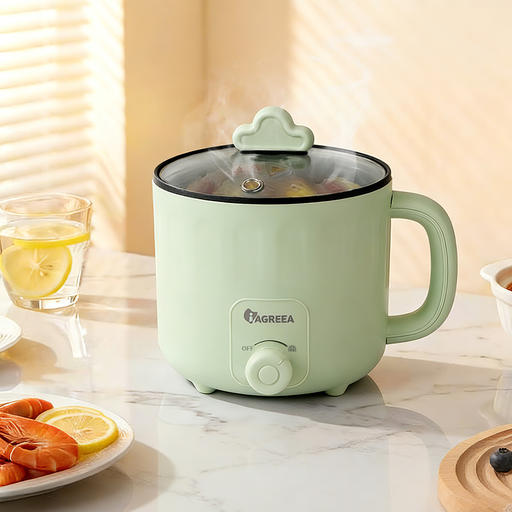
Why this model stands out This mini-cooker is the epitome of convenience. Ultra-compact and lightweight, it was designed for the tightest spaces and for travel. Its safety features, like overheat and boil-dry protection, make it a reassuring option for use in a dorm room or at the office.
Highlights:
Who is it for? Students in dorms, people living in studio apartments, or employees who want to enjoy a real, hot, home-cooked meal at the office.
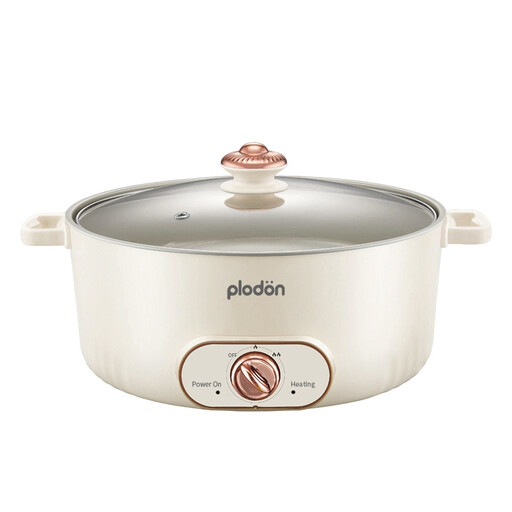
Why this model stands out This model is built for performance and very large volumes. With its 7-litre pot and 1600W of power, it excels at high-intensity cooking: fondue for large groups, braised dishes, or soups in very large quantities. Its deep pot limits splatters.
Highlights:
Who is it for? Large families and anyone who regularly hosts group meals and needs a robust, powerful appliance to delight all their guests.
Because a great dish deserves a beautiful presentation, complete your setup with our selection of deep pasta bowls, perfect for generously serving your creations.
1. What wattage should I choose for an electric multi-cooker? It all depends on the pot's capacity and your intended use. For an individual model (1-2 L), 600W is sufficient. For faster cooking and family-sized capacities (3-5 L), a power of 1000W to 1200W is much more comfortable. Models with 1600W or more are reserved for very large volumes and for cooking that requires a rapid temperature increase, such as fondue.
2. Can you really cook everything in a multi-cooker? These appliances are true Swiss Army knives in the kitchen. You can use them to boil pasta or rice, steam vegetables, prepare soups, stews, fondues, and even sauté food. However, they do not replace a traditional oven for roasting a chicken or baking a cake. Always check the functions offered by each model.
3. How do you clean a multi-cooker with a non-stick coating? After use, unplug the appliance and let it cool down completely. Most of the time, a simple wipe with a non-abrasive sponge, warm water, and a drop of dish soap is all you need. Never use scouring pads or metal utensils that could scratch the coating. Most importantly, never immerse the entire appliance or its electrical base in water.