
Livraison le jour même ou le lendemain

Qualité garantie

Débloquez vos offres de bienvenue: Livraison GRATUITE | Jusqu'à -80 % | 30 jours d'essai gratuits à JoyPlus
Téléchargez l'application
From a slow-cooked Sunday stew to a comforting weeknight soup, the Dutch oven is the versatile all-rounder of our kitchens. But when faced with a maze of materials, coatings, and compatibilities, making the right choice can feel like a puzzle. Our mission? To guide you step-by-step, without the marketing jargon, to find the Dutch oven that will fit seamlessly into your daily life and cooking habits.
Before you dive in, let's review the essential criteria. They will help you refine your search and invest in a high-performance tool that will serve you for years to come.
The material is a deciding factor: it determines heat distribution, the weight of the cookware, and its ease of maintenance.
The coating is a point you should not overlook, especially if you want to cook more healthily and simplify your life when it's time to do the dishes.
Be sure to check the compatibility of your future Dutch oven with your hob. A specific logo usually indicates an induction-compatible Dutch oven. Also, think about versatility: a model that can go from the hob to the oven is a real bonus. For small kitchens, a saucepan set with a removable handle is a formidable solution to save up to 50% of space in your cupboards.
Here are a few options that meet different needs, whether you're looking for practicality, tradition, or a balance between the two.
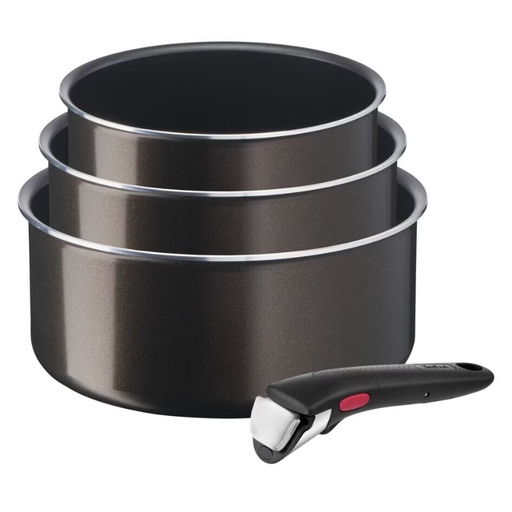
Why it stands out: Tefal's Ingenio system is the gold standard for modularity. Thanks to its unique removable handle, this saucepan set goes from the hob to the oven, then to the table, and even into the fridge. It's the ultimate space-saving solution.
Key Features:
Who is it for? Ideal for small kitchens, families looking to simplify cookware storage, and anyone who appreciates the versatility of an all-in-one product. Please note: this model is not compatible with induction hobs.
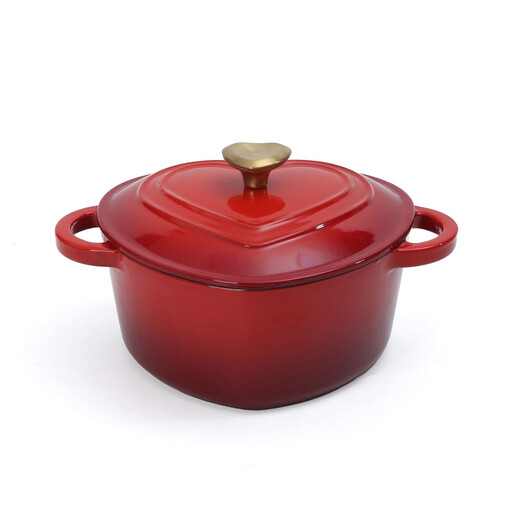
Why it stands out: This Dutch oven combines the performance of cast iron with a design that is as original as it is charming. Its single-piece construction ensures exceptional heat retention, perfect for slow-cooked dishes, while its food-grade enamel coating makes it easy to maintain.
Key Features:
Who is it for? For lovers of traditional cooking and slow-simmered dishes (beef bourguignon, stews), but also for those looking for a beautiful piece to serve directly at the table.
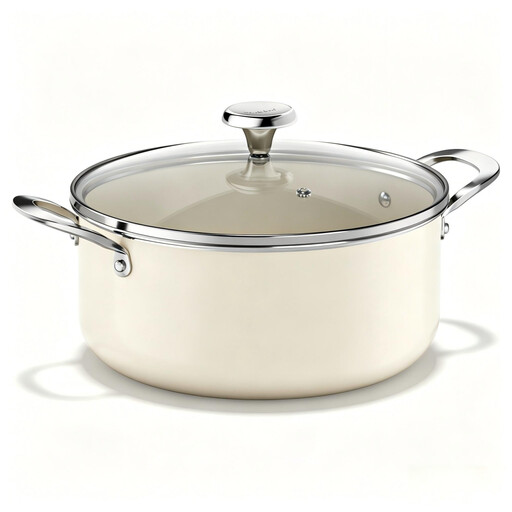
Why it stands out: This stockpot is the perfect modern compromise. It is both a lightweight stockpot thanks to its aluminium body, and high-performing with its thick base that ensures rapid and even heating. Its ceramic coating is a plus for healthy cooking.
Key Features:
Who is it for? The ideal choice for families and everyday cooks looking for a large-format, non-stick stockpot that is easy to use, induction-compatible, and designed with health in mind.
Choosing a Dutch oven is a very personal decision. If these models don't check all your boxes, feel free to explore our full range. There you will find a much wider selection of sizes, materials, and styles.
? Explore Our Entire Selection of Saucepans and Dutch Ovens
Although they are often confused, the distinction is simple. The Dutch oven is traditionally made of cast iron (enamelled or not). Heavy, with thick walls, it is the king of slow cooking. The stockpot is a broader term: made of aluminium, stainless steel, or copper, it is generally lighter and more versatile, perfect for quicker cooking tasks (boiling water, searing vegetables...).
To preserve its coating, always use wooden, silicone, or plastic utensils. When cleaning, avoid abrasive sponges in favour of a soft sponge and soapy water. Even though many models are dishwasher-safe, hand washing is still the best way to ensure their longevity.
Yes, most of the time! As cast iron is a ferromagnetic material, it works very well with induction. To be absolutely sure, look for the spiral-shaped pictogram on the bottom of the cookware. The foolproof trick? Hold a magnet to it: if it sticks, it's induction compatible.