
Livraison le jour même ou le lendemain

Qualité garantie

Débloquez vos offres de bienvenue: Livraison GRATUITE | Jusqu'à -80 % | 30 jours d'essai gratuits à JoyPlus
Téléchargez l'application
Whether you're an artist exploring new styles, a student organising notes, or a parent looking for the ideal creative supply for your children, the dual-tip marker is the ultimate versatile tool. Featuring a fine tip on one end and a broader tip on the other, it adapts to every creative whim. But with an overwhelming number of models available, how do you make the right choice?
This guide is here to help. We'll review the essential criteria for choosing the perfect dual-tip marker for your needs before presenting our selection of the best products on the market today.
Before you dive in, a few technical criteria deserve your attention. These factors will ensure that your markers are perfectly suited to your projects.
The strength of a dual-tip marker is, of course, its two nibs. The most common configuration combines a fine tip and a broad tip.
The type of ink is a decisive factor that depends on both the paper being used and the artist.
Your intended use will guide your choice. For adult colouring or keeping a bullet journal, a wide range of colours and mixed tips are a real plus. For the office, a few basic shades and durable tips will do the trick. Finally, for the youngest users, safety (non-toxic ink, ventilated caps) and ease of cleaning take priority over everything else.
We have selected three products for you that excel in their respective categories.
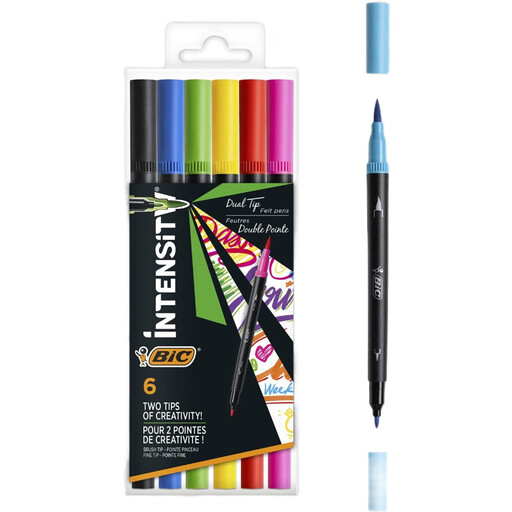
Key feature: This BIC marker set is the perfect everyday companion. It combines the reliability of a trusted brand with the versatility of a dual tip. Its water-based ink dries quickly, reducing the risk of smudges, whether you're taking notes or enjoying a colouring session.
Highlights:
Who is it for? The perfect choice for students, office workers who colour-code their files, and crafting enthusiasts looking for a versatile tool for their notebooks or colouring projects.
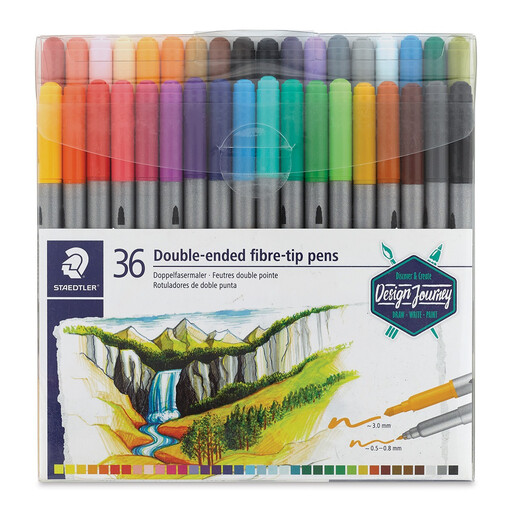
Key feature: With its generous palette of 36 colours, this STAEDTLER kit is aimed at discerning creatives looking for a wide spectrum of shades. The combination of a fine tip and a broad tip on each marker multiplies the possibilities for drawing and illustration.
Highlights:
Who is it for? Essential for drawers, illustrators, art colouring fans, and hand-lettering enthusiasts who want a truly complete colour range and reliable tips to bring their creations to life.
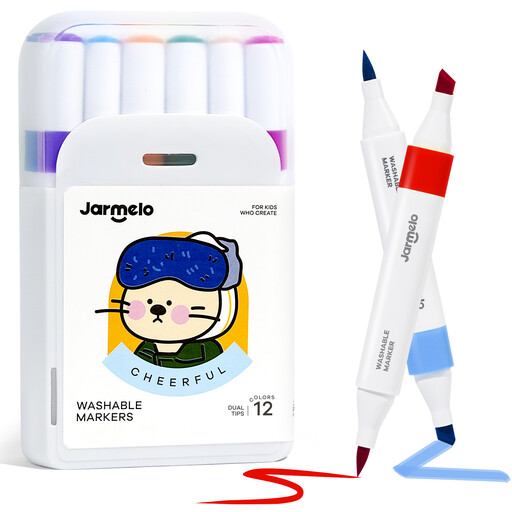
Key feature: This Jar Melo kit was specially designed for budding artists. Here, the absolute priority is safety and practicality: non-toxic and ultra-washable ink, an ergonomic marker body, and ventilated caps to prevent choking hazards.
Highlights:
Who is it for? The ideal gift for parents looking for a first set of colour markers that is safe, practical, and washable for their children (from 3 years old, under adult supervision).
Our selection highlights versatile products, but your creative project may have unique needs. Specific tips, themed colour palettes, expert sets... Feel free to browse our full catalogue to find that perfect match.
? Discover our full range of pens and markers to find the ideal tool for your projects.
What's the difference between a water-based and an alcohol-based marker? As the name suggests, water-based ink uses water as its solvent. It is nearly odourless, doesn't bleed through standard paper, and is easy to wash out. Alcohol-based ink, popular with professionals, dries very quickly and allows for colour layering. In return, it has a stronger odour and requires thick paper (like layout or Bristol board) to prevent bleed-through.
How should I store my markers to make them last longer? The secret to extending the life of your markers, especially dual-tip models, is to store them horizontally. This position ensures that the ink is evenly distributed between the two nibs, preventing one from drying out. And of course, the golden rule: always recap them securely after each use!
Is a dual-tip marker suitable for lettering? Yes, it's actually one of its key uses! For lettering, choose a model with a brush tip. Its flexibility is perfect for creating the thick downstrokes and thin upstrokes typical of modern calligraphy. The fine tip on the other end will be your ally for refining details and adding flourishes.