Whether you're a seasoned illustrator, an art student, or a bullet journal enthusiast, finding the right drawing pen can quickly become a puzzle. Fine nibs, brush tips, pigment-based or water-based ink... it's easy to get lost. But don't worry: this guide breaks down the criteria that matter and presents our selection of the best tools to bring your creative projects to life.
How to Choose the Right Drawing Pens
Before you splurge on a set of black pens, it's essential to understand a few technical concepts. This is what will make all the difference on paper.
1. Nib Type: A Speciality for Every Use
The nib is the heart of your pen. Your choice will depend entirely on what you plan to draw.
- Fine tip (or fineliner): Ideal for details, clean outlines, and writing. Sizes typically range from 0.03?mm to 1.0?mm. A good black fineliner pen is simply indispensable for technical drawing, inking manga panels, or taking flawless notes.
- Brush tip: Flexible and pressure-sensitive, it mimics the behaviour of a real paintbrush. It allows you to vary the line thickness, going from a delicate stroke to a broad wash of colour. It's the top choice for calligraphy, dynamic illustration, and colouring.
- Chisel or bullet tip: Larger and more robust, these nibs are designed for filling large areas, creating impactful lettering, or highlighting.
2. Ink Composition: Guaranteeing a Lasting Result
The type of ink determines not only the final look but also the longevity of your artwork. There are two main categories:
- Water-based ink: Odourless and widely available, this is the star of colouring pens. Its main drawback is that it can cause thin paper to buckle if you go over the same spot multiple times, and it is rarely water-resistant.
- Pigment-based ink: The professional's choice for work that needs to stand the test of time. Made of solid pigments, this ink becomes waterproof (permanent) and light-resistant once dry. This means you can safely apply a layer of watercolour over it: it won't bleed. For illustration, pigmented India ink remains the gold standard.
Recommended Drawing Pens
After testing and comparing dozens of models, our editors have selected three sets that stand out from the crowd, each catering to a specific need.
1. Faber-Castell Pitt Artist Pen: The Benchmark for Professional Inking
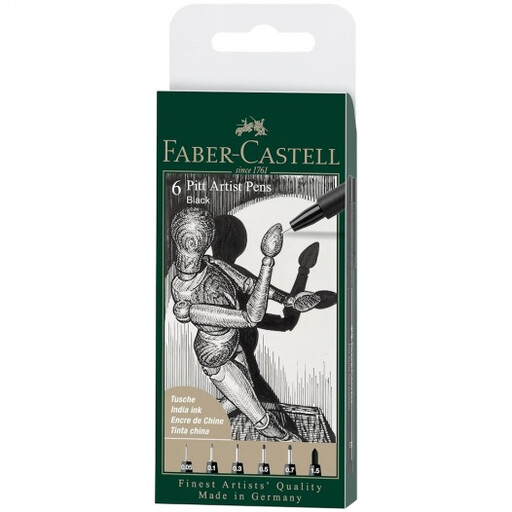
- Why it stands out: The strength of this Faber-Castell set is its high-quality pigmented India ink. The brand guarantees exceptional resistance to water and light, ensuring museum-quality longevity for your artwork. With its six pens featuring various nibs, it offers impressive versatility.
- Pros:
- Permanent and waterproof India ink after drying.
- Excellent fade resistance (archival quality).
- Highly versatile set with multiple nib types (fine, medium, brush).
- Ready to use, no maintenance required.
- Who is it for?: Illustrators, artists, and comic book creators who demand a flawless and durable inking tool. Its permanence makes it the ideal companion for mixed media (watercolour, alcohol markers...).
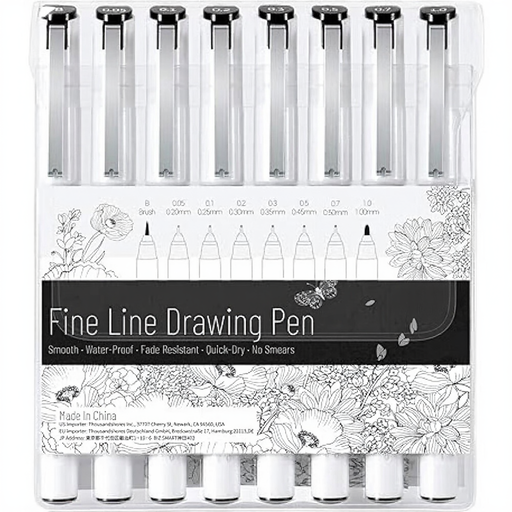
- Why it stands out: The main advantage of this Ohuhu set is its incredible variety of nibs. It includes seven fineliner pens in different sizes (from 0.05?mm to 1.0?mm) and a bonus brush pen. This covers every need, from the most minute detail to the most expressive stroke.
- Pros:
- Wide range of 7 fineliner sizes + 1 brush tip.
- Quick-drying black ink, advertised as water and fade-resistant.
- Caps with size codes for at-a-glance identification.
- Excellent value for money for experimenting with different line weights.
- Who is it for?: Students, fans of sketching and bullet journaling, or any creative looking for an ultra-comprehensive set of black pens to vary their styles without breaking the bank.
3. STABILO point 88 Fineliner (Set of 10): Surgical Precision for Linework
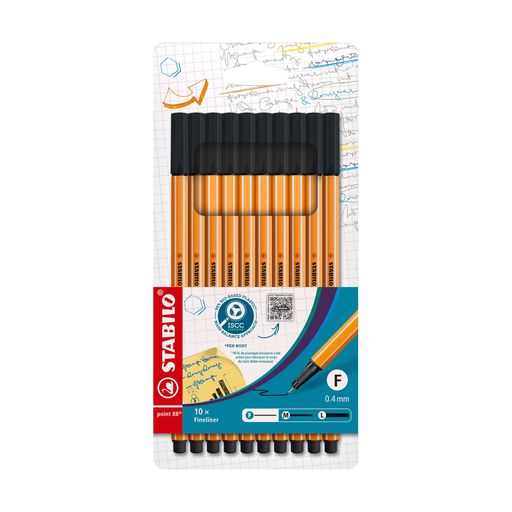
- Why it stands out: Does the STABILO point 88 even need an introduction? It's a true stationery icon. Its metal-encased 0.4?mm fine tip is legendary for its robustness and precision. It glides perfectly along a ruler or stencil without ever getting crushed.
- Pros:
- Ultra-fine and consistent 0.4?mm line.
- Metal-encased tip for unbeatable durability.
- Perfect for writing, diagrams, technical drawing, and mandalas.
- German-made with a pen body made from 96% bio-based plastic (according to the manufacturer).
- Who is it for?: Students, architects, graphic designers, and anyone for whom precision down to the tenth of a millimetre is non-negotiable: for note-taking, diagrams, demanding creative hobbies...
Still Haven't Found Your Perfect Match?
Our selection is just a starting point. The ideal pen ultimately depends on your style and projects. Fortunately, the choice is vast!
To explore a more complete range of black pens and fineliners, from the most technical to the most artistic, take a look at our collection.
? Discover our entire collection of black pens
Frequently Asked Questions
Alcohol-based vs. Pigment-based Pens: What's the Difference?
Alcohol-based pens use dyes dissolved in alcohol. They are king for smooth gradients and streak-free colour fills, ideal for manga-style illustration. A pigment-based pen, on the other hand, contains solid pigments. Once dry, its ink becomes permanent and waterproof. It's the safe choice for creating outlines that will never bleed, even when in contact with water or other markers.
How Do I Keep My Fineliner Pens from Drying Out?
The golden rule: always cap your drawing pen firmly after each use. Air is their worst enemy! For optimal storage, keep them horizontal. This allows the ink to distribute evenly and keeps the nib perfectly saturated.
Can a Black Fineliner Be Used for Calligraphy?
Yes, but for a very specific style! A fineliner is perfect for "faux calligraphy," a technique where you draw the thick downstrokes and thin upstrokes by hand. For traditional calligraphy, where line thickness varies with pressure, nothing beats a brush-tipped pen (brush pen).


