
Livraison le jour même ou le lendemain

Qualité garantie

Débloquez vos offres de bienvenue: Livraison GRATUITE | Jusqu'à -80 % | 30 jours d'essai gratuits à JoyPlus
Téléchargez l'application
Whether you're an artist, a bullet journal enthusiast, or simply looking for the perfect pen to organise your notes, you know that the right tool can make all the difference. But there's often a world of difference between marketing promises and reality. Smudging ink, a tip that frays after just a few strokes, faded colours... disappointments are common and can ruin a piece of work. Choosing a drawing pen shouldn't be left to chance.
As the section editor for our buyer's guides, my mission is to do the legwork for you. No more unpleasant surprises: this guide focuses on the criteria that truly matter, helping you find reliable tools that are perfectly suited to your creative projects.
Before diving into the technical specs, it's crucial to know the most common problems that can ruin the experience.
To avoid these pitfalls, two fundamental aspects of any drawing pen deserve your attention: the tip and the ink.
The tip determines the nature of your line. Choosing the right one is the first step to bringing your ideas to life.
The ink is the heart of your pen. Its properties define not only the colour output but also the durability of your creations.
Instead of an endless catalogue, here are our targeted recommendations, chosen for their quality, durability, and ability to meet specific needs.
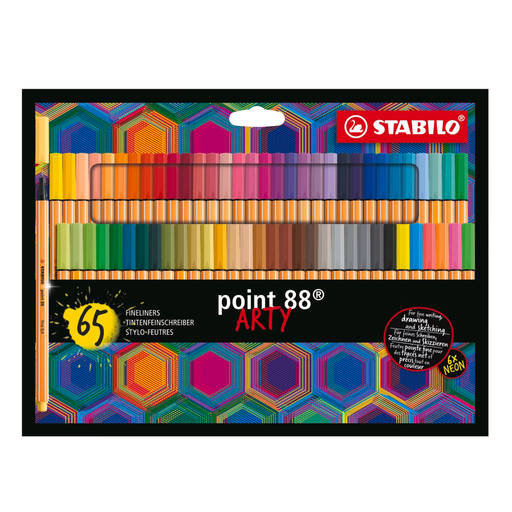
Why it stands out: A must-have for *journaling* and colourful note-taking, this set is a reliable choice. Its fine 0.4 mm tip is perfect for writing in the smallest spaces and structuring your layouts. With such a wide colour palette, the creative freedom is nearly limitless.
The metal-clad tip is designed to withstand pressure and wear, even when used with a ruler. It doesn't fray, ensuring a clean line over the long term.
The precision of the 0.4 mm tip and the complete collection of 65 colours, including fluorescent shades, make it a versatile tool for fine details and colour-coding.
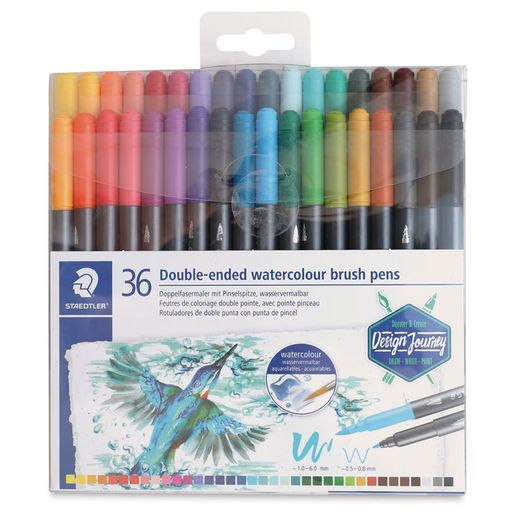
Why it stands out: This set is for creatives who love to mix drawing and painting. Its dual tip is a model of versatility, allowing you to switch from a broad, expressive stroke to an ultra-fine line for finishing touches, all with a single marker.
The water-based ink is specifically formulated to be mixed and diluted, allowing you to create genuine watercolour effects without the flat, stagnant colours of low-end markers.
The dual tip (flexible brush + fine tip) maximises versatility. It's an all-in-one tool for illustration, brush pen lettering, and detailed colouring.
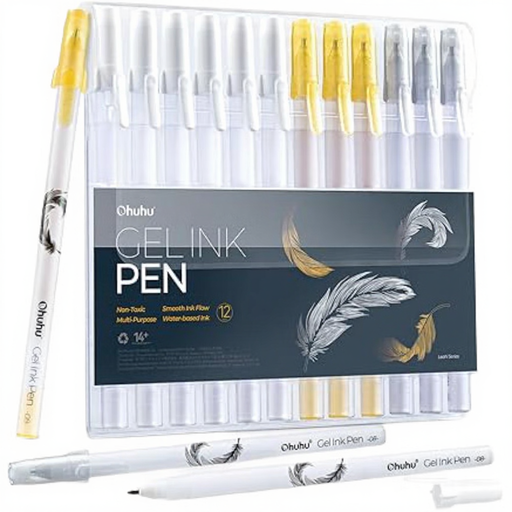
Why it stands out: This is the solution for anyone working on dark media. This set is specially designed for adding bright highlights, fine details, and text on black, kraft, or coloured paper, where traditional pens are completely invisible.
It solves the problem of disappointing opacity. Its high-coverage pigment ink ensures a vibrant and perfectly opaque result on dark surfaces, with no translucent effect.
The ink flow is smooth and skip-free, allowing you to draw perfectly clean lines. The ink is also water-resistant and lightfast after drying.
We have put together a complete selection of products that meet our quality criteria and current standards.
1. How do I prevent my markers from drying out? The golden rule: always cap them immediately after use. For optimal storage, lay them horizontally. This ensures even ink distribution, preventing the tip from drying out or, conversely, leaking. Finally, avoid leaving them in direct sunlight or near a heat source.
2. Pigment-based vs. dye-based ink: what's the real difference? Imagine pouring salt (dye) and sand (pigment) into a glass of water. The salt dissolves completely, colouring the water transparently. The sand, however, remains suspended as solid particles. It's the same with ink: dye-based ink soaks into the paper fibres (vibrant but less permanent colours), while pigment-based ink deposits its particles on the surface, making it more opaque and far more resistant to water and light.
3. Can you use watercolour markers on regular paper? Technically, yes, but you'll likely be disappointed with the results. Standard office paper (around 80 g/m?) isn't designed to handle a lot of water: it will buckle, pill, and the ink is likely to bleed through. To take full advantage of blending and gradient effects, mixed-media paper or, even better, watercolour paper (from 200 g/m? upwards) is essential.