
Livraison le jour même ou le lendemain

Qualité garantie

Débloquez vos offres de bienvenue: Livraison GRATUITE | Jusqu'à -80 % | 30 jours d'essai gratuits à JoyPlus
Téléchargez l'application
Giving your dog a treat is so much more than just handing over a biscuit. It's a gesture of love, a tool for training, and a special moment of connection. But let's be honest: faced with a jungle of options on the shelves, choosing the right treat can quickly become a headache for health-conscious owners. Between the marketing jargon and endless ingredient lists, it's hard to know where to turn.
As the Head of Product Recommendations at Joybuy, my mission is simple: to help you see things more clearly. In this guide, we'll give you the keys to choosing a dog treat that is not only delicious but also perfectly suited to your dog's needs and lifestyle.
Before we get to our top picks, here are the essential criteria for making the right choice.
The ingredient list is your greatest asset. The first sign of a healthy dog treat? A short, easy-to-understand list. Prioritise products where the first ingredient is a clearly identified animal protein source (e.g., "chicken," "beef") rather than vague terms like "meat and animal by-products."
For dogs with sensitive digestion or allergies, a hypoallergenic dog treat formulated with a single source of animal protein is often the best option. Opting for a natural dog treat, free from artificial colours, flavours, or preservatives, is also a smart move to limit exposure to potentially irritating substances.
Not all treats are created equal, nor should they be used in the same way.
A low-calorie treat is always a wise choice, especially for dogs prone to weight gain or for small breeds.
The size of the treat must be appropriate for your dog's jaw to prevent any choking hazards. Of course, the nutritional needs of a growing puppy differ from those of an adult or senior dog. Check that the product is suitable for your pet's age.
Here are the products that caught our eye for their quality ingredients and their ability to meet different needs.
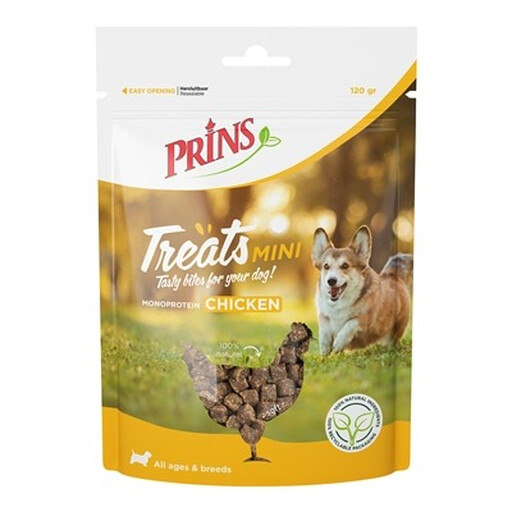
What makes it great
These treats stand out for their simple and natural composition. Formulated with chicken as the sole source of animal protein, they are an excellent choice for dogs with food sensitivities. Their very small size and breakable texture make them particularly suitable for training sessions or for small-breed dogs.
Highlights
Who is it for?
These treats are perfect for owners of dogs of all sizes (especially small breeds) and ages who are looking for a healthy and natural dog reward, particularly for training or for pets with sensitive digestion.
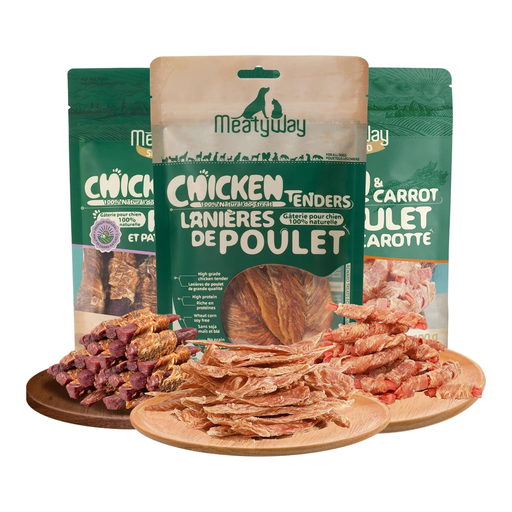
What makes it great
This dog snack combines the pleasure of meat with the benefits of vegetables. It consists of real chicken fillet wrapped around purple sweet potato and carrot. This combination offers a good balance of protein, vitamins, and fibre, all without grains or additives. Its tender yet durable texture encourages chewing, thereby contributing to dental hygiene.
Highlights
Who is it for?
Ideal for owners who want to offer a treat that is both delicious and healthy. Its soft texture is suitable for most dogs, and its composition makes it an excellent vegetable-enriched chicken treat for dogs.
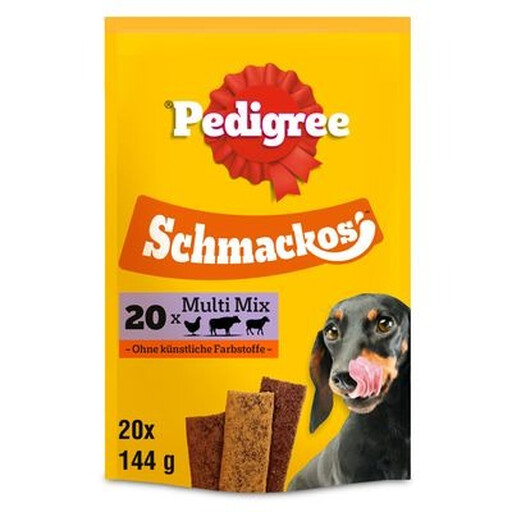
What makes it great
Schmackos are a classic, loved for their convenience and controlled calorie count. With less than 30 kcal per strip, it's a low-calorie treat that lets you indulge your dog without overdoing it. The multi-flavour pack (beef, lamb, poultry) helps to keep things interesting. The formula is enriched with Omega-6, Vitamin E, and calcium to support the dog's overall health.
Highlights
Who is it for?
These treats are aimed at owners of adult dogs who are looking for a simple, budget-friendly, and calorie-controlled reward for daily use.
Our selection aims to cover the most common needs, but every dog is unique. If none of these products are quite right, or if you're simply curious to discover other textures, flavours, or formulas, feel free to explore our catalogue.
Discover a wider range of snacks and rewards, or find inspiration among our Dog Treat Recipes.
The general rule of thumb is that treats should not make up more than 10% of your dog's daily calorie intake. The exact amount will depend on the energy value of the treat, as well as your pet's size, weight, age, and activity level. Always refer to the recommendations on the packaging and remember to slightly reduce their main meal portion accordingly.
The term "natural" is often a good indicator of quality, as it suggests the absence of synthetic additives. However, be aware that this doesn't guarantee the treat is suitable for all dogs. A natural dog treat can be high in fat or calories. The key is to always read the full ingredient list and the analytical constituents (protein, fat, etc.) to ensure the product meets your companion's specific needs.
For puppy training, the ideal dog training treat should be:
Treats like the PRINS Treats we selected are a perfect example of this type of reward.