Joybuy Insights

How to Choose Dog Food and Avoid Common Marketing Traps

Giving your four-legged companion the very best is a given. Yet, when faced with the premium dog food aisle, making a choice can often feel like a puzzle. The packaging is a battle of tempting promises: "natural," "holistic," "protein-rich"... How can you make sense of it all? As a product expert at Joybuy, my mission is to give you the keys to decipher labels and make the right choice with complete confidence.

Before you head to the checkout, learn to recognise the most common marketing traps:

  1. The 'Natural' Mirage: Leafy green packaging is no guarantee of a quality composition. Some manufacturers highlight a premium ingredient that is present in a minuscule amount, while the base of the recipe relies on low-quality meals or unidentified "animal by-products."
  2. The 'Grain-Free at All Costs' Myth: While grain-free kibble is a godsend for sensitive or allergic dogs, it is not a one-size-fits-all solution. A dog with no specific issues can perfectly digest quality whole grains (oats, brown rice...), which remain an excellent source of energy.
  3. The High-Protein Race: A high protein number on the bag is a great selling point. But quality trumps quantity! The source and digestibility of these proteins are far more crucial than the percentage shown. Always opt for proteins from fresh, clearly identified meats and steer clear of vague sources.

The Essential Criteria for an Informed Choice

To make an informed choice, forget the marketing and focus on the only criteria that truly matter. These objective indicators will allow you to assess the real quality of a product.

1. Deciphering the Ingredient List

The golden rule is simple: ingredients are always listed in descending order by weight. The first on the list is therefore the most abundant.

  • Track the animal protein source: Demand formulas where the first ingredient is a clearly identified fresh or dehydrated meat (e.g., "fresh chicken," "dehydrated lamb"). Avoid vague terms like "meat and animal derivatives."
  • Identify the carbohydrates: In a natural dog food, carbohydrates often come from sweet potatoes, peas, or lentils. If the recipe contains grains, brown rice or oats are good options.
  • Spot the "little extras": The presence of fatty acids (omega-3 and 6) for a healthy coat, prebiotics (FOS, MOS) for digestive comfort, or chondroitin for joints is a real bonus.

2. 'Complete' vs. 'Complementary' Food?

The distinction is crucial and must be stated on the packaging.

  • A complete food (most kibbles and p?tés) is designed to cover 100% of your dog's daily nutritional needs. It can be served on its own.
  • A complementary food (treats, certain specific p?tés...) is not nutritionally balanced. It must be given in addition to a complete food, not as a replacement.

3. Adapting Food to Specific Needs

Every dog is unique. Some have particular needs that require a tailor-made formula.

  • Hypoallergenic dog food: Often formulated with a single protein source (mono-protein recipe) or hydrolysed proteins (pre-digested to avoid triggering a reaction), it is the solution for dogs prone to food allergies or intolerances.
  • Light kibble: Ideal for overweight or less active dogs, these formulas are lower in fat and enriched with fibre for a feeling of fullness. L-carnitine is often added to help preserve muscle mass during weight loss.
  • Veterinary dog food: These are therapeutic foods, prescribed by a veterinarian to support the treatment of a medical condition (kidney failure, diabetes...). They must be used under veterinary supervision.

Our Recommended Product Picks

To help you see how these criteria apply in practice, here are a few products suited to different dog and owner profiles.
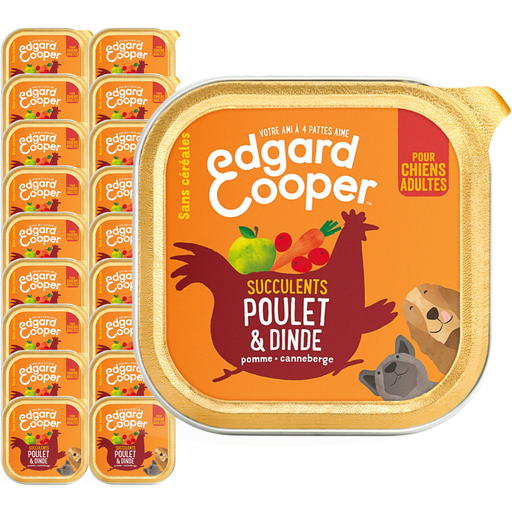
IDEAL PROFILE: THE OWNER SEEKING NATURAL INGREDIENTS AND TRANSPARENCY
EDGAR & Cooper Grain-Free Chicken & Turkey P?té for Adult Dogs - 18x100g

EDGAR & Cooper Grain-Free Chicken & Turkey P?té for Adult Dogs - 18x100g

Why we recommend it: Ideal for owners who want a simple recipe and a crystal-clear ingredient list. This wet dog food prioritises fresh meat, supplemented with fruits and vegetables, all without artificial additives or added sugars. It's the perfect example of a successful natural dog food.

How It Avoids the Trap

The ingredient list is exceptionally clear: 30% chicken and 26% turkey at the top of the list. There's no room for vague "by-products."

Key Advantage & Highlights

As a complete and moist food, it contributes to your dog's hydration. Its gentle cooking process preserves nutrients and flavours for maximum palatability.
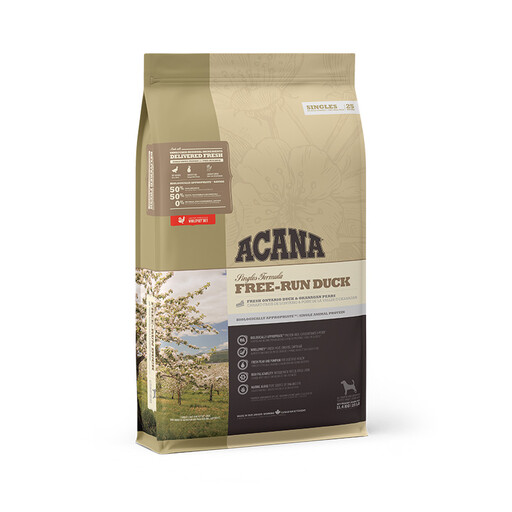
IDEAL PROFILE: THE DOG WITH SENSITIVE SKIN OR DIGESTION
Acana Free-Range Duck Single-Ingredient Dog Food, 11.4 kg

Acana Free-Range Duck Single-Ingredient Dog Food, 11.4 kg

Why we recommend it: This hypoallergenic dog food recipe is built around a single source of animal protein: duck. This is the ideal approach for identifying and eliminating common allergens (like beef or chicken) in sensitive dogs.

How It Avoids the Trap

It doesn't just claim to be "grain-free"; it offers a genuinely targeted solution for intolerances. The composition is unambiguous: 50% duck, and no major allergens like corn, soy, or wheat.

Key Advantage & Highlights

A protein-rich formula (31%) from a single meat source to limit risks. The omega-3 and 6 content is a real plus for skin health and a shiny coat.
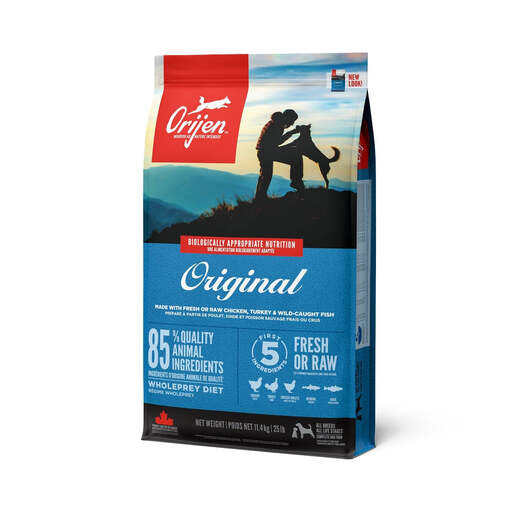
IDEAL PROFILE: THE SPORTY AND ENERGETIC COMPANION
Orijen Original Prey Dog Food - 11.4 kg

Orijen Original Prey Dog Food - 11.4 kg

Why we recommend it: An active dog has higher energy needs. This **Orijen** formula is calibrated for athletes, with a high level of protein (38%) and fat (18%) for optimal muscle support and sustained energy.

How It Avoids the Trap

The protein level isn't just a marketing figure. It's backed by a premium ingredient list: fresh chicken, turkey, fish, and eggs, incorporated according to the "WholePrey" principle.

Key Advantage & Highlights

The "WholePrey" philosophy incorporates meat, organs, and cartilage. The result is an ultra-complete nutritional profile that closely mimics a dog's ancestral diet.

Want to Explore Other Options?

Discover our full selection of products that meet our quality standards and current regulations.

Frequently Asked Questions

1. How do I safely transition my dog to a new food?

To avoid digestive upset, the golden rule is to be gradual. Over 7 to 10 days, mix the old and new food, slowly increasing the proportion of the new one. Start with a 25% (new) / 75% (old) ratio and adjust every two to three days.

2. Kibble or wet food: what should I choose for my dog?

This is the great debate! Each format has its advantages.

  • Kibble is convenient, cost-effective, easy to store, and helps reduce tartar buildup through chewing.
  • Wet dog food (p?té) is very palatable and rich in water, which is excellent for hydration. It often appeals to picky eaters, older dogs, or those who don't drink much. Mixed feeding (a combination of both) is also an excellent solution.

3. Is 'grain-free' always the best choice?

Not necessarily. A grain-free diet is most relevant for a dog with a confirmed sensitivity or allergy. For a healthy animal, quality whole grains (brown rice, oats), in the right amount, are a perfectly valid source of energy and fibre. The most important thing remains the overall quality of the recipe and, above all, the quality of the protein.