
Livraison le jour même ou le lendemain

Qualité garantie

Débloquez vos offres de bienvenue: Livraison GRATUITE | Jusqu'à -80 % | 30 jours d'essai gratuits à JoyPlus
Téléchargez l'application
Grooming at home can often feel like an uphill battle for both you and your four-legged friend. Between fur taking over the living room, the sheer panic caused by noise, and the risk of a bad trim, the experience is enough to put anyone off. Yet, regular maintenance is essential for your pet's health and hygiene.
This guide is here to help you make sense of it all. We'll break down the essential features to look for when choosing the ideal dog clippers, without the confusing marketing jargon. Our goal: to lead you to a safe, effective device that will (finally) turn grooming into a pleasant bonding moment.
Before you settle on a model, it's crucial to understand the few criteria that will make all the difference. Here are the points to check to ensure you make the right choice.
Not all coats are created equal. Fine, short hair doesn't require the same cutting power as a long, dense coat riddled with knots.
It's no secret that dogs and cats are highly sensitive to noise and vibrations. Clippers that are too loud are a guaranteed source of stress, making your pet particularly uncooperative. Choosing quiet dog clippers is therefore an essential criterion for a peaceful grooming session. Manufacturers indicate the noise level in decibels (dB). Aim for a model under the 60 dB mark—this is generally the tolerance threshold for our four-legged friends.
Grooming is more than just a quick trim. Finishing touches, sensitive areas (paws, ears…), and managing clipped hair are just as crucial.
Based on these criteria, we've selected three models that meet distinct needs: surgical precision, a hassle-free all-in-one solution, or raw power for stubborn coats.

The Concept This clipper stands out with its ultra-compact design and feather-light weight (116 g). Built for precision, its easy grip makes it the ideal tool for delicate areas that require a steady hand.
Key Features
Who is it for? For owners looking for dog finishing clippers (or cat clippers) to work with surgical precision around the eyes, ears, or paw pads. It's the perfect complement to a more powerful clipper used for general body trimming.
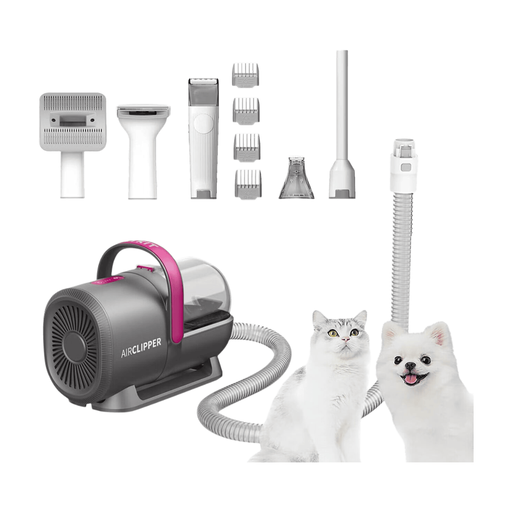
The Concept More than just a clipper, this dog grooming kit is a complete at-home grooming station. Its star feature? An integrated vacuum system that promises to capture 99% of clipped hair. Goodbye to post-session vacuuming!
Key Features
Who is it for? For dog and cat owners who want an all-in-one solution for a flawless, mess-free grooming experience. It's especially smart for those living in apartments who want to save hours on cleanup. It's equally adept at regular maintenance and full-body clips.
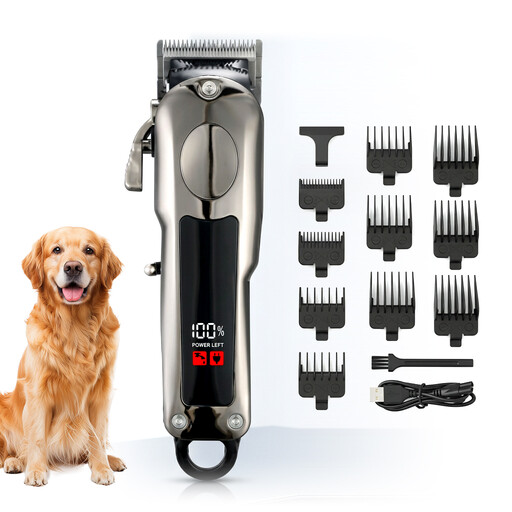
The Concept This one is all about performance. With its heavy-duty motor and robust design, this clipper is built to tackle the densest and most matted coats where standard models would throw in the towel.
Key Features
Who is it for? For owners of dogs with long, double, or very dense coats (Shepherds, Golden Retrievers, Bouviers...). This is the ultimate weapon for anyone looking for a reliable and high-performance clipper for thick dog hair that can handle full-body clips without faltering.
If these models don't check all your boxes or if you're simply curious, feel free to explore our full range of grooming accessories.
? Explore our full collection in the Dog Grooming category
Can you use human clippers on a dog? This is a very bad idea. The blades on human clippers heat up quickly and can burn your dog's sensitive skin. Furthermore, their noise and vibrations, which are often more intense, are a major source of stress. Pet clippers are specifically designed for their safety and comfort.
How often should you clip your dog? It all depends on the breed, coat type, season, and your pet's lifestyle. A long-haired dog might need a trim every 6 to 8 weeks to prevent matting, while a simple seasonal clip will suffice for others. The best advice: observe your dog's coat and adjust the frequency for their well-being.
How do you properly maintain dog clippers? Proper maintenance is the secret to your clipper's longevity and effectiveness. After each use, brush the clipper head to remove hair. Clean the blades as instructed by the manufacturer (some can be rinsed under water). Most importantly, don't forget to regularly apply a few drops of oil to the blades: this lubricates them, reduces friction, and prevents rust. It's a simple step that makes all the difference!