Small household with a very limited kitchen
You have little space and need to work out whether your dishes will fit in a compact model or whether you can install a 45 cm appliance on the floor. Measure the space before comparing capacities.


For a small household, start by measuring the space available and considering how much washing-up you accumulate before each load. A compact model works if you can manage with a smaller capacity, while a 45 cm model gives you more room without taking up the full width of a 60 cm model. A 60 cm model is worth considering if you can fill it regularly and install it correctly. Before deciding whether an appliance will meet your needs, compare its capacity, water and energy figures on the label, noise level and connection requirements.
You have little space and need to work out whether your dishes will fit in a compact model or whether you can install a 45 cm appliance on the floor. Measure the space before comparing capacities.
You want a capacity that suits your meals and the dishes you use every day, without having to run a cycle that’s only partly full. ADEME recommends waiting until the dishwasher is full; its capacity and Eco programme figures can help you compare models.
In a small home, the stated noise level can matter just as much as the format. Check the connections too, along with the manufacturer’s specific terms for any leak-protection system advertised.
Start by measuring the space, then estimate how much washing-up you’ll have before each cycle: compact, 45 cm and 60 cm models each offer a different balance between space and capacity. For energy and water use, ADEME and the European Commission explain that the label shows details including water per reference cycle, energy per 100 cycles, capacity, Eco programme duration and noise level.
| Criteria | What to check | Who is this relevant to? |
|---|---|---|
| Space and format | Width, height and depth; the dimensions of the recess and fitting diagram for an integrated model. | If my kitchen can only accommodate a small appliance, its size determines the format before any other features. Around 34% of consumers prioritise this constraint. |
| Capacity and loading | Place settings, basket layout, litres per Eco cycle and kWh per 100 cycles. | I want to wait until there’s enough for a load without letting plates and pans pile up for too long. This washing frequency is the top priority for around 33% of consumers. |
| Noise | Stated noise level in dB(A), noise class and Eco cycle duration. | If the kitchen is close to the living area or a bedroom, I need to consider the noise while the cycle is running. Around 20% of consumers put quiet operation first. |
| Installation and leaks | Water inlet, drain, electrical supply and the terms of the model’s leak-protection system. | Before choosing an integrated model, I need to know whether the recess and connections are suitable, rather than relying on leak protection to make up for poor installation. Around 13% of consumers would put installation feasibility first. |
A smaller capacity may mean running more cycles or leaving out pans and bulky dishes.
Keep an eye on how much washing-up builds up before you wash it over several days, then check the place settings and basket layout of the model you’re considering.
The energy class alone won’t tell you how much you can wash, how much water is used per reference cycle, how long the Eco programme takes or how noisy the appliance is.
Compare these figures on the labels of the models you’ve shortlisted, using the same cycle as your point of reference.
Overall dimensions aren’t enough to confirm that the recess, door panel and connections are compatible. Promotelec specifies that a dishwasher’s socket must be connected to a dedicated circuit.
Measure the recess, check the fitting diagram for the model and have the existing installation inspected if you’re unsure about the connections.
If the recess or connections aren’t suitable, you may need to make changes to the cabinetry, plumbing or electrics before installation.
Bosch describes AquaStop as a system that cuts off the water supply in certain leak situations, but clarifies that its warranty doesn’t cover faulty inlet pipes or taps upstream of the connection.
Check the system and its terms for the exact model, as well as the condition of the tap and hoses.
Worth considering if you’re in a small household with a recess suitable for a compact integrated model: Electrolux describes the ESL2500RO as a fully integrated 55 cm model with capacity for 6 place settings.
Worth considering if you’re looking for a slim freestanding appliance: Beko’s French range includes 45 cm dishwashers with a stated capacity of 10 place settings.
Worth considering if you’re looking at a 60 cm integrated model or a leak-protection system: Bosch lists these features for each model individually.
These models are compact options for small households with limited space. Before choosing, check that the capacity, dimensions and water supply suit your kitchen and the dishes you use every day.
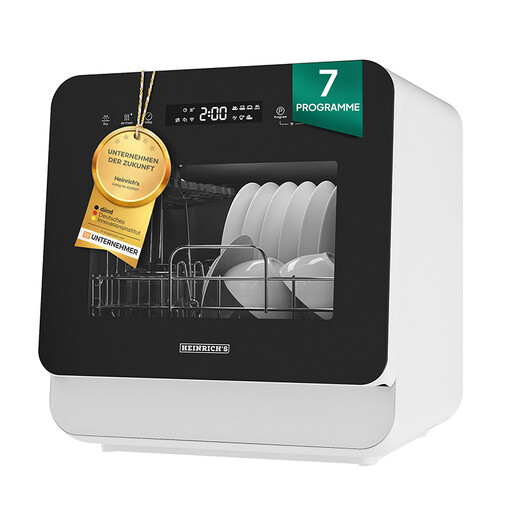 Image unavailable
Worth considering if you’re looking for a table-top appliance for a small amount of washing-up.
The product name lists capacity for 3 place settings and 7 programmes. Check the dimensions and water supply method before deciding where to put it; the available noise-level figures don’t quite match.
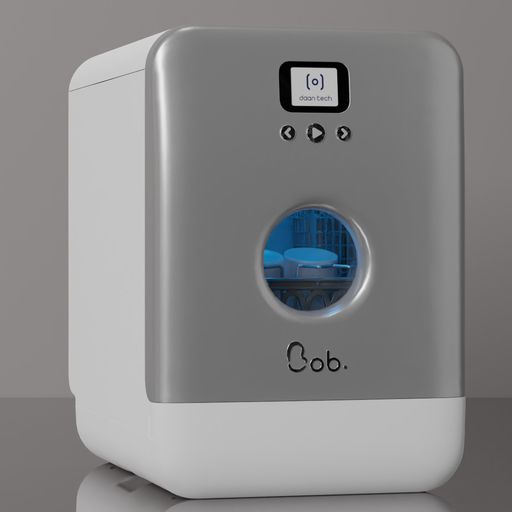 Image unavailable
Worth considering if 3 place settings suit the amount of washing-up you usually have and you have a suitable worktop space.
The product name lists a dimension of 34 cm; check the other dimensions, the size of dishes it can take and any accessories needed for the water connection.
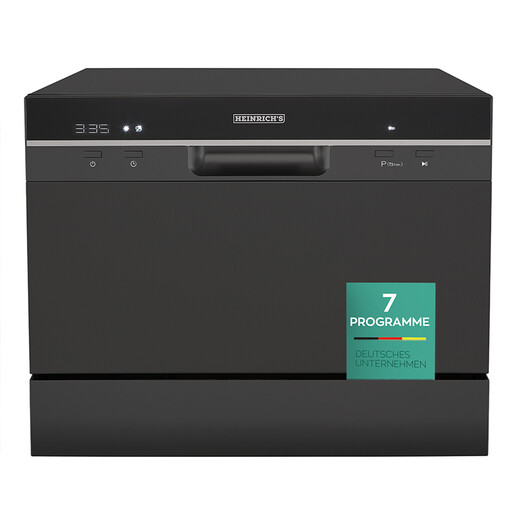 Image unavailable
Worth considering if you want to fit more washing-up into a table-top format, provided your dishes fit in the baskets.
The product name lists capacity for 6 place settings, 7 programmes and a noise level of 47 dB. Check the full dimensions before making space for it; to compare water use, check the figures on the energy label.
 Image unavailable
Worth considering if a countertop appliance with a water tank is a better fit for your kitchen layout.
The product name lists a built-in 5 L tank and 6+3 programmes. Check the place settings, water use per cycle and noise level before comparing it with other models; if you plan to connect it to a tap, confirm compatibility and any accessories required.
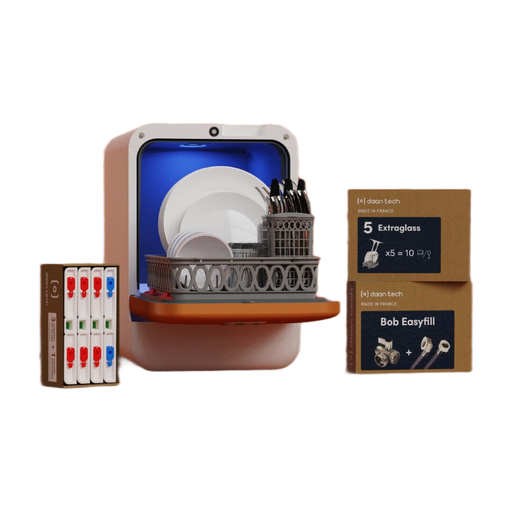 Image unavailable
Worth considering if you’re looking for a compact dishwasher for a small amount of everyday washing-up.
Keep the All-Options Pack name in mind so you can identify this version when comparing models. Check the usable capacity, dimensions and water connection method before buying.
It could suit your needs if you have enough washing-up to fill it at a pace that works for you and you can install it. ADEME recommends waiting until you have a full load and avoiding pre-rinsing; compare the water used per Eco cycle by the models you’re considering rather than assuming a smaller appliance will always use less water.
Compare the capacity in place settings, litres per reference cycle, kWh per 100 cycles, Eco programme duration and noise level. ADEME and the European Commission list these as information shown on the label; the energy class alone won’t tell you whether the capacity or noise level is right for you.
No: measure its width, height and depth, then check the fitting diagram for the exact model. Before ordering, also check the space needed for the door panel, plinth and connections.
Check that there’s a suitable electrical supply where you plan to put it: Promotelec says a dishwasher’s socket must be connected to a dedicated circuit. If you’re unsure about the existing installation, ask a qualified professional to check whether it’s suitable.
No. Bosch describes AquaStop as a system that can cut off the water supply when it detects certain leaks, but clarifies that its warranty doesn’t cover faulty inlet pipes or taps upstream of the connection. Check the terms for your chosen model and the condition of the connections.