Which criteria should you prioritise?
First work out how much space you have and which installation type will suit, then compare noise and capacity with your household’s actual mealtime routine. The three formats are designed for different needs.
Freestanding
Consider this if: you’re replacing an appliance without a fitted kitchen space.
Bear in mind: the appliance will remain visible; its installation type doesn’t indicate how noisy it is or how well it washes.
Integrated
Consider this if: you have a suitable space and want the appliance to blend in with your kitchen units.
Bear in mind: installation depends on the space and connections, and some models also need a compatible door panel.
Countertop compact
Consider this if: space is limited and you don’t produce many dishes.
Bear in mind: its smaller capacity may mean more cycles when you have several meals’ worth of dishes to wash.
| Criteria |
What to check before buying |
Who this matters to |
| Noise in the living area |
Compare the dB rating and noise class on the energy label, bearing in mind when you’ll be running the appliance. |
If the cycle runs during meals or conversations, I want to limit the noise that carries into the living area. Around 33% of consumers would put this need first. |
| Capacity and cycle frequency |
Compare the number of place settings and the basket layout with a typical load, including saucepans. |
When dishes from several meals pile up, I want to be able to load them without running lots of cycles. This would be the main priority for around 33% of consumers. |
| Fitting the appliance in your kitchen |
Measure the width, height and depth. For an integrated model, also check the installation diagram, door panel and connections. |
If my kitchen already has a dedicated space or a door panel I want to keep, I first need to make sure the appliance will fit. This would be the priority for around 20% of consumers. |
| Space for smaller loads |
Compare the space available and the capacity of a 45 cm or compact model with how often you do the washing-up. |
I don’t produce many dishes and don’t want to take up unnecessary kitchen space, but a smaller model shouldn’t force me to run too many cycles. Around 14% of consumers would prioritise this balance. |
Dishwashers available on Joybuy
These 60 cm appliances include integrated models for fitted kitchens and a freestanding model for a space without a dedicated unit. Compare their capacity with your everyday loads, then check the energy label and installation requirements for the model you choose.
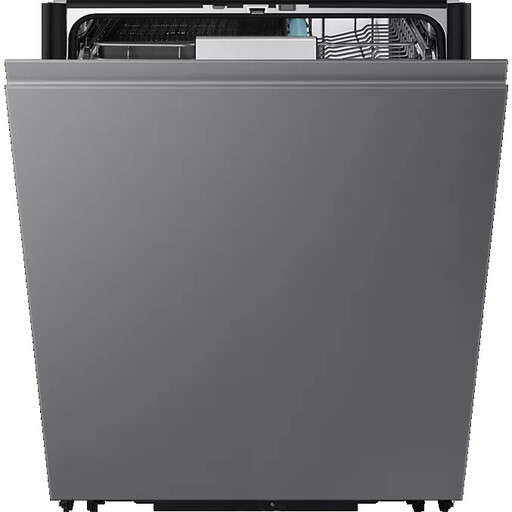 Image unavailable
Samsung DW90H79JAI0U1 Bespoke AI, 60 cm integrated, 14 place settings, Class A
Worth considering if you have a fitted kitchen and regularly wash large loads. Check the installation diagram, compatible door panel and energy label before choosing this model.
View on Joybuy
 Image unavailable
AEG FSB34707Z, 60 cm fully integrated, 14 place settings, Class C
Worth exploring for large everyday loads in a fitted kitchen. Compare the dimensions and door-panel fixing requirements with this model’s installation diagram.
View on Joybuy
 Image unavailable
Indesit D2F HK26 S, 60 cm grey freestanding, 14 place settings, Class E
Worth considering if you’re replacing an appliance without needing to adapt a kitchen unit door panel. Measure the space and compare its stated noise level with how you use your open-plan kitchen.
View on Joybuy
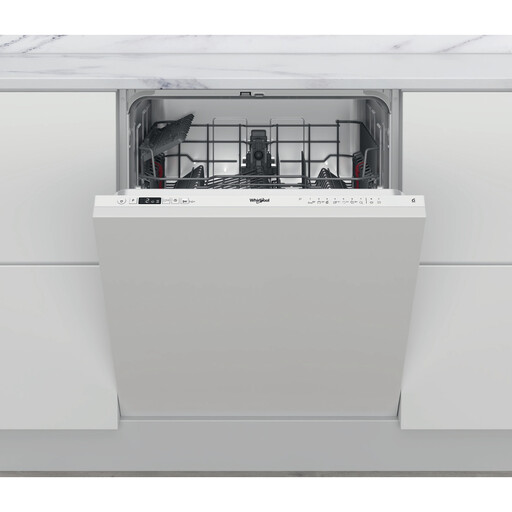 Image unavailable
Whirlpool W2I HD526 A, 60 cm white integrated, 14 place settings, Class E
Worth considering if you want to fit an appliance of this capacity in a fitted kitchen. Check the space, connections, door panel and noise level in the model’s documentation.
View on Joybuy
 Image unavailable
Samsung DW70H72WCB0U1, 60 cm integrated, 13 place settings, Class C
Worth exploring if a capacity of 13 place settings suits your loads and you have space for an integrated model. Check the installation diagram and energy label, especially the noise rating for an open-plan kitchen.
View on Joybuy
Frequently asked questions
How can you assess dishwasher noise in an open-plan kitchen?
Compare the dB rating and noise class for each model on its energy label, then think about when you’ll run the cycles. ADEME states that a 3 dB difference corresponds to almost twice the noise, so a marketing term alone isn’t enough to compare models.
Does an integrated dishwasher come with a door panel?
Don’t assume that it does. Some Whirlpool listings state that the decorative door panel isn’t included, so check what’s supplied and make sure the kitchen unit door is compatible with the model you choose.
What should you measure before buying an integrated model?
Measure the width, height and depth of the space, then compare them with the installation diagram for the exact model. Also check the door panel, room for the hoses, water inlet, drainage and power supply: a ‘45 cm’ or ‘60 cm’ label alone doesn’t confirm that the appliance will fit.
Is a compact model always suitable for one or two people?
No. It’s best suited to households with few dishes and genuinely limited space. If it fills up quickly, compare it with a 45 cm model and consider how often you’d need to run each one.
How can you compare the energy use of two dishwashers?
Check the energy label for the Eco programme’s kWh per 100 cycles and litres per cycle, as well as the capacity. The European Commission specifies these figures for household dishwashers. Compare models that can handle similar loads, and take into account how many cycles your household will need.


