Start by choosing a format that fits your kitchen: an integrated model needs a suitable housing unit and door panel, while a freestanding or compact dishwasher comes with different placement requirements. For shared meals in an open-plan room, compare capacity, noise levels and consumption figures on the energy label. A compact model saves space, but has less capacity.
Who is this choice for?
Households concerned about noise in their living space
If you run cycles during meals, conversations or when working from home, compare the dB level and noise class rather than relying on a marketing claim. Que Choisir highlights how important noise levels are when a dishwasher shares your living space.
Households that build up dishes between meals
If several people regularly cook and eat together, compare the number of place settings and the basket layout with the dishes you actually use. A dishwasher with too little capacity could mean running more cycles or washing some items by hand.
People whose kitchen has a specific space for a dishwasher
An existing housing unit, limited worktop space or hard-to-reach connections can determine which format will work before you even consider capacity. With an integrated model, also check the door panel and any adjustments needed to the cabinetry.
Which criteria should you prioritise?
First, find a format that fits your kitchen, then compare appliances with enough capacity for your mealtimes. The noise and consumption figures on the energy label can help you narrow down your options, without confusing a compact size with a more comfortable experience in your living space.
Freestanding
Consider this if: you don’t have a fitted housing unit that requires an integrated appliance.
Bear in mind: the appliance will be visible. If you’re fitting it under a worktop, check the dimensions and whether the model’s top can be removed.
Fully or semi-integrated
Consider this if: you have a suitable housing unit and want the appliance to blend into your kitchen in an open-plan space.
Bear in mind: the housing unit and furniture door must be suitable for the model. You may need to adapt your kitchen.
Worktop compact
Consider this if: space is limited and you don’t produce many dishes between cycles.
Bear in mind: there are fewer place settings per cycle, and you shouldn’t assume the model can work without a water connection.
| Criterion |
What to check |
Who should consider it? |
| Noise in your living space |
The dB level and noise class on the energy label for the model you’re considering. |
If a cycle is running during a conversation or while I’m relaxing, I want to keep noise disruption to a minimum. Around 31% of consumers make this a priority. |
| Capacity for regular shared meals |
The number of place settings and the basket layout, compared with the dishes you use between cycles. |
When shared meals quickly fill the sink, I’d rather not run several cycles or wash the extra dishes by hand. Capacity comes first for around 31% of consumers. |
| Placement and connections |
The dimensions of the housing unit or worktop, the water supply, drainage and plug socket; for an integrated model, the door panel too. |
With a fitted kitchen, my first priority is finding an appliance that can be installed in the space available. This is the main consideration for around 25% of consumers. |
| Running costs |
The kWh per 100 cycles and litres per cycle on the label, taking capacity and the reference programme into account. |
If I run the dishwasher often, I want to compare its stated water and electricity use without overlooking how many cycles I’ll need. Around 13% of consumers prioritise these figures. |
Mistakes to avoid
-
Relying solely on the word ‘quiet’
A marketing claim alone won’t help you compare how disruptive a cycle might be in an open-plan kitchen.
Check the dB level and noise class on the energy label for each appliance.
-
Assuming a compact model needs no connections
An appliance placed on a worktop may still need a water supply and drainage, or a nearby sink, depending on the model. Que Choisir points this out for a compact model it tested.
Before choosing a location, check the instructions for the exact model, the route for the hoses and access to a plug socket.
Depending on the setup, you may need connection accessories or changes to your existing installation.
-
Comparing consumption without checking capacity
The figures on the label are based on a reference programme. Low consumption per cycle won’t solve the problem if the capacity means you need to run more cycles for your household’s meals.
Look at litres per cycle, kWh per 100 cycles, the duration of the Eco programme and the number of place settings together.
-
Treating an integrated model like a freestanding appliance
An integrated dishwasher needs to fit a housing unit and a furniture-door system. Simply sliding it under a worktop isn’t enough.
Measure the housing unit and check the model’s requirements for the door panel, door and installation before ordering.
The door panel and any joinery or connection work may be additional to the appliance installation.
Brands to consider
There are no brand profiles to display in this section.
Dishwashers available on Joybuy
These integrated and freestanding models let you compare capacities suited to shared meals. Before choosing one for an open-plan kitchen, check the noise label and installation dimensions for each model.
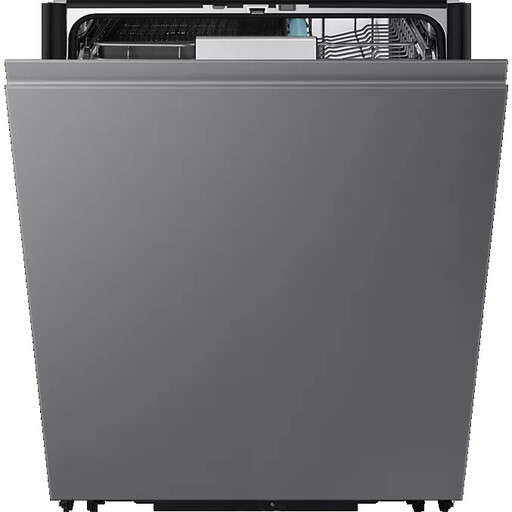 Image unavailable
Samsung DW90H79JAI0U1 Bespoke AI integrated dishwasher, 60 cm, 14 place settings
Worth considering if you have a suitable housing unit and need to handle dishes from regular shared meals.
Energy rating A stated in the product title. Check the door panel, connections and noise data on the label for the exact model.
View on Joybuy
 Image unavailable
Samsung DW60M6050FS freestanding dishwasher, 14 place settings
An option for shared meals if you don’t have a housing unit and door panel in place.
The product title lists seven programmes. Check the dimensions, connections and noise label before installing it in your living space.
View on Joybuy
 Image unavailable
Indesit D2F HK26 S freestanding dishwasher, 60 cm, 14 place settings
Worth considering if you need capacity for 14 place settings for shared meals without an integrated installation.
Energy rating E stated in the product title. Compare the water, electricity and noise figures on the label for the exact model.
View on Joybuy
 Image unavailable
Samsung DW70H72WCB0U1 integrated dishwasher, 60 cm, 13 place settings
Consider this for a fitted kitchen with a compatible housing unit, if 13 place settings match the dishes you use between cycles.
Energy rating C stated in the product title. Check the connections and the consumption and noise figures on the label.
View on Joybuy
 Image unavailable
Samsung DW80H72YBB0U1 integrated dishwasher, 60 cm, 13 place settings
Another model to consider if your kitchen is suitable for an integrated appliance and 13 place settings meet your household’s needs.
Energy rating B stated in the product title. Before comparing, check the housing unit, door panel and the water, electricity and noise data for the exact model.
View on Joybuy
Frequently asked questions
What should you look for on the energy label for an open-plan kitchen?
First, check the dB level and noise class if the appliance will be running while you use your living space, then compare its capacity with the dishes you typically use. ADEME says the label also shows the energy rating, kWh per 100 cycles and litres per cycle. Compare these figures using the same reference basis, and don’t consider them separately from the number of place settings.
Can a compact dishwasher work without water connections?
Not necessarily. Que Choisir says that a compact model it tested can be placed on a worktop, provided it has a water supply and drainage, or a sink nearby. Check the installation instructions for the model you’re considering before deciding where to put it.
What should you check before buying an integrated dishwasher?
Check that the housing unit, furniture door and connections are compatible with your chosen model. Installation may also require joinery, plumbing or electrical work. Before ordering, confirm with the installer exactly what their service includes.


