
Livraison le jour même ou le lendemain

Qualité garantie

Débloquez vos offres de bienvenue: Livraison GRATUITE | Jusqu'à -80 % | 30 jours d'essai gratuits à JoyPlus
Téléchargez l'application
The chore of washing dishes is a near-daily ritual in most households. When faced with a brimming sink, choosing the right dish soap is no small matter: it can turn this task into a mere formality. While some swear by heavy-duty degreasing power to obliterate traces of last night's casserole, others prefer an eco-friendly dish soap to lighten their impact on the planet. And for the most fragile skin, a hypoallergenic formula is simply non-negotiable.
As the Head of Products at Joybuy, my mission is to do the groundwork for you. This guide is designed to get straight to the point: presenting you with proven options and giving you the keys to choose the product that's right for you, cutting through the marketing jargon.
Before you head to the checkout, let's review the three criteria that truly matter.
Let's be clear: a good dish soap is, first and foremost, a product that cuts through grease. This firepower against even the most stubborn fats relies on the concentration and type of surfactants in the formula. These cleaning agents capture grease particles and carry them away in the wash water. If your kitchen often looks like a battlefield after frying, baking, or cooking with sauces, a concentrated formula will be your best ally for getting your sink sparkling clean without spending hours on it.
Eco-consciousness has also made its way to the kitchen sink. Natural or eco-friendly dish soap formulas, rich in plant- or mineral-based ingredients, are gaining ground. A reliable benchmark to avoid making a mistake? The European Ecolabel. It guarantees proven effectiveness and a reduced environmental impact, from the formula all the way to the packaging.
Washing dishes shouldn't lead to tight, red hands. If your skin is dry or reactive, opting for a dish soap for sensitive skin isn't a luxury. These hypoallergenic formulas are specifically designed to minimise the risk of allergies. In short: goodbye to fragrances, dyes, and controversial preservatives.
To put theory into practice, here are three products that each meet a specific need.
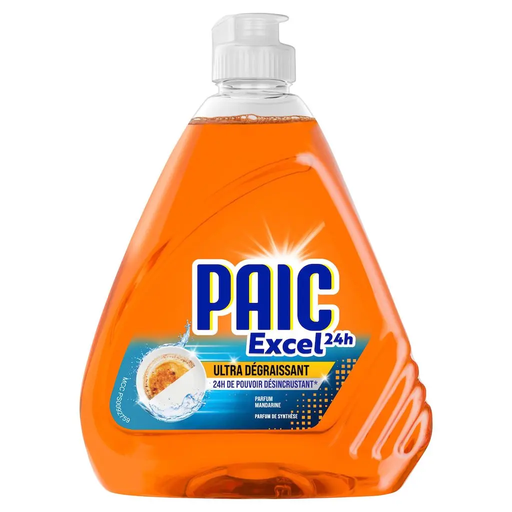
Key Feature: Raw performance. This Paic dish soap formula is a true powerhouse against grease. Its high concentration of cleaning agents is designed to tackle the toughest dishes without hours of scrubbing.
Pros:
Who is it for? For prolific home chefs who frequently cook saucy dishes and fried foods. This is the choice for pure, uncompromising effectiveness.
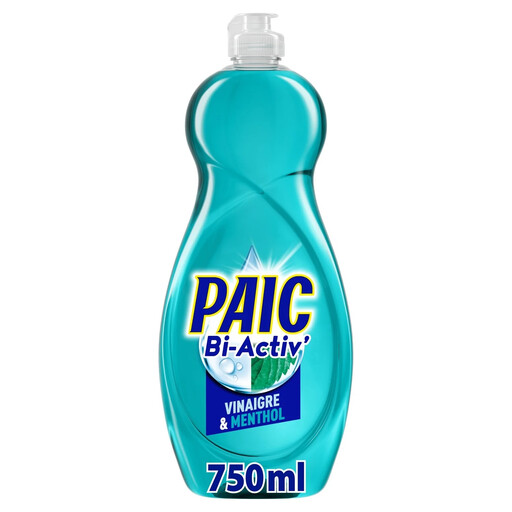
Key Feature: The blend of tradition and effectiveness. This product successfully combines the renowned power of Paic with a greener formula. The secret weapon? The addition of vinegar, a formidable classic, in a composition made of 96% naturally derived ingredients.
Pros:
Who is it for? For those who want an effective dish soap without sacrificing eco-friendliness. It's the ideal compromise between performance and environmental consciousness.
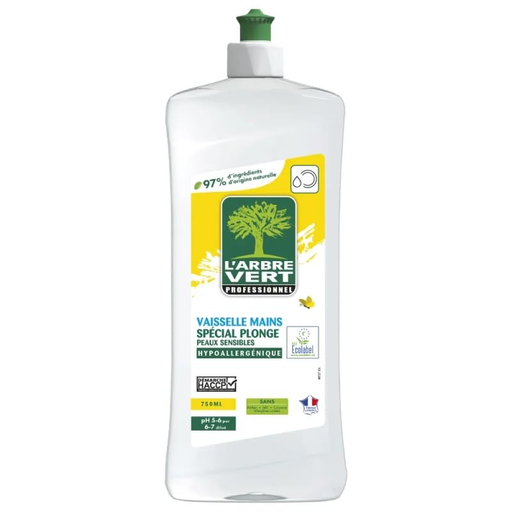
Key Feature: Certified gentleness. The L'Arbre Vert dish soap is the undisputed benchmark for delicate skin. Its hypoallergenic formula, validated by rigorous testing, is designed to eliminate any risk of allergies. The bonus: it's certified with the European Ecolabel.
Pros:
Who is it for? An essential for anyone with sensitive skin or who is prone to allergies, as well as for families with young children. It's also the perfect choice for those who want an eco-friendly dish soap with an official certification.
Our selection covers three main profiles, but the world of cleaning products is much broader. If you're looking for a family-size bottle, a specific scent, or another brand, feel free to explore our full catalogue.
? Explore our full range of liquid dish detergents to find the product that perfectly meets your needs.
Its secret lies in surfactants. Imagine double-sided molecules: one side that loves grease (lipophilic) and one that loves water (hydrophilic). They act like magnets that capture grease particles, lift them off the dishes, and carry them away with the rinse water. "Ultra-degreasing" formulas are simply supercharged with these valuable agents.
An eco-friendly dish soap, especially if it's certified (e.g., European Ecolabel), ticks several boxes. Its formula uses plant-based ingredients, which break down more quickly in nature to limit water pollution. Its packaging is also eco-designed (recycled plastic, 100% recyclable). And no, effectiveness isn't sacrificed: it's actually a mandatory criterion for obtaining the label.
Absolutely not. A dish soap for sensitive skin is still, above all, an effective cleaning product. The difference is that manufacturers remove everything superfluous and potentially irritating: synthetic fragrances, dyes, certain preservatives... The cleaning agents themselves are still there to get the job done. If you feel it's "less strong," it's often because it lathers less or lacks a strong scent—gimmicks that have nothing to do with degreasing power.