
Livraison le jour même ou le lendemain

Qualité garantie

Débloquez vos offres de bienvenue: Livraison GRATUITE | Jusqu'à -80 % | 30 jours d'essai gratuits à JoyPlus
Téléchargez l'application
Parking lot fender-benders, right-of-way disputes, vandalism on your parked car… these are stressful situations where video evidence can make all the difference. This is precisely the role of a dashcam, or onboard camera—your objective witness on the road.
But with an overwhelming number of options, how do you separate the gimmicks from the genuinely useful features? This guide is here to help you see clearly, understand the essential criteria, and choose the model that will equip your vehicle with complete peace of mind.
Before you fall for a particular model, let's review the features that will truly make a difference in daily use. Here are the three key points not to overlook.
A dashcam's mission is simple: to record perfectly sharp and legible images. Resolution is therefore the number one criterion.
An impact can come from anywhere. The number of cameras and their viewing angle therefore define your scope of protection.
Beyond simple video capture, certain options provide a significant advantage in terms of security and ease of use.
Here are three models that stand out, each catering to different needs and budgets.
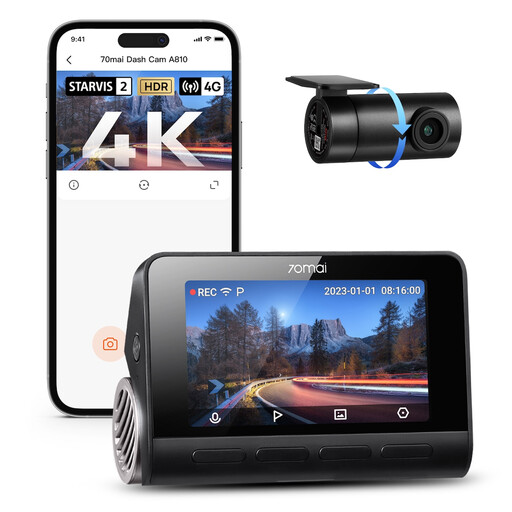
Why It Stands Out
The 70mai A810-2 makes image quality its top priority. It features two Sony STARVIS 2 sensors, one in the front for true 4K and one in the rear for 1080p. The dual-channel HDR and proprietary "Night Owl Vision" technology promise stunning clarity, even in near darkness.
Key Features
Who Is It For?
For demanding drivers who want to make no compromises on video quality and are looking for a complete front-rear system with advanced features like GPS and driver aids.
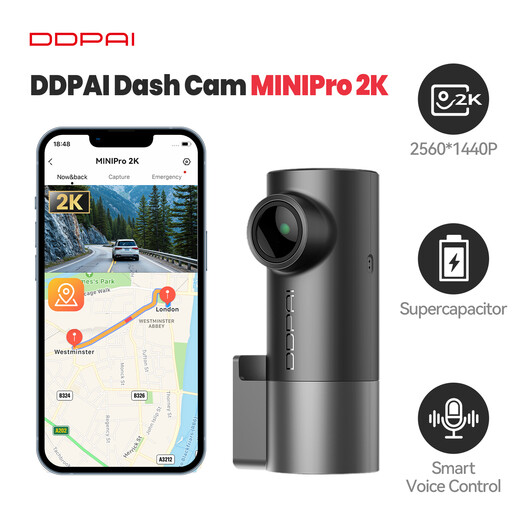
Why It Stands Out
The DDPAI MINI Pro is all about discretion. Its ultra-compact design allows it to be forgotten behind the rearview mirror, never obstructing the field of view. Despite its tiny size, it records in 2K resolution (1440p), an excellent compromise between sharpness and file size.
Key Features
Who Is It For?
For drivers looking for a simple, reliable, and, above all, discreet dashcam. It's the perfect choice for a "set-it-and-forget-it" installation without compromising on image quality.
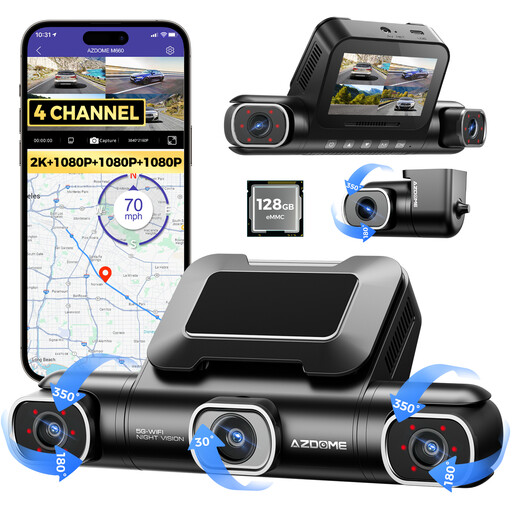
Why It Stands Out
The AZDOME M660 is a surveillance powerhouse, with its four-camera system providing 360-degree coverage. It combines a 2.5K front camera with three 1080p cameras (two for the cabin with infrared vision, and one for the rear). Its unique feature? 128GB of built-in eMMC storage, which eliminates the need to purchase an SD card.
Key Features
Who Is It For?
For professional drivers (ride-hailing, taxis), fleet managers, or individuals who demand maximum surveillance of their vehicle, both inside and out.
Our selection highlights a few flagship models, but the dashcam market is full of hidden gems. To explore other references, compare technologies, or find the perfect camera for your budget, feel free to browse our full category.
? Discover all our vehicle camera systems
Yes, using a dashcam for private purposes is perfectly legal in most countries, including the UK and the US. Recordings are generally admissible as evidence in the event of an accident. However, be careful: sharing these images online or on social media is strictly regulated by privacy laws and GDPR. It is strictly forbidden to publish videos where faces or license plates are identifiable without consent.
Parking mode keeps an eye on your vehicle when the engine is off. To work, the dashcam must remain powered. This is done via a hardwire kit, which is connected directly to the car's fuse box. This smart kit cuts power if the vehicle's battery voltage drops too low, to avoid draining it. Once active, parking mode starts recording as soon as it detects an impact or suspicious movement.
A front dashcam is good. A front-rear setup is much better. Rear-end collisions are extremely common, both in traffic and while maneuvering in a parking lot. Having a video of the incident can make all the difference in establishing liability, especially in a hit-and-run. The additional investment is more than offset by the peace of mind it provides.