
Livraison le jour même ou le lendemain

Qualité garantie

Débloquez vos offres de bienvenue: Livraison GRATUITE | Jusqu'à -80 % | 30 jours d'essai gratuits à JoyPlus
Téléchargez l'application
Whether you're personalising a photo album, crafting a unique greeting card, or simply elevating a creative project, precision is key. And for that, nothing beats the right tools. The cutting die, known to enthusiasts simply as a die, is the essential accessory for creating endless, flawless shapes. But with a vast array of designs and sizes, how do you make the right choice??
Our guide is here to help you navigate this landscape. We've broken down the options to present you with versatile choices and practical advice—without the marketing jargon—so you can select the dies that will truly bring your ideas to life.
Before you dive in, a few key points will help you make an informed decision and ensure a lasting investment that’s perfectly suited to your future creations.
The first thing to check is the die's compatibility with your die-cutting machine (Sizzix Big Shot, Cricut Cuttlebug, etc.). Most dies, or cutting dies, are designed to be universal, but it's always wise to be cautious, especially regarding dimensions. A die that is too wide for your machine will simply be unusable. Just make sure the width of the die does not exceed that of your machine's opening.
Some dies offer dual functionality: cutting and embossing. As a reminder, embossing creates a raised pattern on the paper without cutting through it. This is done by using a silicone mat compatible with your machine. Choosing a versatile die multiplies your creative possibilities without multiplying your purchases. Designs like frames or textured backgrounds are often excellent for this dual purpose.
Consider what you will primarily use it for. Do you need simple, recurring shapes for batch card making?? Or are you looking for a detailed, central design for a spectacular album page?? Very fine and intricate dies require high-quality paper and sometimes several passes through the machine for a perfect cut. To start, a frame die or simple geometric shapes are solid choices.
Whether you're just starting out or looking to expand your collection, here is a selection of dies that stand out for their versatility and creative potential.
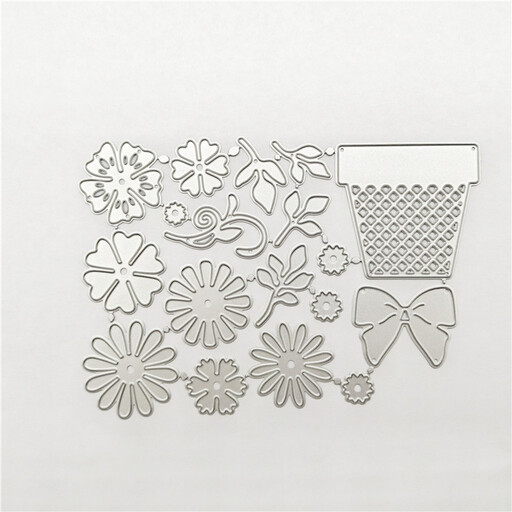
What makes it unique?: This design captivates with the incredible fineness of its leaf and petal details. It's not just about cutting a single flower, but about composing a complete botanical background, perfect for adding depth to a creation.
Key features?:
Who is it for?? Ideal for crafters seeking elegance and a natural touch. This die is perfect for wedding stationery, spring-themed albums, or for delicately framing a photo.
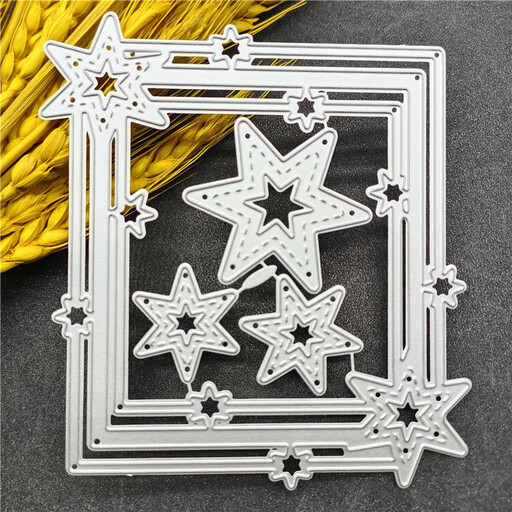
What makes it unique?: The frame format is a timeless classic, but the addition of stars gives it an irresistible festive and playful touch. It's perfect for creating a window on a card or for highlighting a central element.
Key features?:
Who is it for?? A must-have for anyone who makes greeting cards, announcements, or festive decorations. It's a reliable choice that will earn its place in any crafter's workshop, from beginner to expert.
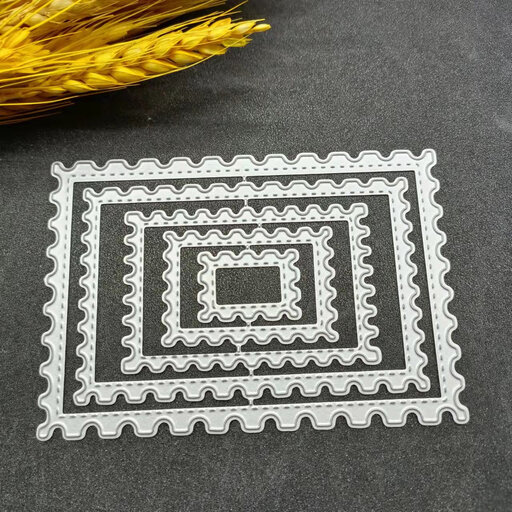
What makes it unique?: With its scalloped edge mimicking a postage stamp, this die adds a vintage and authentic touch. It stands out for its dual function: it can be used for standard cutting, but also for embossing, creating a subtly textured frame.
Key features?:
Who is it for?? For lovers of vintage style or those looking to bring a touch of originality to their creations. Ideal for making tags, mini-albums, or junk journal embellishments.
Creativity knows no bounds, and every project is unique. If our selection doesn't quite match what you have in mind, hundreds of other possibilities await.
To find the inspiration and the tool that will bring your ideas to life, explore our complete collection of cutting dies.
Although the terms are often confused, they refer to two very different tools. A cutting die (or die) is a metal tool with sharp edges that, when passed through a machine, cuts a precise shape from paper. In contrast, a scrapbooking stencil (stencil), usually made of thin plastic, serves as a guide for applying ink, paint, or texture pastes, without ever cutting the material.
The choice of paper (or weight) depends on the complexity of the die. For simple designs, standard paper (between 120 and 160?g/m?) will do the job. For highly detailed dies, it is advisable to opt for a smoother, denser paper, around 200 to 250?g/m?, to ensure a clean cut without tearing.
Yes, most dies can cut other thin materials. Depending on their quality and type (thin dies, known as wafer-thin, are less robust than thick, steel-rule dies), they can cut cardstock, craft foam (EVA foam), thin cork, adhesive vinyl, or thin felt. Just remember to check your machine manufacturer's recommendations for compatible materials.