
Livraison le jour même ou le lendemain

Qualité garantie

Débloquez vos offres de bienvenue: Livraison GRATUITE | Jusqu'à -80 % | 30 jours d'essai gratuits à JoyPlus
Téléchargez l'application
Have a specific idea for your next greeting card or scrapbook page, but feel like it's missing that special something to be perfect? With the sheer number of cutting dies available, it's easy to feel overwhelmed. It can be hard to know where to start or which design will truly make a difference.
This guide is here to help. We'll break down the essential criteria for choosing the right dies and present our top picks to boost your creativity. The goal? To give you all the keys to finding the tools that will perfectly match your crafting projects.
Before you buy, a few key points deserve your attention to ensure you make the right choice.
This is the number one, non-negotiable criterion: compatibility. Most cutting dies, also known as stencils or matrices, are designed to be universal. They work with the majority of machines on the market that use the "sandwich" system (a stack of plates passed through a pressure roller).
However, always check two key elements:
Taking a few moments to check these details will save you a lot of disappointment when your package arrives.
To get started or simply get the most for your money, opt for versatile scrapbooking die sets. An alphabet die set is an excellent starting point for personalising messages, names, or dates. Likewise, basic geometric shapes (circles, rectangles...) and timeless motifs like flowers will serve you in countless creations.
A card-making die set with multiple sizes of the same design (the famous "nesting" technique) is also a smart investment. It will allow you to create frames, card backgrounds, and layering effects with a single purchase.
The cutting quality and longevity of a cutting die largely depend on its material. Dies made of carbon steel are the gold standard for durability and precision. They allow for clean cuts on paper, thin cardstock, felt, or even EVA foam.
Also, consider the complexity of the design. Dies with many fine details may require high-quality paper and sometimes several passes through the machine for a flawless cut. For highly intricate designs, a small pointed tool (like a pick) is often essential to dislodge stubborn paper pieces.
Whether you're just starting out or looking to expand your collection, here are three types of dies that cater to very different creative needs.

Why it stands out: This set wins with its versatility and impeccable finish. The six different sizes allow you to play with layers ("nesting") to create frames or tags. The "stitched" detail around the edge instantly adds a touch of elegance and a professional look to your cuts, effortlessly.
Key features:
Best for: An excellent choice for card makers looking to structure their compositions and for anyone wanting to frame photos and messages on their scrapbook pages.
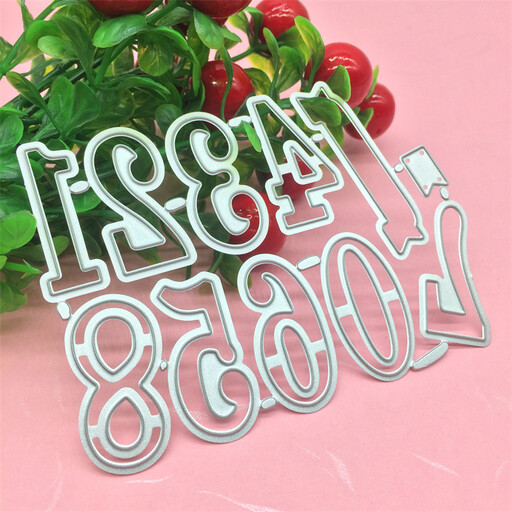
Why it stands out: A complete alphabet die set is a true essential in any scraproom. This set includes not only all 26 uppercase letters of the alphabet but also all 10 numerals. Its clean, highly legible font adapts to a multitude of styles, from classic to modern.
Key features:
Best for: All crafting enthusiasts. Whether for a baby album, a birthday card, or a creative journal, being able to create your own titles is a major asset.
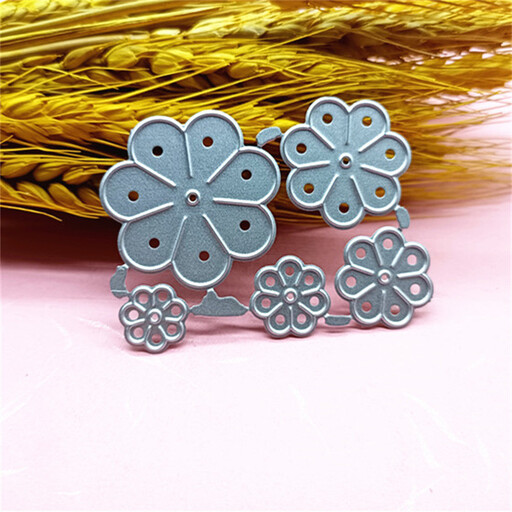
Why it stands out: More than just a floral pattern, this flower die is designed for layering. The set contains several elements (petals of different sizes, leaves, flower centres) that, once cut and assembled, create flowers with a stunning volume and depth effect.
Key features:
Best for: Ideal for those who love decorative projects and want to add a botanical and textured touch to their cards, gift boxes, or album pages.
This selection is, of course, just a glimpse of the most practical options for starting or expanding a collection. The world of dies is nearly infinite: animals, seasonal themes, geometric patterns, 3D boxes... There's a die for (almost) every idea.
If you're curious or looking for a specific model, feel free to explore our complete collection.
Discover our full range of crafting dies
The principle is simple: it's the "sandwich" technique. Here are the general steps:
A punch is a standalone tool: you insert the paper, press down, and it's cut. It is often limited to simple shapes and thin paper. In contrast, a die is just a metal shape. It needs a die-cutting machine to apply the pressure required for the cut. Dies allow for much more complex designs and can cut a wider variety of materials.
To make them last as long as possible, store your dies flat, ideally on magnetic sheets to prevent them from getting lost or damaged. If small pieces of paper get stuck, use a stiff-bristled brush or a pointed tool to gently remove them. Avoid any contact with water to prevent rust.