
Livraison le jour même ou le lendemain

Qualité garantie

Débloquez vos offres de bienvenue: Livraison GRATUITE | Jusqu'à -80 % | 30 jours d'essai gratuits à JoyPlus
Téléchargez l'application
Whether you're into scrapbooking, card making, or just want to personalise your DIY creations, cutting dies are your most valuable allies. These small metal templates have the power to transform a simple sheet of paper into a delicate and precise work of art. But with the overwhelming variety of designs, sizes, and brands, it's easy to feel lost.
This guide is here to help you navigate the options. Our goal: to give you the keys to choosing the perfect cutting dies for your needs, without marketing jargon and getting straight to the point.
Before diving into our selection, let's review the essential points to check to ensure you make the right choice.
This is fundamental. Not all dies work with all machines. The good news is that the majority of thin cutting dies (the most common type) are compatible with market-leading machines like the Sizzix Big Shot or the Cricut Cuttlebug. The key is to always check the width of the die and compare it to your die-cutting machine. For thicker or XXL dies, a more robust or specialised machine will sometimes be necessary.
The choice of your dies will obviously depend on your projects.
Also, pay attention to the complexity of the design. A highly intricate metal stencil will require good quality paper and, sometimes, several passes through the machine to achieve a flawless cut.
Some dies are true Swiss Army knives: they cut, but can also be used for paper embossing. This technique creates a raised pattern on the paper without cutting through it. All you need is a silicone mat compatible with your machine. It's the ideal way to add texture and depth to your creations with a single tool.
After reviewing the latest releases and feedback from enthusiasts, our editors have selected dies that stand out for their design and versatility.
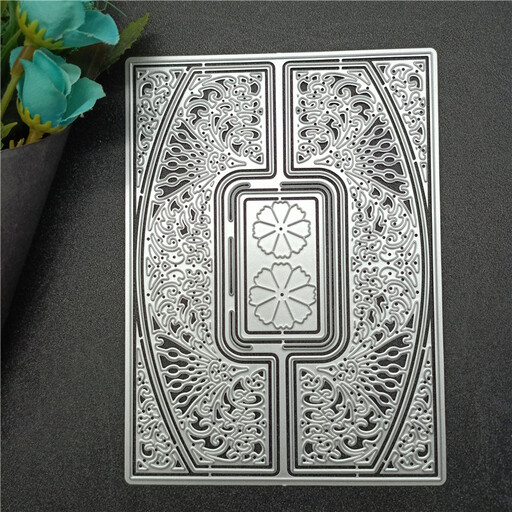
What we love: This die creates a floral frame that is as elegant as it is detailed, all in a single pass. Its dimensions are perfect for standard greeting card sizes, providing a sophisticated foundation to build upon.
Key features:
Who is it for? For card making enthusiasts, engaged couples preparing their wedding invitations, and anyone who loves botanical and romantic designs.
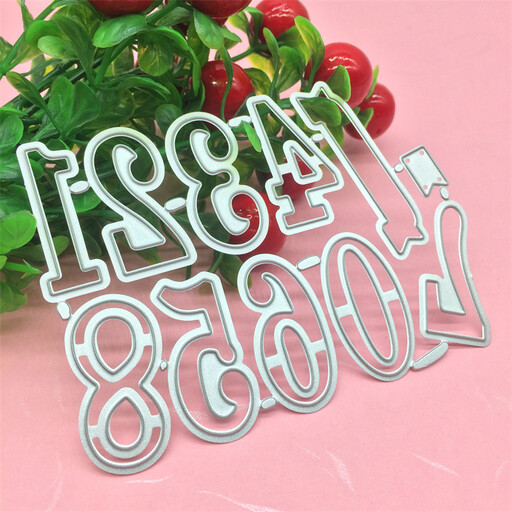
What we love: This is THE essential kit for any crafting enthusiast. Having a complete alphabet (capital letters and numbers) on hand multiplies the possibilities for personalisation. The clean, highly legible font suits a multitude of styles.
Key features:
Who is it for? A must-have for all crafters, from beginners to experts. Indispensable for scrapbooking, customising gifts, or making banners.
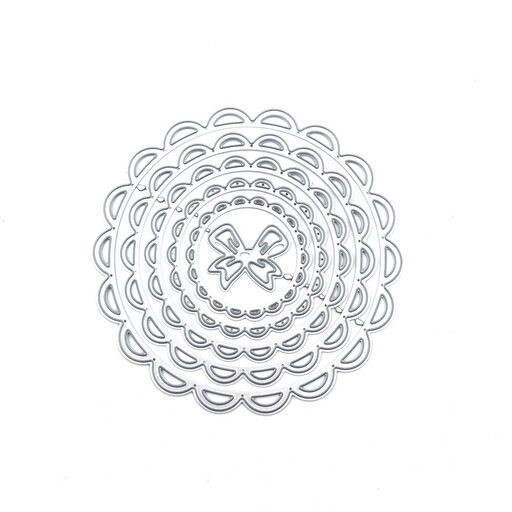
What we love: This clever set contains several frames of different sizes, designed to be layered. Their borders, both simple and elegant, make them a perfect all-rounder for framing photos, text, and other decorations.
Key features:
Who is it for? For anyone who regularly makes cards and invitations. It's an ultra-reliable foundation for creating an infinite variety of designs.
Our selection focuses on versatile models, but the world of creative hobbies is an endless playground. Are you looking for a specific design: animals, vehicles, complex geometric shapes? Hundreds of other options are available to you.
To explore a much larger catalogue, take a look at our complete category.
Discover our complete collection of embossing and die-cutting tools
A cutting die (or template) is a metal shape with sharp edges that slices through paper. In contrast, an embossing folder is a kind of plastic sleeve that contains a raised pattern. When passed through the machine, the paper is pressed inside, and the pattern is imprinted in relief without any cutting. This is the principle of paper embossing.
No, and this is a crucial point. Compatibility depends on two things: the width of the die and the width of your machine. While most thin dies (often called "wafer-thin") are nearly universal, the best advice is to check the specifications of your die-cutting machine before any purchase, especially for a large or particularly thick die.
Dies are durable, but a few simple steps will extend their effectiveness. After each use, remember to remove small paper scraps with a brush or a fine pick. For storage, the ideal solution is to keep them flat on magnetic sheets. This prevents them from warping or getting damaged, and it's much more convenient for finding them at a glance.