
Livraison le jour même ou le lendemain

Qualité garantie

Débloquez vos offres de bienvenue: Livraison GRATUITE | Jusqu'à -80 % | 30 jours d'essai gratuits à JoyPlus
Téléchargez l'application
A beautiful cutting board can elevate everything from meal prep to table presentation. Yet, the purchase too often ends in disappointment. Who hasn't bought a gorgeous wooden board that split after a few washes, or a designer model that turned out to be completely impractical?
Choosing the right cutting board goes far beyond aesthetics. It's an investment in a kitchen tool that must be functional, hygienic, and durable. Let's break down the common pitfalls to ensure you don't regret your purchase a few months down the line.
Before we dive into specific models, let's review the most common missteps so you don't end up throwing your money away:
charcuterie board made of soft wood to chop onions or cut meat is the fastest way to ruin it forever and prematurely dull your knives. Every board has its purpose.To make an informed choice, simply focus on a few key factors that will make all the difference in your daily routine.
The choice of material directly impacts the board's durability, its maintenance, and even the lifespan of your knives.
wood cutting boards (oak, acacia): A timeless classic, and for good reason. A dense wood like oak is sturdy, durable, and has natural antibacterial properties. Most importantly, it's gentle on your knife edges. The trade-off is that it requires regular maintenance (hand-washing and oiling) to prevent it from drying out.bamboo cutting board: Technically, bamboo is a grass, not a wood. It's valued for its eco-friendly properties (fast growth) and high density, which makes it less porous and more water-resistant. While its hardness is a plus for hygiene, it can dull knives faster than traditional wood.presentation board.Determine the primary use for your future board.
cutting board with a juice groove, which is incredibly practical for catching liquids from tomatoes or meat and keeping your countertop spotless.serving board or a wooden serving platter with a distinctive grain (like acacia) always makes a statement.A cutting board set can be an excellent solution, allowing you to dedicate a board to each task and ensure impeccable hygiene.
Here are a few options that meet specific needs, taking into account our criteria for durability and practicality.
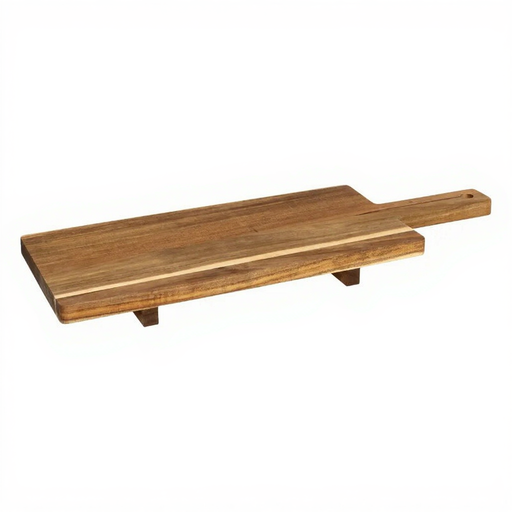
Why we chose it: Its XXL size and the natural elegance of acacia wood make it the perfect wooden serving platter for large gatherings. It's ideal for presenting a charcuterie board or a cheese spread with flair, without ever running out of space.
Designed specifically for presentation, its sturdiness and large surface area mean you won't have to juggle multiple small dishes. Its quality acacia wood is far more resistant to wear than soft woods, preventing it from looking prematurely "worn."
XXL dimensions (70 cm) for spectacular presentations; durable and beautiful acacia wood.
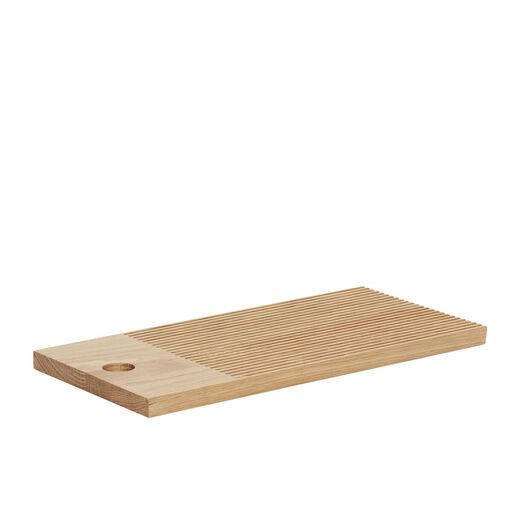
Why we chose it: This is the quintessential oak wood cutting board: reliable, simple, and versatile. Its rectangular shape and solid, FSC-certified oak construction make it a perfect everyday companion, from prepping vegetables to carving the Sunday roast.
Unlike purely decorative boards, its solid oak design is built to withstand repeated knife work. It won't warp after the first wash (if properly maintained), thus avoiding the classic trap of a board that splits.
Solid, FSC-certified oak wood that's durable and sustainably sourced; timeless design equally suited for chopping and serving.

Why we chose it: This cutting board set is the ideal solution for those who prioritise organisation and hygiene. With three different sizes, it allows you to dedicate a board to each type of food (meat, fish, vegetables), thereby preventing cross-contamination.
The carbonisation process makes the bamboo more resistant to moisture and less prone to warping. The inclusion of a cutting board with a juice groove on each model is a real bonus for preventing spills and keeping your work surface clean.
Set of 3 sizes for maximum versatility; carbonised bamboo for enhanced durability and better moisture resistance.
We've curated a complete selection of boards that tick all the boxes: durability, style, and practicality.
The golden rule: never put it in the dishwasher or let it soak in water. Wash it by hand with warm water and a little mild soap, then dry it immediately and thoroughly with a cloth. To nourish and protect it, apply a thin layer of food-grade mineral oil about once a month.
It's highly recommended for basic hygiene reasons. Using separate boards—for example, one for raw meat and fish, and another for vegetables and bread—helps prevent cross-contamination. A cutting board set is perfect for implementing this best practice.
A bamboo cutting board is an excellent option. Bamboo is a renewable resource that is dense and less porous than some woods, which limits liquid absorption. Be aware, however: its high hardness can dull the edge of your knives slightly faster than a softer wood board like oak or maple. It's a trade-off between the board's durability and knife maintenance.