Buying priorities for a frequently used kitchen
Start with your main use, then check comparable consumption figures, actual capacity and installation requirements before choosing a model.
| Priority |
What to check |
Your needs |
| Compare useful consumption |
For a hob, distinguish maximum power from consumption figures. For an oven, compare kWh per cycle using the same cooking mode. Consider the oven’s capacity alongside your usual portion sizes. |
I want to limit consumption without comparing figures that describe different types of use. For small meals, I can avoid switching on a large oven if a microwave will do the job. |
| Match the hob to your cookware |
Check the number and diameter of the zones, and whether they can be linked. For induction, make sure a magnet sticks to the base of your saucepans and frying pans. |
I want to use several pans at the same time without replacing my cookware unnecessarily. A flexible zone is only useful to me if I regularly use large or oblong dishes and containers. |
| Prepare for installation |
Compare the cut-out dimensions, ventilation and exact model diagram with the cabinet. Also check the dedicated circuit and the electrical specifications set out by the manufacturer. |
I want to replace a built-in appliance without discovering too late that the cabinet or electrical installation needs adapting. |
| Plan for maintenance |
Note the exact model reference before looking for a part or document. Check access to support and compatible spare parts for the appliance you are considering. |
I prefer a solution whose documentation and maintenance options are easy to identify for the chosen reference. |
Joybuy products for your cooking set-up
These Joybuy options include induction and ceramic hobs for everyday cooking, as well as a microwave to complement them for reheating, defrosting and preparing small portions.
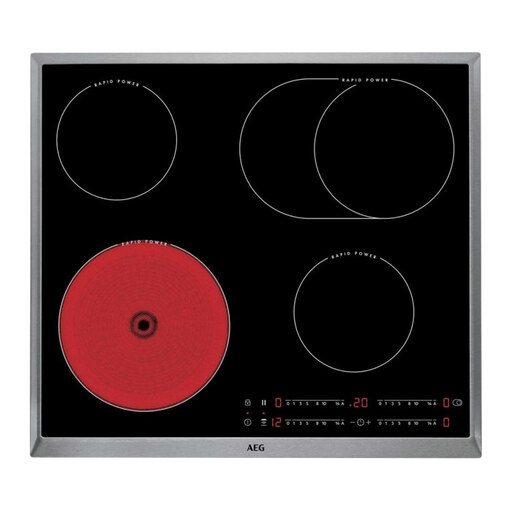 Image unavailable
HK654850XB Series 3000 ceramic hob, 60 cm
This four-zone hob, including one extendable zone, is suitable for preparing several dishes at the same time.
The product information lists 14 power levels, separate timers, a pause function and a residual heat indicator.
Consumption of 190.3 Wh/kg is stated; compare this only with figures measured using the same method. Check the 56 × 49 cm cut-out, ventilation and connection against the technical diagram.
Joybuy
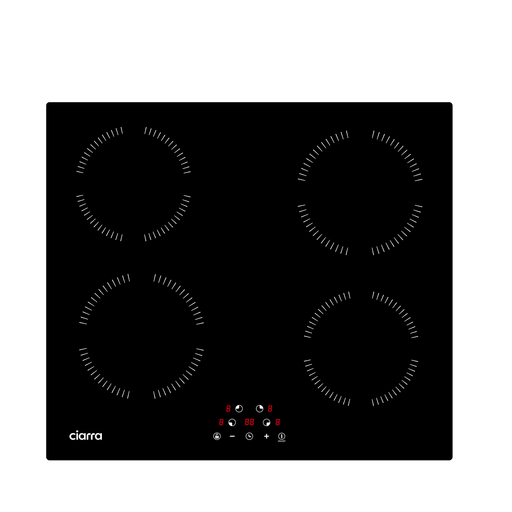 Image unavailable
CIARRA CABBIH4-A 4-zone induction hob
This built-in hob is designed for households that use several saucepans every day and have induction-compatible cookware.
It features four zones, nine power levels, an individual timer and recommended cookware diameters of 120 to 260 mm.
Check the 560 × 490 mm cut-out, 32 A rated fuse, circuit, conductors and ventilation against the model manual.
Joybuy
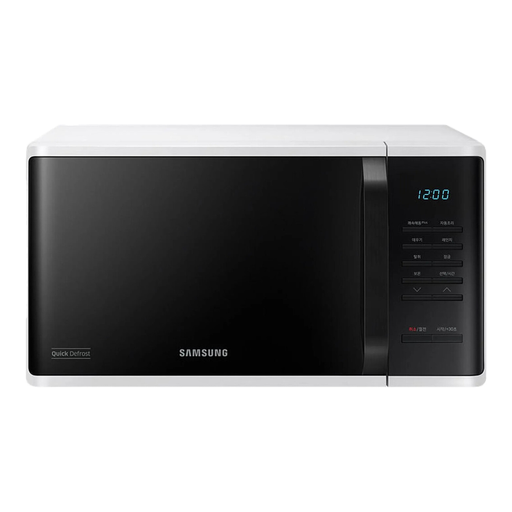 Image unavailable
Samsung MS23K3513 solo microwave, 23 L
This freestanding microwave can complement a large oven for reheating, defrosting or preparing small portions.
The product information lists a 23 L capacity, 800 W microwave power, 29 automatic programmes, a 28.8 cm turntable and a child lock.
It does not replace an oven’s functions, capacity or browning performance. Check the ventilation clearances in the manual before installing it on a worktop or in a niche.
Joybuy
 Image unavailable
TOPWISH 4-zone induction hob, 60 cm
This built-in induction hob may suit you if you prepare several dishes at once using ferromagnetic cookware.
It features four zones, including two measuring 180 mm, nine power levels, a Boost function, a timer, a child lock and a residual heat indicator.
The stated dimensions are 590 × 520 mm, with a 565 × 495 mm cut-out. Do not infer cooking costs from the maximum power of 7200 W; also check the circuit and ventilation in the manual.
Joybuy
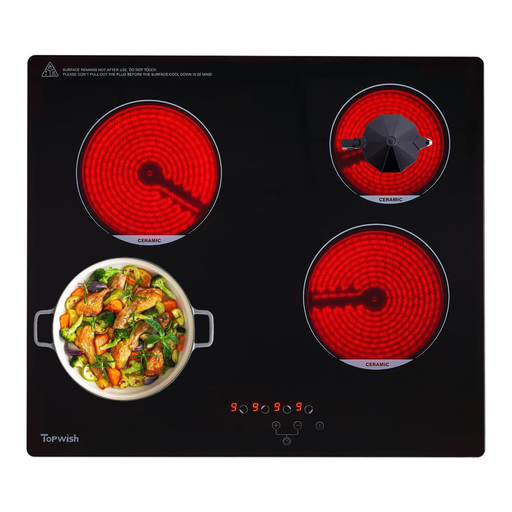 Image unavailable
TOPWISH 4-zone ceramic hob, 60 cm
This ceramic hob is an option for cooking with cookware made from different materials, including non-magnetic vessels.
The product information mentions four zones, a timer, a child lock, automatic switch-off, a residual heat indicator and dual-circuit zones.
The stated dimensions are 590 × 520 mm, with a 560 × 490 mm cut-out. Check the technical instructions, as the layout and power ratings of the zones should be confirmed for this reference.
Joybuy
Frequently asked questions
Does an induction hob always use less energy than a ceramic hob?
No. ADEME gives the following annual figures as a guide, based on 409 cycles: 200 kWh/year for an average ceramic hob and 115 kWh/year for the best new induction appliances. These categories do not represent two models tested using the same recipe, so compare the data for the specific models and your own usage before assuming you will make a saving.
Which figures should you look at on an oven’s energy label?
Compare the capacity in litres and energy consumption per cycle, separately for conventional heat and fan-assisted heat. The European Commission states that this information appears on the labels of applicable ovens. Choose a capacity that suits the dishes you usually prepare.
Will my saucepans work on an induction hob?
Look for the induction symbol or test the base with a magnet. Bosch and Electrolux state that cookware is suitable when a magnet sticks to its base. This check is particularly useful before replacing a ceramic hob.
Can a fixed hob be connected to a standard socket?
Do not assume so. Legrand’s installation guide specifies a dedicated circuit for a fixed hob, protected by a circuit breaker rated up to 32 A, with only one hob on the circuit and conductors of at least 6 mm². Before making any changes, have the existing installation and the manufacturer’s instructions checked by a suitably qualified professional.
Can a microwave replace an oven to reduce energy consumption?
It can complement an oven for reheating, defrosting or preparing small portions, but it cannot replace all an oven’s functions or capacity. ADEME’s guide figure of 40 kWh/year for a microwave is not a recipe-by-recipe comparison with an oven.


