
Livraison le jour même ou le lendemain

Qualité garantie

Débloquez vos offres de bienvenue: Livraison GRATUITE | Jusqu'à -80 % | 30 jours d'essai gratuits à JoyPlus
Téléchargez l'application
Whether it's for back-to-school, a creative workshop, or an art project, finding the ideal box of colored pencils can often feel like a puzzle. Between packaging that promises "unbreakable" leads and infinite color palettes, disappointment is never far behind. As a product expert for the editorial team, my mission is to help you decode the marketing jargon and focus on what really matters: quality and real-world use.
Before we detail the criteria for a good pencil, let's review the common mistakes that often lead to buyer's remorse.
To avoid falling into these traps, here are the technical points to inspect closely.
The lead is the soul of the pencil. Its quality defines the entire coloring experience. There are three main types:
Pigment richness is just as crucial. High-quality pigments ensure brilliant hues and strong coverage, without you having to press down hard on the paper.
Comfort is non-negotiable, whether for children developing their motor skills or for artists who draw for hours on end.
Not all pencils are suited for the same techniques.
To put theory into practice, here are a few products that perfectly illustrate these criteria, each tailored to a specific user profile.
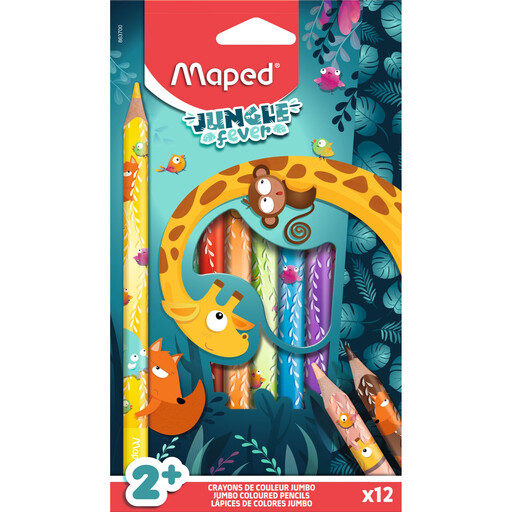
Why we chose it: Designed for little hands, these pencils combine an easy-to-hold jumbo size with a triangular barrel that guides finger placement. A major plus for safety: their wood-free resin body prevents any risk of splinters.
It sidesteps the pitfall of poor ergonomics. Here, the shape isn't an afterthought; it's the main feature, designed for learning and comfort for the little ones.
Jumbo triangular format and wood-free resin body for an easy and 100% safe grip.
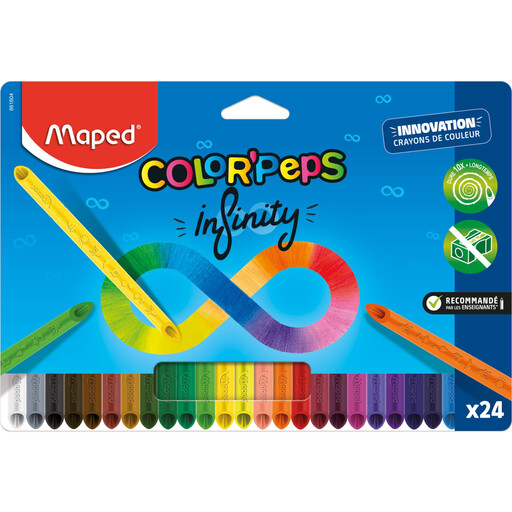
Why we chose it: A small revolution to slip into any pencil case. These pencils are 100% lead, with no wood at all. No more sharpening chores: they can be used to the very end and self-sharpen as you color. Maped claims they last 10 times longer than a standard pencil. A practical and economical selling point that hits the mark.
It kills two birds with one stone by sidestepping the pitfalls of fragile leads and the chore of sharpening. Its 100% lead design is a genuine technical feature, far from mere marketing promises.
No sharpening needed and a 10x longer lifespan thanks to its 100% usable lead.
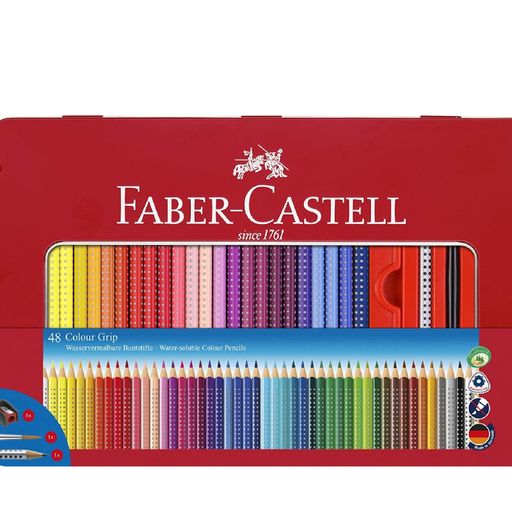
Why we chose it: The reliable choice for those wanting to take their art further. These watercolor pencils allow you to work dry or create paint-like effects. You get the Faber-Castell signature: intense pigments and an ultra-strong lead thanks to the patented SV bonding process. Comfort is also top-notch, with the triangular shape and the famous Grip zone.
It doesn't fall into the quantity trap. Its 48 colors are rich and versatile (watercolor-ready), offering a much broader creative scope than a giant palette of low-quality colors.
Versatility with its watercolor lead, comfort from the Grip zone, and durability thanks to SV bonding.
Explore our complete selection of colored pencils, all tested and approved by our editorial team based on our quality criteria and current safety standards.
Wax-based pencils are the most common. They are affordable and perfect for everyday coloring and for beginners. Oil-based pencils, which are often creamier, are the artists' secret. They allow for layering and creating perfect blends, without the "waxy" buildup that wax can sometimes leave.
For a child, a set of 12 or 24 colors is ideal. It's enough to have fun without being overwhelmed by choice, and it's perfect for learning basic color mixing. An amateur or experienced artist will appreciate a palette of 36 to 72 colors, which provides the richness needed for more detailed works. The golden rule remains the same: always prioritize pigment quality over the sheer number of pencils.
Yes, without a doubt, especially for children. This shape naturally guides the fingers into the "tripod grip," the most ergonomic position for drawing and writing without tension. The result: less fatigue, even after hours of coloring.