Busy households making coffee cup after cup
You want to keep preparation simple and make it easy to find portions that work with your machine.


For your daily espresso, first consider how much effort you’re happy to put into each cup and how much time you can set aside for maintenance. Capsules and coffee pods make it easy to prepare a drink straight away; a portafilter involves more hands-on steps, while a grinder automates grinding but still needs regular care. If you make milk-based drinks, check the milk system and how it needs cleaning separately. Then compare the ongoing cost of the compatible products you actually plan to use.
You want to keep preparation simple and make it easy to find portions that work with your machine.
You’d rather buy coffee beans than rely on a capsule format, and you’re happy to keep a machine with a grinder in good working order.
The milk system matters just as much as the coffee machine itself: cleaning it will be part of your everyday routine.
For your daily espresso, start by thinking about how much time you want to spend on each drink. Then check the maintenance requirements, compatible coffee and the drinks you’ll actually make.
Worth considering: if you prefer a ready-to-use portion and can easily find compatible capsules.
Bear in mind: your capsule choice depends on whether they’re compatible with the machine. You’ll also need to descale it and deal with used capsules.
Worth considering: if you want a ready-made portion without measuring out coffee or using a grinder.
Bear in mind: you’ll need to find pods in the right format for your machine and maintain it regularly.
Worth considering: if you want to control the coffee dose and preparation yourself.
Bear in mind: using the filter and portafilter involves a few hands-on steps, and both need cleaning after use.
Worth considering: if you regularly use coffee beans and want grinding and brewing to be automated.
Bear in mind: according to Que Choisir, these machines take up more space and make more noise than capsule systems. Their components also need regular maintenance.
| Factor | What to check | Who it matters to |
|---|---|---|
| Steps per cup | Compare how you prepare the coffee and empty the grounds or used portions. Don’t mistake automation for being maintenance-free. | If I make several coffees throughout the day, I want to keep repetitive tasks to a minimum. Around 31% of consumers put this convenience first. |
| Ongoing purchases | Compare the cost per drink using the compatible capsules, pods, beans or ground coffee you’d buy, as well as any maintenance products you’ll need. | To keep my machine stocked every day, I want to be able to buy the right coffee easily and budget for regular costs. This is a priority for around 31% of consumers. |
| Milk-based drinks | Check whether the machine has a steam wand, milk carafe or separate frother, then find out which parts and steps are involved in cleaning after use. | If I often make cappuccinos or lattes, I want a milk system that’s easy to fit into my routine. This is the top priority for around 23% of consumers. |
| Manual preparation | Look at the steps involved in dosing and cleaning the portafilter. For a grinder, check access to the containers, the space it takes up and the maintenance instructions. | I prefer to be hands-on when preparing my espresso and don’t mind cleaning the parts I use. Around 15% of consumers prioritise this level of manual control. |
If you make several coffees a day, compatible coffee and maintenance products become regular purchases. An old cost-per-cup figure won’t tell you what you’ll pay today.
Work out the cost of your drinks using products available from the shops you usually use, then check which maintenance consumables the models you’re considering need.
Remember to factor in any filters, parts that wear out and accessories needed for milk-based drinks.
Starting a drink at the touch of a button doesn’t mean you can skip emptying the containers or descaling the machine. Water hardness and how often you use it can affect how frequently it needs maintenance.
Check the manual for the model you’re considering to find out which parts need cleaning, what alerts to look out for and how to descale it.
Allow time for these tasks and budget for the maintenance products recommended for the machine.
A steam wand, milk carafe and separate frother each need different care after you make a drink. Some carafes have a cleaning cycle, but you’ll still need to check which parts require washing.
For the specific model, check what needs rinsing, taking apart or cleaning after use before making milk-based recipes a deciding factor.
Rinsing the wand or washing the carafe is an extra step on top of making your coffee.
ADEME distinguishes between capsules sent for recovery and those put in household waste, which then go through the waste disposal system.
Check your local council’s guidance and find out which route is accepted for the type of capsule you plan to buy.
These machines are mainly designed to make espresso from coffee beans; the Dedica Style is the portafilter option. To compare them, consider how hands-on you want the preparation to be and which milk system you’d prefer, then check the maintenance requirements for your chosen model.
 Image unavailable
Worth considering if you want to make coffee from beans and cappuccinos with a LatteGo milk system. Check the manual for the full maintenance requirements and what you need to do after making milk-based drinks.
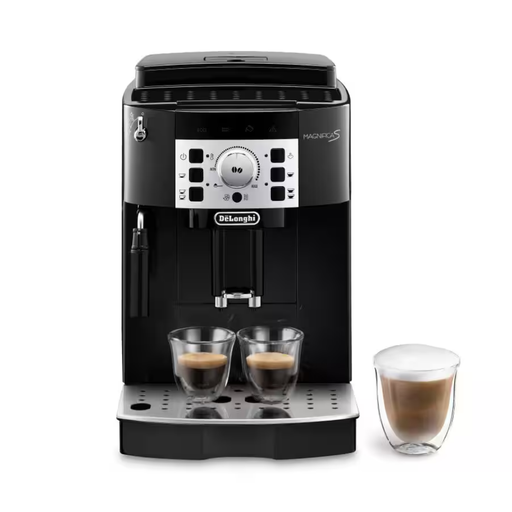 Image unavailable
Worth considering for coffee beans if you’re happy to prepare milk manually using a steam wand. Check how much worktop space you’ll need and follow the instructions for cleaning the wand.
 Image unavailable
This bean-to-cup machine could be a good fit if you’d also like to make milk-based drinks using a manual steam wand. Check the instructions for cleaning the wand and descaling the machine.
 Image unavailable
Worth a look if you want to choose recipes on a touchscreen: the product name lists six types of coffee. Before relying on it for everyday milk-based drinks, check how the milk system works, how to clean it and the machine’s dimensions.
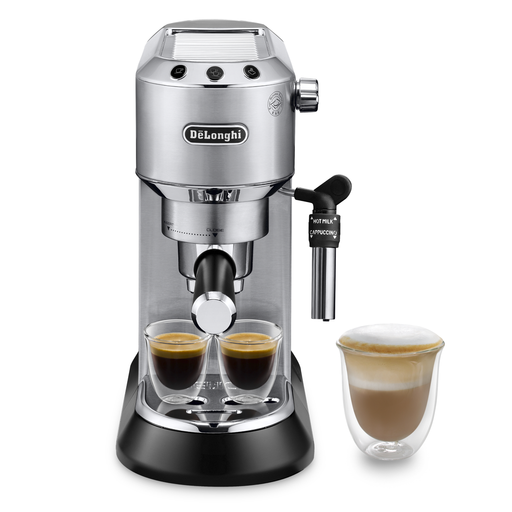 Image unavailable
Worth considering if you prefer to make espresso using a portafilter and don’t mind the cleaning involved afterwards. Check which coffee formats you’ll use, as well as how to clean the steam wand for milk-based drinks.
Yes. Include descaling in your machine’s maintenance routine and follow the model’s manual. For the relevant machines, Nespresso recommends using three months or around 300 capsules as a guide. De’Longhi explains that the frequency depends, in particular, on water hardness and how many coffees you make.
Not necessarily. An automatic grinder cuts down on some of the steps involved in making a cup, but its containers and components still need looking after. According to Que Choisir, you should also consider how much space it takes up and how noisy it is compared with a capsule system.
No. Even if a model has a cleaning cycle, check which parts need removing and washing. The carafe’s own instructions will also explain how to store it between uses.
Use the local disposal route accepted for your type of capsule. ADEME says that capsules put in household waste follow the route used for that waste. To use a recovery scheme, check your local council’s collection guidance.
Work out the cost of a drink using the coffee or compatible portions you’ll actually buy, then add the maintenance costs for each model. The per-cup figures published by Que Choisir in 2009 aren’t current prices for comparing capsules, pods and beans.