Busy households looking for simplicity
You want to make coffee with minimal effort and keep your worktop clear. A capsule or pod machine could be a good fit, as long as you check which format it accepts.


If you regularly make several coffees at home, choose a machine based on how much hands-on preparation you’re happy with. Capsules and pods keep handling to a minimum; a portafilter means preparing each shot yourself, while a bean-to-cup machine automates the process. Also check the format of the consumables, the space required and the cleaning routine. Serving two cups and making milk-based drinks depend on the model.
You want to make coffee with minimal effort and keep your worktop clear. A capsule or pod machine could be a good fit, as long as you check which format it accepts.
You often make several cups and prefer to use ground coffee or beans. According to Que Choisir, choosing between a portafilter and a grinder also affects how you prepare your coffee and the cleaning involved.
You want to control how much coffee you use and how firmly you tamp it. A portafilter gives you that control, but you’ll need to empty it after use, as Que Choisir points out.
If your household regularly makes several coffees, start with the part of the process that matters most to you, then check the practical requirements of the machine you’re considering. Que Choisir distinguishes between capsule machines, soft-pod machines, portafilter machines and bean-to-cup machines. Each makes coffee differently, so they aren’t interchangeable.
| Criterion | What to check | Best for |
|---|---|---|
| Speed and fewer steps | How much space the machine takes up and how many steps are needed to make and clean a cup. | If coffees are being made one after another in the morning, I want to keep handling to a minimum without cluttering the kitchen; around 25% of consumers put simplicity first. |
| Coffee choice and consumables | Whether the machine takes beans, ground coffee or a specific capsule or pod format. | For regular coffee making, I want to choose the coffee I use without making assumptions about compatible formats; around 25% of consumers put this freedom of choice first. |
| Hands-on control | The steps involved in measuring, tamping and emptying the portafilter after each use. | I prefer to be involved in making every shot, even if it means a few more steps; around 25% of consumers value this hands-on approach. |
| Making several drinks and cleaning | How many cups you can make, which drinks are available and how easy it is to reach the parts that need cleaning. | When several people want different coffees, I want to be able to serve them all while keeping the cleaning routine manageable; around 25% of consumers put this need first. |
Two capsules that look alike aren’t necessarily compatible. Nespresso, for example, has separate Original and Vertuo systems.
Check the exact system listed for the machine, then make sure it accepts the consumables you plan to use.
The trays, brewing unit and, where applicable, parts of the milk system all need cleaning according to the model’s instructions. Que Choisir also highlights the importance of following the machine’s descaling prompts.
Read the manual before choosing: check which parts you can access, the rinsing steps and the instructions for the milk system.
Que Choisir notes that a grinder can take up more space and make more noise than a capsule system. This can be particularly important in a small kitchen or when making coffee in the morning.
Measure the space needed to open the trays and fill the reservoirs. For noise levels, look for an assessment of the exact model you’re considering.
You’ll need to prepare the portafilter by hand and empty it after use. These steps are repeated whenever several people want a coffee.
Choose this option if you want to be involved in making every coffee. Otherwise, compare the steps involved with pod machines and grinders.
Capsule machines across a range of systems, including Original and Vertuo.
A range of machines that use soft coffee pods.
The brand offers manual portafilter machines as well as automatic bean-to-cup machines.
A range of bean-to-cup machines with different features across the models.
These Joybuy models illustrate three of the options covered here: a grinder for using beans, soft pods for fewer steps and capsules for making a single coffee. Compare each model based on the drinks you want to make, the consumables you prefer and the cleaning routine that suits you.
 Image unavailable
Worth considering if you regularly make coffee from beans and would also like to explore an option for milk-based drinks.
Automatic espresso machine with grinder and LatteGo system. Check that the system’s cleaning routine suits your needs.
 Image unavailable
Worth a look if you make several different coffee drinks at home and want to use beans.
The product name mentions a milk system, a touchscreen and six types of coffee. Check the drinks available and cleaning instructions in the manual for the H16 model.
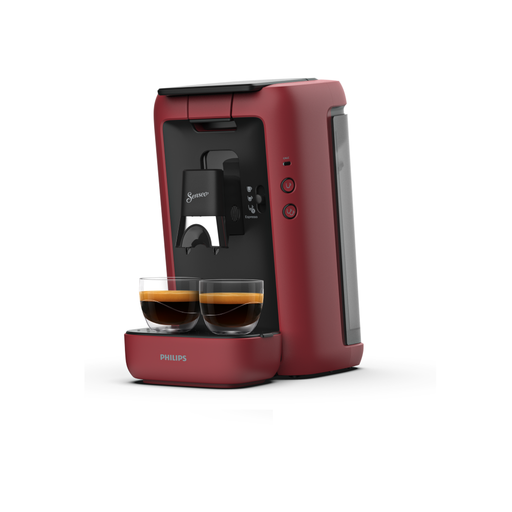 Image unavailable
This model is for households that want to make coffee with pods rather than handle ground coffee.
Check which pod format the CSA260/91 takes before choosing your consumables.
 Image unavailable
Worth considering if you regularly make espresso from beans and are happy with the cleaning involved in using an automatic machine.
Automatic espresso machine with grinder. Measure the available space before setting it up.
 Image unavailable
Worth a look if you want to make individual coffees with capsules and are considering using different types of consumables.
The product name states that it can be used with several types of pod as well as ground coffee. Check which exact formats the H1C accepts and whether any accessories are needed.
No, compatibility depends on the system and model. Que Choisir points out that many capsule brands use their own format; Nespresso, for example, has separate Original and Vertuo systems. Check the machine and consumable details before you buy.
Clean the trays and descale the machine when prompted, then follow the manual’s instructions for the brewing unit and, if included, the milk system. The frequency and accessible parts vary by model, so check what’s involved before choosing one.
According to ADEME, aluminium and plastic capsules can go in the recycling collection for paper and packaging. For capsules made from other materials, check the sorting guidance for the capsule and your local recycling scheme.
Yes. In France, the statutory guarantee of conformity also applies to refurbished goods sold by a trader to a consumer, as the Ministry of the Economy explains. Keep your proof of purchase and the machine’s description in case you need to report a fault or a difference from what was advertised.