
Livraison le jour même ou le lendemain

Qualité garantie

Débloquez vos offres de bienvenue: Livraison GRATUITE | Jusqu'à -80 % | 30 jours d'essai gratuits à JoyPlus
Téléchargez l'application
By the Joybuy Editorial Team, July 09, 2026
Choosing your child's first set of crayons? You might think it's child's play. However, as parents and early childhood professionals know, navigating the options—from safety and ergonomics to ease of cleaning—can quickly become a real puzzle. This guide is here to help you see things more clearly, breaking down the essential points to check and presenting our selection of the best products to accompany their first masterpieces.
Before diving into our selection, here are a few practical tips to help you make an informed choice that is perfectly in tune with the needs of toddlers.
At an age where everything ends up in their mouth, the composition of the crayons is paramount. Always opt for non-toxic crayons for children. Products that comply with European regulations guarantee completely risk-free use. The body of the crayon must also be sturdy enough not to break into small pieces that could be ingested.
Young children's hands have not yet developed the fine motor skills required to hold a standard pencil. Chunky crayons for babies, with their thick, short shape, are specifically designed for a palmar grasp (using the whole palm). This design ensures a comfortable drawing experience and encourages the development of hand-eye coordination, for a frustration-free experience.
A child's creative bursts aren't always confined to a sheet of paper. Opting for washable wax crayons will save you a lot of stress. A washable formula allows you to easily clean marks from skin, most fabrics, and smooth surfaces with a simple damp cloth. Unbreakable crayons, or at least very durable ones, will better withstand drops and the sometimes very energetic pressure from little artists, thus ensuring a longer lifespan.
We have carefully reviewed the features of dozens of products to select only the options that excel in safety, ergonomics, and practicality.
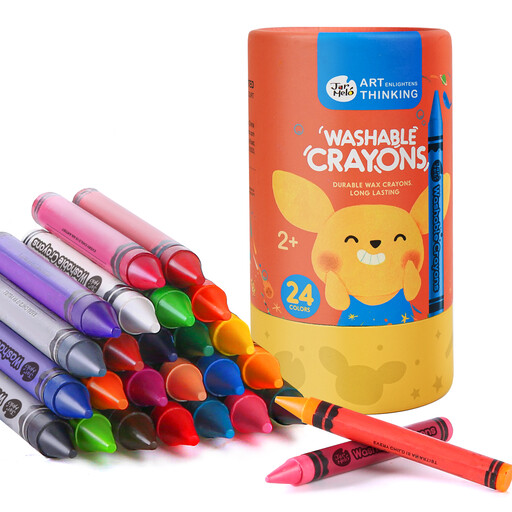
Why we love it: This children's crayon set combines a wide palette of 24 vibrant colours with a formula designed for parents' peace of mind. Their "jumbo" size is ideal for little hands, and their main advantage is that they are fully washable, which radically simplifies cleanup after each creative session.
Key features:
Who is it for? Ideal for parents looking for a first set of crayons that is safe, colourful, and above all, stress-free thanks to its washable formula. An excellent choice for both home and nursery use.
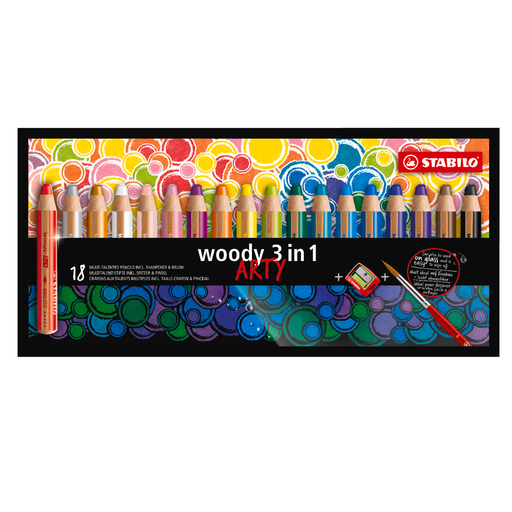
Why we love it: The STABILO Woody 3-in-1 is much more than just a crayon: it serves as a wax crayon, coloured pencil, and watercolour all in one. Its XXL 10?mm lead is virtually indestructible, and its pigmentation is exceptionally intense. Made from PEFC-certified wood, it can be used on a multitude of surfaces (paper, cardboard, glass, metal) and wipes off smooth surfaces with a cloth.
Key features:
Who is it for? Perfect for creative families looking for a versatile tool that grows with their child. Its robustness and ability to draw on different materials make it a durable choice that will accompany a child for several years.
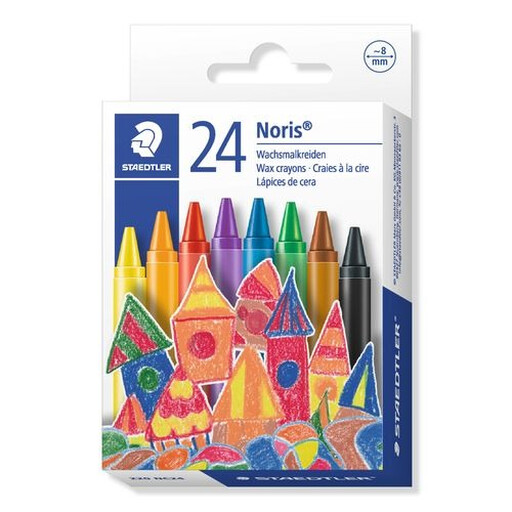
Why we love it: The STAEDTLER Noris 220 crayons are a reliable and effective classic. Their wax-based formula ensures a smooth application and vibrant colours. Wrapped in paper to keep hands clean, these crayons are designed to be particularly break-resistant—a major advantage with overly energetic young artists.
Key features:
Who is it for? This set is suitable for parents and childcare facilities (schools, childminders) who need a reliable and budget-friendly children's crayon set for daily use. A smart choice for drawing and colouring on paper.
If our selection hasn't completely won you over, or if you're simply curious to discover other hidden gems, many other models are available. Every child is unique, and their needs may vary.
? Explore our full collection of wax crayons to find the perfect set.
1. At what age can a baby start using crayons? Generally, a child can start handling chunky crayons for babies around 12 to 18 months, always under adult supervision. At this age, the goal is not yet figurative drawing, but rather exploring movement, colour, and the cause-and-effect relationship (the crayon leaves a mark). The choice of non-toxic, large-sized crayons is therefore crucial for their safety.
2. How do you clean wax crayon stains from clothes or walls? For washable wax crayons, a damp cloth or a sponge with a little soap is usually enough for smooth surfaces (washable painted walls, tables, glass). For clothes, pre-treating by hand with Marseille soap or a stain remover before machine washing is often very effective. Always remember to read the manufacturer's instructions for specific advice.
3. What is the difference between wax crayons and classic coloured pencils for a young child? Wax crayons, especially "jumbo" models, are distinguished by their thicker, more robust format, making them easier to grip and less likely to break. Their soft tip does not require strong pressure to lay down a bright colour, which is ideal for toddlers. Classic coloured pencils, with their fine lead and wooden body, are better suited for older children (from 3-4 years) who are beginning to refine their fine motor skills and pencil grip.