
Livraison le jour même ou le lendemain

Qualité garantie

Débloquez vos offres de bienvenue: Livraison GRATUITE | Jusqu'à -80 % | 30 jours d'essai gratuits à JoyPlus
Téléchargez l'application
Finding the ideal chicken-based p?té or kibble for your cat can often be a real puzzle. Between the enticing packaging and endless ingredient lists, it's easy to get lost. To help you see things more clearly, we'll break down the common pitfalls and essential criteria for making an informed choice that's perfectly suited to your companion's needs.
The marketing is often more polished than the recipe. Here are three classic mistakes that can cost you dearly and, more importantly, may not be right for your pet.
To avoid these traps, simply focus on a few objective indicators. They will give you a clear picture of the product's true quality.
The cat is an obligate carnivore: its diet must consist mainly of animal proteins. Here's how to evaluate them at a glance:
The choice between chicken kibble for cats and chicken p?té for cats depends on both your cat's preferences and your own lifestyle.
Mixed feeding, which combines both, is often the ideal compromise to blend hydration, enjoyment, and practicality.
A cat's nutritional needs evolve throughout its life. A chicken food for sterilised cats should have a reduced fat content and an adjusted mineral balance to prevent weight gain and urinary issues, which are common after the procedure. A kitten, on the other hand, will need a formula much richer in calories, proteins, and key nutrients like DHA to support its growth.
To put theory into practice, here are a few products that tick all the boxes, each meeting a specific need.
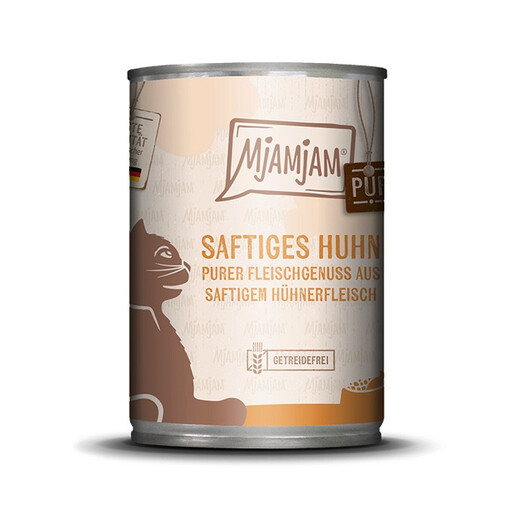
Why we recommend it: This p?té from the MjAMjAM cat range is the perfect answer for those seeking a diet close to a cat's natural one, with an ingredient list that's as short as it is clear. Ideal for owners who want to know exactly what's in the bowl.
It avoids the trap of vague formulas with a clearly stated 71% chicken content (meat, heart, liver, gizzard) and a single-protein recipe, free from grains or added sugars.
Very high meat content, a single-protein recipe perfect for identifying food sensitivities, and a formula with no synthetic additives.
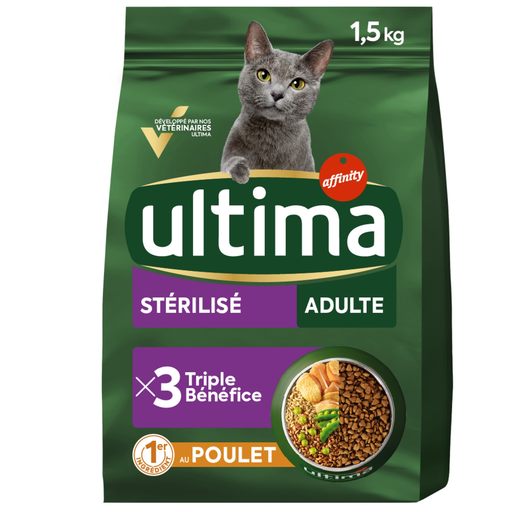
Why we recommend it: Specially formulated for sterilised cats, this kibble tackles two issues: weight control and urinary health, the two main concerns after the procedure. A targeted and effective solution.
Unlike generic formulas, this one specifically addresses post-sterilisation needs with a controlled fat content (12%) and balanced minerals to maintain an optimal urinary pH.
Specific formula for weight management and urinary health; chicken as the first ingredient (17%) ensures a quality protein supply.
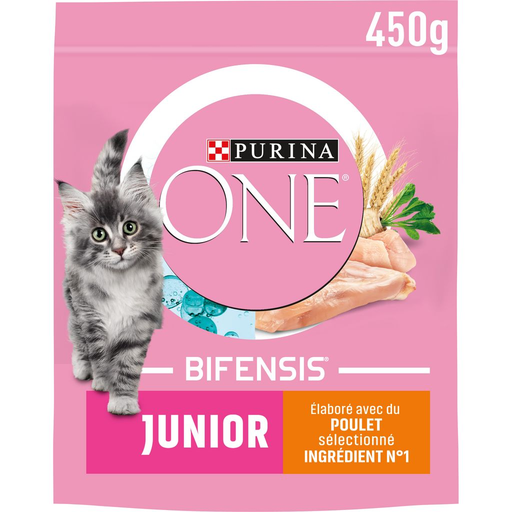
Why we recommend it: A kitten has intense nutritional needs. This formula from the Purina One cat range is designed to support its rapid development—from brain to vision to the immune system—during its crucial first year.
It goes beyond a simple 'for kittens' label. The recipe includes key nutrients like DHA, which is essential for brain and visual development—a detail often overlooked in entry-level products.
Rich in chicken (17%) and fortified with DHA. Contains functional bacteria (Lactobacillus) which, according to the manufacturer, help strengthen natural defences.
Explore our complete, up-to-date selection of products that meet our selection criteria and current regulations.
There's no one-size-fits-all answer. Wet food is unbeatable for hydration and often wins over the pickiest eaters. Kibble, on the other hand, is convenient and helps maintain good dental health. The ideal solution is often mixed feeding: kibble available throughout the day, and a portion of wet food in the morning or evening to add variety and ensure excellent water intake.
To avoid any digestive upset, the transition must be gradual. Over 7 to 10 days, mix the new food with the old, gradually increasing the proportion of the new food. Start with a 25% new to 75% old ratio, move to 50/50, then 75/25, before reaching 100% of the new diet. Be sure to monitor your cat's stool and general behaviour during this phase.
A single-protein diet contains only one source of animal protein (in this case, chicken). This is a very interesting option for cats prone to food sensitivities or allergies. If you suspect your cat has an intolerance to a certain meat, switching to a single-protein formula allows you to identify the allergen through a process of elimination. It's also a guarantee of simplicity and transparency in the ingredient list.