
Livraison le jour même ou le lendemain

Qualité garantie

Débloquez vos offres de bienvenue: Livraison GRATUITE | Jusqu'à -80 % | 30 jours d'essai gratuits à JoyPlus
Téléchargez l'application
Between laptops, smartphones, tablets, and smartwatches, our desks and nightstands are quickly overrun by a constant tangle of cables. Finding the right plug or charger becomes a daily chore. A centralised charging station is the perfect solution to simplify device management, free up space, and ensure everything is always ready for action.
This guide is designed to walk you through the various options on the market, breaking down the essential criteria to help you make the right choice, whether it's for your home, office, or travels.
The market is flooded with models featuring sometimes complex spec sheets. To help you navigate them, here are the essential criteria to scrutinize.
Power, measured in watts (W), is the most critical factor: it dictates charging speed. For a laptop, aim for a USB-C fast charger of at least 65W. For a smartphone, 20 to 30W is more than enough for a quick charge.
Also, consider GaN (Gallium Nitride) technology. Now a must-have, it enables the creation of chargers that are more compact, more energy-efficient, and run much cooler than older silicon models—all while delivering the same or even greater power.
How many devices do you need to plug in at the same time? The answer will determine the number of ports you need. A multi-port charger is often the most straightforward solution. However, pay close attention to the port selection:
The most comprehensive models combine these ports with standard AC outlets or a wireless charging pad for ultimate versatility.
The ideal format will obviously depend on your use case:
Enough theory, let's get practical! Here is our selection of models that caught our eye, each designed for very different uses.
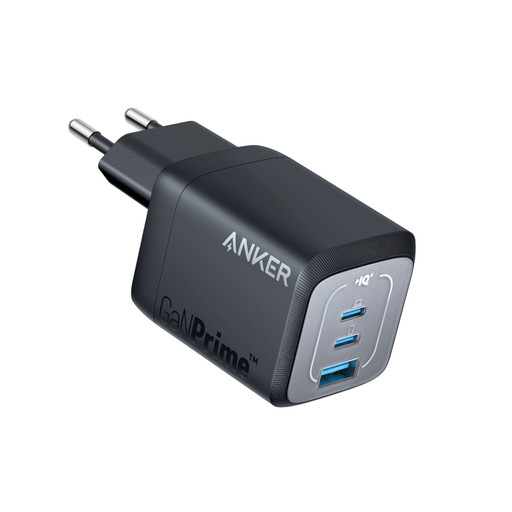
Why it stands out: This charger is a powerhouse of performance and compactness. Thanks to GaN technology, it packs 67W into a foldable design that's 51% smaller than the equivalent Apple charger. It's powerful enough to charge a laptop, a smartphone, and a tablet simultaneously, without the bulk.
Key features:
Who is it for? For business travellers, students, and any digital nomad who needs a powerful yet discreet charging solution for their laptop and other gadgets.
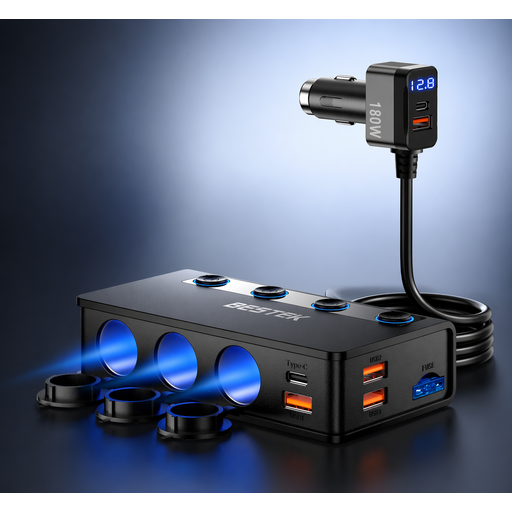
Why it stands out: This car charger transforms your vehicle's 12V/24V socket into a true mobile power station. With a colossal 180W of power, it can run up to nine devices simultaneously, from a simple smartphone to an electric cooler for picnics.
Key features:
Who is it for? Ideal for families on long holiday road trips, road professionals (ride-share drivers, delivery workers), or anyone who needs to turn their car, SUV, or truck into a mobile office.
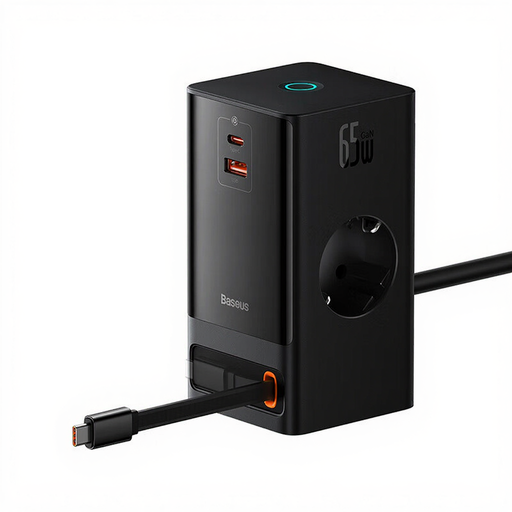
Why it stands out: This USB power strip is the dream all-in-one solution to end desk clutter. It merges AC outlets, USB ports, and even a retractable USB-C cable into a compact and stylish housing, all powered by GaN technology.
Key features:
Who is it for? For remote workers, creatives, and anyone who wants a stationary charging station that is powerful, elegant, and practical for an immaculate workspace.
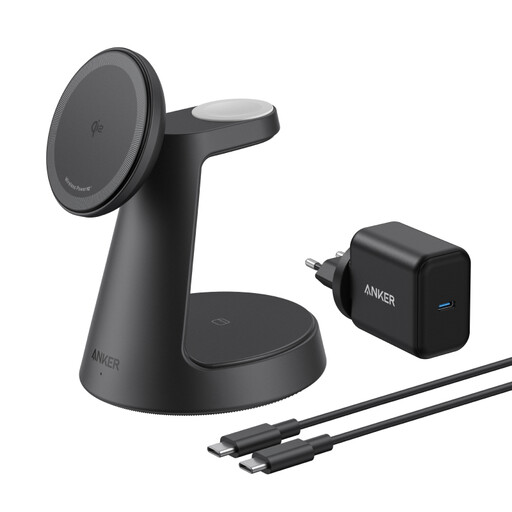
Why it stands out: Designed for Apple enthusiasts, this wireless charging station is a true 3-in-1 charger that simultaneously refuels an iPhone, Apple Watch, and AirPods. Its sleek, vertical design makes it as much a decorative object as a practical tool for a nightstand or desk.
Key features:
Who is it for? Exclusively for fans of the Apple ecosystem (owning an iPhone 12 or newer, an Apple Watch, and wireless-charging-compatible AirPods) who are looking for an elegant and seamlessly integrated solution.
Our selection only covers a fraction of the possibilities. The charger market is vast and full of hidden gems. If you're looking for a simple, ultra-compact wall charger or a very specific setup, don't hesitate to explore further.
To learn more, take a look at our USB-C Adapter category.
1. What wattage should I choose for my charging station? It all depends on your devices. For a smartphone alone, 20W is sufficient. If a laptop is part of the equation, you'll need a USB-C port that delivers at least 65W. To power multiple power-hungry devices at once (PC, tablet, etc.), a 100W or higher station is not an extravagance.
2. Is GaN technology really better? Yes, a resounding yes! GaN (Gallium Nitride) technology allows for the manufacturing of chargers that are much more compact, lightweight, and efficient than older silicon-based models. They run cooler, which enhances safety and helps preserve the lifespan of your batteries.
3. Can any USB-C port charge my laptop? Absolutely not. This is a classic pitfall! To charge a laptop, the USB-C port must support the Power Delivery (PD) standard and provide sufficient wattage (typically a bare minimum of 45W, with 65W or more being the norm for most models). Always check the port's power output (indicated in watts) and compare it to the power required by your computer (often written on its original charger).