
Livraison le jour même ou le lendemain

Qualité garantie

Débloquez vos offres de bienvenue: Livraison GRATUITE | Jusqu'à -80 % | 30 jours d'essai gratuits à JoyPlus
Téléchargez l'application
Does your sofa look like a battlefield and are your armchairs crying for mercy? It's time to give your cat an outlet worthy of its energy. A cat tree isn't just a gadget; it's their personal kingdom: a place to climb, scratch, survey their territory, and lounge in complete peace.
But with an overwhelming number of options, how do you find the perfect one? Our editorial team has scrutinised dozens of models to guide you. Follow our guide to find the ideal cat tree—one that will delight your four-legged companion while blending seamlessly into your home's decor.
Before you dive in, let's review the key points that will make all the difference.
This is the most important factor, especially if you have a large cat (like a Maine Coon) or a household of boisterous felines. A wobbly tree will never inspire your pet's confidence and can even be dangerous. Here are the elements to scrutinise:
The materials determine not only the tree's lifespan but also the comfort and interest your cat will take in it.
Is your cat more of an explorer, a heavy sleeper, or an avid hunter? A good cat tree should cater to its temperament.
Finally, don't forget aesthetics. A designer cat tree in neutral tones (beige, grey, cream) will blend more harmoniously into your living room.
After our analysis, here are three models that caught our eye, each meeting a specific need.
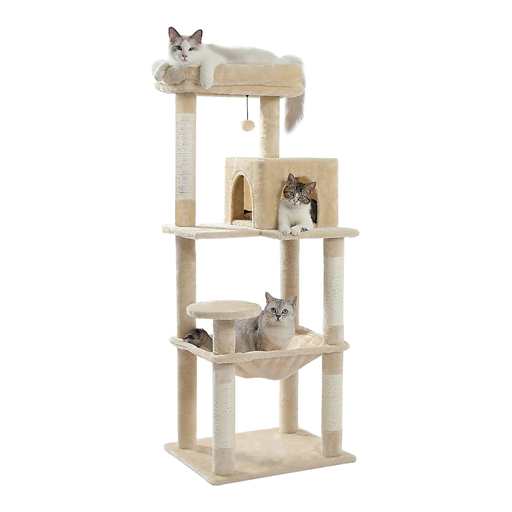
Why it stands out
This mid-sized model is the perfect all-rounder. It offers maximum functionality with a manageable footprint. Its six levels make it a true amusement park for cats, combining play, rest, and observation with well-designed stability.
Pros
Who is it for? Perfect for households with one or two medium-sized cats. It's an all-in-one activity centre that fits easily into a living space without overwhelming it.
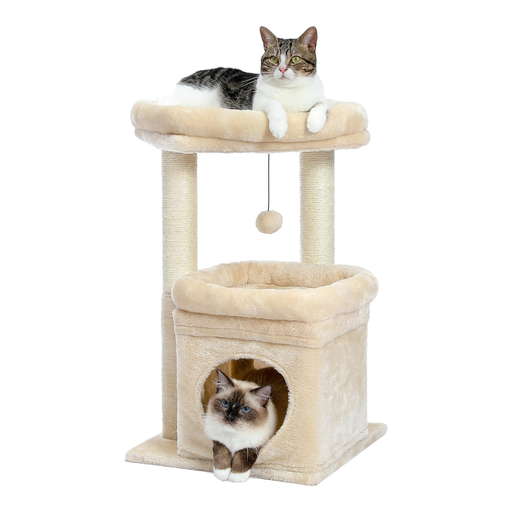
Why it stands out
The ultimate space-saving solution. Ideal for studios or small apartments, this tree packs the essentials (scratching, sleeping, observing) into a stable, vertical structure without sacrificing comfort.
Pros
Who is it for? The ideal choice for a first-time cat owner, a kitten, or a small to medium-sized cat living in an apartment. It also makes an excellent secondary tree for a bedroom or office.
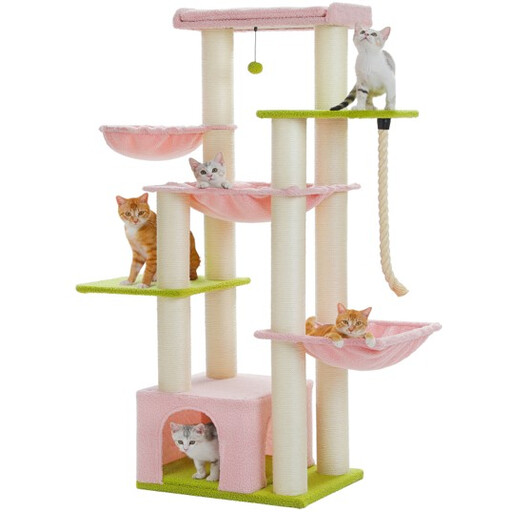
Why it stands out
More than just a cat tree, this is a veritable palace for felines. At 170 cm tall, it was designed for large cats and households with multiple cats. Its design prioritises sturdiness and stability, featuring oversized posts and a multitude of platforms.
Pros
Who is it for? Essential for owners of large breeds (Maine Coon, Norwegian Forest Cat, Ragdoll) or for large families of three or more cats. It requires space, but it pays you back tenfold by offering an unparalleled playground and resting spot.
If none of these trees have won you over, or if you simply want to offer an extra cosy spot for your companion, a dedicated bed can be an excellent solution.
Discover our selection of beige cat beds to find the perfect cocoon.
Location is strategic. Ideally, place the tree in a living area (like the living room) where you spend your time. Your cat is a social animal! The perfect spot? Near a window, so they can watch the world go by. Just make sure the floor is level and the tree doesn't obstruct any walkways.
While some cats take to it in minutes, others are more wary. To entice them, try rubbing a little catnip on the posts. You can also hide their favourite treats or place their toys on the platforms to encourage exploration. Most importantly, play with them near it: they need to associate their new tree with a positive bonding experience with you.
It all depends on its quality and how enthusiastically your cat uses it! The main sign of wear and tear is on the sisal posts: if they're shredded and the rope is hanging off, it's time to take action. On some models, the posts can be replaced. Otherwise, you'll need a new tree. The absolute red flag? A structure that becomes wobbly. Your pet's safety comes first. A good, well-maintained cat tree can easily last for several years.