
Livraison le jour même ou le lendemain

Qualité garantie

Débloquez vos offres de bienvenue: Livraison GRATUITE | Jusqu'à -80 % | 30 jours d'essai gratuits à JoyPlus
Téléchargez l'application
That dreaded silence when you turn the key, followed by a single "click"... It's every driver's nightmare. A flat battery always happens at the worst possible moment, turning any trip into a major headache. Fortunately, there's a simple and effective solution: the battery booster. This compact device, also known as a portable car jump starter, has become the essential accessory to get you back on the road in minutes, without needing to rely on another vehicle.
But with an overwhelming number of options on the market, how do you find the right one? This guide is here to help you see things more clearly by breaking down the essential criteria and presenting our selection of the best models to help you make the right choice in 2026.
Before diving into our selection, it's crucial to understand a few technical concepts. Here are the key points to check to find the perfect booster for your vehicle and your needs.
This is the most critical factor. A booster's power is expressed in amps (A). The peak amperage (or peak amps) is the maximum burst of current the device can deliver to force the engine to start.
Always remember to check the booster's compatibility with your engine's displacement (in litres), information that is clearly stated by manufacturers.
Most current boosters use lithium-ion batteries, known for their compact form factor and good energy density. However, new technologies like sodium-ion are beginning to emerge. Their advantages? Enhanced safety and durability, including much better tolerance to extreme temperatures and no risk of thermal runaway.
A good smart jump starter must include a full suite of protections: against short circuits, reverse polarity, overcharging, or overheating. These safeguards are essential to protect not only the user but also your car's sensitive electronics.
A modern battery booster is a true Swiss Army knife. Most models also function as a power bank, often with fast charging, to bring your smartphones and laptops back to life via their USB-C or USB-A ports. Some go even further, integrating an air compressor to reinflate a flat tyre, or a powerful LED torch with different modes (light, strobe, SOS)—a valuable feature during a night-time breakdown.
Here is our selection of standout models, designed to meet the needs of different users, from the casual driver to the demanding professional.
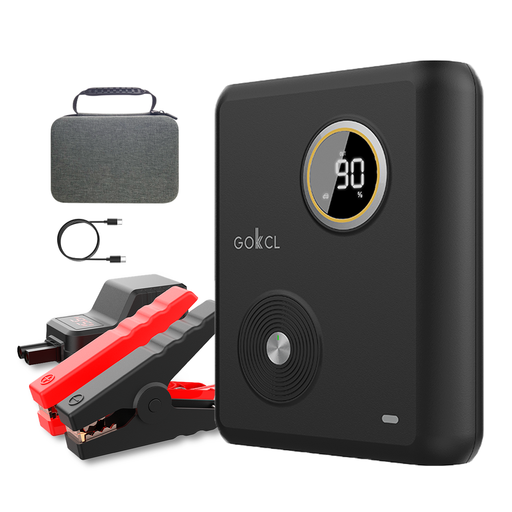
Why it stands out: It's a pioneer in sodium-ion technology, giving it outstanding safety and durability. It is designed to withstand the most extreme conditions and offer complete peace of mind.
Advantages:
Who is it for? For drivers in extreme climates (very cold or very hot) and for anyone who wants a reliable device they can leave in their car without a second thought.
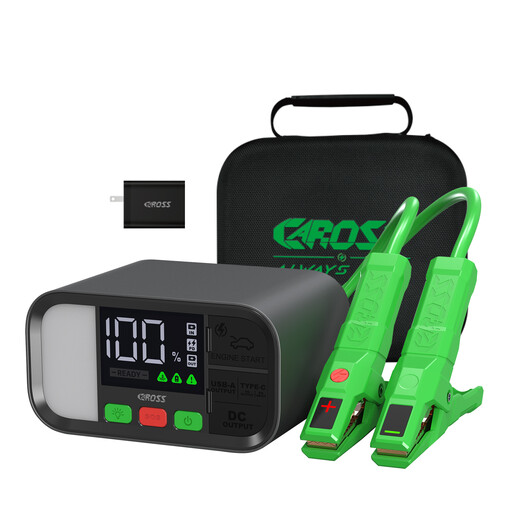
Why it stands out: It's the champion of simplicity. Thanks to its Smart Connect technology and non-polarised clamps, it's impossible to connect it incorrectly—safety first.
Advantages:
Who is it for? For the user seeking absolute peace of mind and who is worried about making a mistake when connecting the clamps.
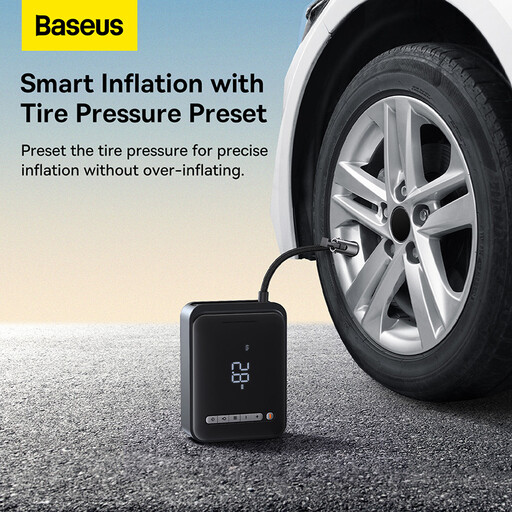
Why it stands out: A clever 2-in-1 device that combines a jump starter and an air compressor in a surprisingly compact form factor.
Advantages:
Who is it for? For drivers of city cars, compacts, and motorcyclists who want a single, versatile tool to handle both dead batteries and flat tyres.
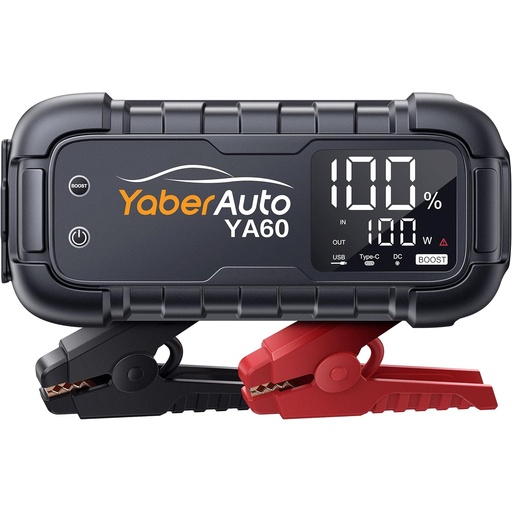
Why it stands out: Raw power. With 8000 A peak current, this is the powerhouse of our selection, capable of starting the largest vehicles, from heavy-duty vans to powerful diesel engines.
Advantages:
Who is it for? For professionals, owners of trucks, RVs, large 4x4s, or any vehicle with a stubborn diesel engine that requires uncompromising starting power.
Our selection highlights a few gems, but the market is full of other models. To explore other power levels, technologies, or budgets, feel free to browse our complete category.
Explore our range of AC-powered portable car jump starters
It depends on its battery technology and your usage. Lifespan is measured in charge/discharge cycles. A lithium model will last for several hundred cycles, while a sodium-ion model like the GOKKCL GK03 promises over 6,000 cycles. To preserve its longevity, remember to recharge it every 3 to 6 months, even if you don't use it.
Yes, most are designed for this. However, it is crucial to respect the storage temperature range indicated by the manufacturer. In this regard, sodium-ion models have a clear advantage, as they tolerate much more extreme conditions (from -40°C to 80°C) than their lithium counterparts.