
Livraison le jour même ou le lendemain

Qualité garantie

Débloquez vos offres de bienvenue: Livraison GRATUITE | Jusqu'à -80 % | 30 jours d'essai gratuits à JoyPlus
Téléchargez l'application
By Joybuy, your product expert – Published August 27, 2026
Check engine light on?? It's that sinking feeling, followed by the fear of a hefty garage bill. To take back control, a growing number of car owners are equipping themselves with a multi-brand car diagnostic tool to identify the source of the problem themselves. But be warned: the market is flooded with models making tempting promises that too often lead to costly disappointments.
To avoid falling into the trap and make a truly worthwhile purchase, here are the pitfalls to avoid.
To make the right choice, here are the technical points to examine closely. They determine the true effectiveness and lifespan of your car diagnostic tool.
A simple fault code reader only displays and clears engine-related errors. A good tool must offer "all-system" diagnostics, meaning it can communicate with all of the vehicle's control units.
Also, remember to check the list of service functions (or "resets"). They are crucial for performing routine maintenance yourself and generating real savings on labour costs. The most important ones include:
The best models go as far as offering bi-directional control, allowing you to send commands to components (like activating a fan or a fuel pump) to test their operation without disassembly.
This is the most important point, and it's non-negotiable. A diagnostic tool is only useful if it's regularly updated to cover new vehicles and new faults. Always prioritise models that offer lifetime updates with no subscription. This guarantees a one-time, future-proof investment. You'll benefit from the latest features and expanded compatibility without ever worrying about hidden fees.
The choice will depend on your use case and technical comfort level:
To help you see things more clearly, we have identified options that cater to distinct user profiles, ensuring they avoid the pitfalls mentioned above.
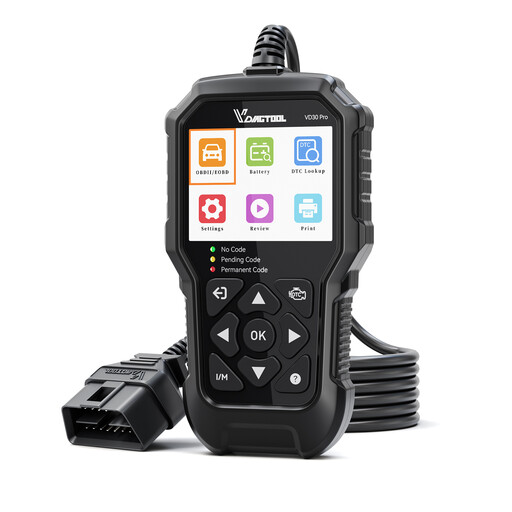
Why we chose it: Perfect for getting started with car diagnostics. It lets you read and clear engine fault codes, check if the vehicle will pass its emissions test (I/M Readiness), and view live data. Its key strength? Simplicity. Just plug it in and it works, with no smartphone or app to install.
This device is 100% standalone: no subscriptions, no paid updates. It focuses on essential OBD2 functions, avoiding the complexity and hidden costs of more advanced tools.
"Plug & Play" Simplicity: No setup required. It's powered by the vehicle's port and ready to use in seconds, making it ideal for newcomers.
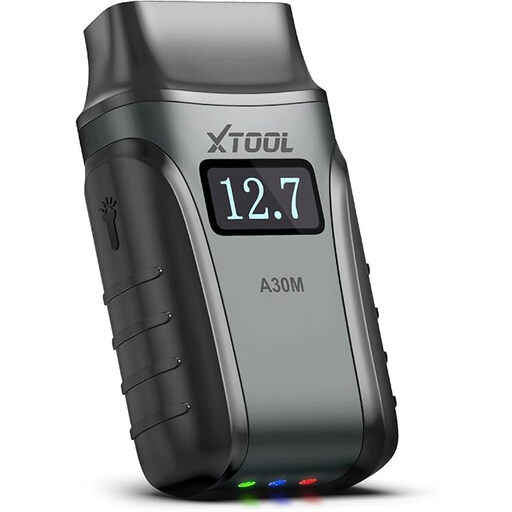
Why we chose it: For those who want to go beyond simple code reading. This Bluetooth adapter transforms a smartphone into a powerful tool capable of performing all-system diagnostics, accessing over 26 service functions, and even running active tests (bi-directional control).
Its business model is crystal clear: free lifetime software updates. A single purchase gives you access to an arsenal of pro-level functions, with no recurring fees. It's also CAN FD and FCA compatible, ensuring its relevance for years to come.
Bi-directional control: The ability to directly command vehicle components for testing is a feature normally reserved for much more expensive scan tools. It's a major asset for pinpointing a fault with precision.
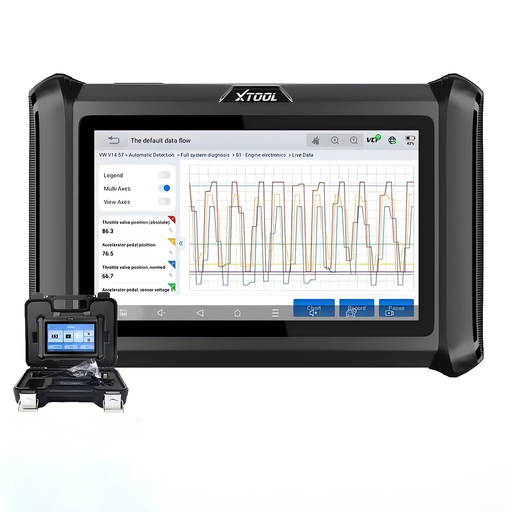
Why we chose it: Here, we're moving into the next league with a professional-grade diagnostic tablet. It not only offers full all-system diagnostics and bi-directional control but also expert functions like ECU coding for certain vehicles, over 39 service functions, and extensive compatibility (CAN FD, DoIP, FCA).
The D7S includes 3 years of free updates, which is tremendous value for a tool of this calibre. Even after this period, the device remains fully functional, unlike tools that turn into a brick without an active subscription.
ECU Coding and Expert Functions: The ability to code new control units or modify parameters on brands like BMW or Mercedes-Benz puts it in a higher class, making it suitable for the most advanced repairs.
Discover our full selection of tools that meet our strict selection criteria and comply with current regulations.
In Europe, the OBD2 standard has been mandatory on petrol cars since 2001 and diesel cars since 2004. Most scan tools are therefore compatible for reading engine fault codes on these vehicles. However, more advanced functions (ABS/SRS diagnostics, resets, coding) are specifically dependent on the make, model, and year. The golden rule: always verify the exact compatibility with the seller before buying, ideally by providing your car's Vehicle Identification Number (VIN).
It depends on the model. Some manufacturers use a business model based on annual subscriptions for updates or access to certain features. Others, like several models in our selection, offer free lifetime updates. This is a critical selection criterion for managing your budget over the long term. So, always read the fine print to avoid unpleasant surprises.
Absolutely. A single diagnostic scan at a garage can cost anywhere from 50?€ to 100?€. With your own tool, it's free. You can also perform common maintenance tasks yourself, like an oil service reset or replacing brake pads (on vehicles with an electric parking brake). Finally, arriving at the garage already knowing the nature of the fault puts you in a strong negotiating position to get a fair quote and decline unnecessary repairs. The investment, therefore, often pays for itself after the first or second use.