
Livraison le jour même ou le lendemain

Qualité garantie

Débloquez vos offres de bienvenue: Livraison GRATUITE | Jusqu'à -80 % | 30 jours d'essai gratuits à JoyPlus
Téléchargez l'application
The check engine light comes on, and with it, a wave of anxiety. Is it a simple sensor replacement or the prelude to a costly repair bill? Before rushing headfirst to the mechanic, a car diagnostic scanner can give you a reliable initial verdict and potentially save you hundreds of dollars. But the market is a real jungle, and choosing the right tool can be an uphill battle. To help you see things more clearly, our editorial team has analyzed the common pitfalls and selected the best models available today.
Too many car owners get fooled and end up with a nearly useless device. Here are the three most common mistakes to avoid:
To make an informed choice that fits your needs and budget, you just need to master a few key concepts.
Before you pull out your credit card, let's break down the technical jargon together. Here are three essential points to check to ensure your investment is profitable in the long run.
The OBD2 (On-Board Diagnostics) port has been standard on all petrol vehicles since 2001 and diesel vehicles since 2004 in Europe. It provides access to engine and emissions system data. This is the bare minimum.
Pro Tip: Before buying, always verify the compatibility of specific functions (e.g., ABS bleeding) with the exact make, model, and year of your vehicle. Reputable sellers consistently provide a verification tool on their product pages.
The device's connectivity and update model directly impact its daily usability and, most importantly, its real cost.
Sometimes, the fault isn't software-related, but electrical. An illuminated warning light could be due to a weak battery or a failing alternator. A car battery tester is an inexpensive but extremely useful complement for checking the health of your battery, starter, and charging system, helping you avoid a breakdown at the worst possible moment.
Rather than just a list, we've matched each tool to a typical user profile. Find the one that fits you!
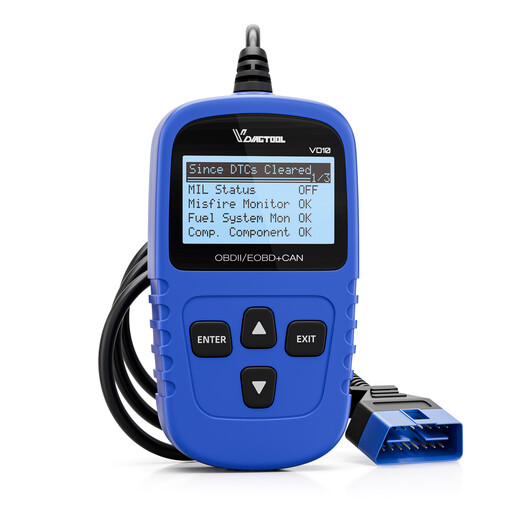
Why you need this tool: Perfect for taking your first steps in car diagnostics. It lets you understand why the check engine light is on, read the fault code, see its definition directly on the screen, and clear it after the repair is done. Ideal for a quick check on a used car or for minor everyday issues.
It gets straight to the point (OBD2 engine diagnostics) without being cluttered with superfluous features. It's self-powered by the vehicle's port and requires no battery, no app, and no subscription. Simplicity itself.
Plug-and-play: plug it in, read the code, understand the problem. Its built-in fault code library saves you from having to look up code meanings online. An excellent balance of simplicity and price.
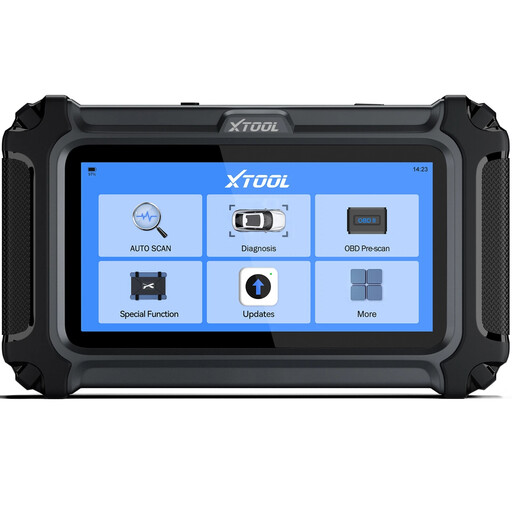
Why you need this tool: For those who get their hands dirty, do their own oil changes, replace their brake pads, and want to go beyond just the check engine light. It offers diagnostics on the 4 major systems (Engine, ABS, SRS, Transmission) and includes numerous service functions (oil reset, ABS bleed, etc.), all on a responsive touchscreen.
It sidesteps the subscription trap by including free lifetime software updates. Its extensive compatibility and the ability to verify it before purchase (by contacting the seller with your VIN) prevent unpleasant surprises.
The perfect balance between advanced features and ease of use. Support for the CAN FD protocol and FCA AutoAuth makes it a future-proof tool for modern vehicles.
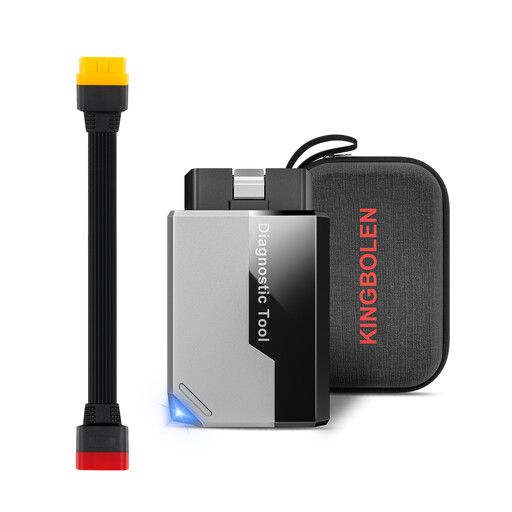
Why you need this tool: For the savvy DIY mechanic or the owner of a small family fleet who needs full system diagnostics, extensive reset functions, and the ability to perform active tests (bidirectional control) to pinpoint a fault with precision.
This Bluetooth dongle transforms your smartphone into a pro-level tool while eliminating the costly subscription trap thanks to its lifetime updates. Its wide compatibility and support for CAN FD and FCA AutoAuth protect it from obsolescence.
Bidirectional control, which allows you to activate components (fan, wipers, etc.) from the app to test their functionality. A feature usually reserved for garage equipment costing several thousand dollars.
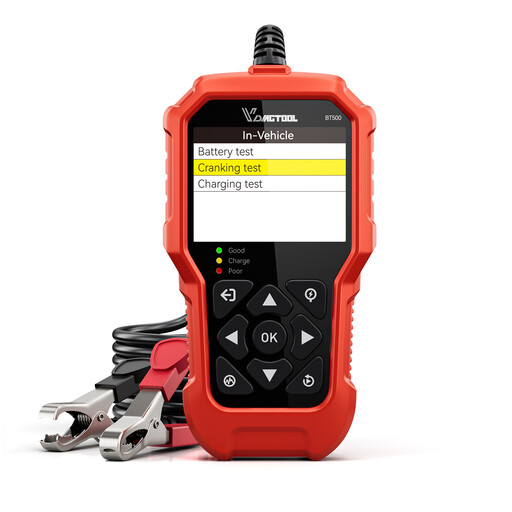
Why you need this tool: For those who know that a fault isn't always an ECU issue. This specialized tool allows you to test the battery's state of health (SOH), its state of charge (SOC), as well as the proper functioning of the starter and alternator. The perfect tool to anticipate a battery failure before getting stranded in a parking lot.
It prevents you from blindly replacing a battery or alternator. In seconds, it provides a precise diagnosis of the charging system, saving you a costly trip to the garage for a simple problem.
Its versatility: it works on 6V, 12V, and 24V systems, making it useful for cars, motorcycles, trucks, and boats. Its interface is crystal clear, and the results are easy to interpret, even for a novice.
Our complete and up-to-date selection features products that meet our strict selection criteria and current standards.
When used correctly, a quality diagnostic tool poses absolutely no risk to your vehicle. These devices are designed to read data provided by the car's ECUs, not to modify them (unless you are using advanced functions like coding, which require specific knowledge). Simply be sure to follow the manufacturer's instructions and never unplug the tool during communication or an update.
It all depends on the tool you choose. A simple code reader like the VD10 can be used in minutes: you plug it in, read the code, and clear it. That's it. For a more advanced multi-brand diagnostic tool, getting the hang of service functions or analyzing live data may take a little practice. However, most devices are designed with guided menus to assist the user.
This depends entirely on the model and the manufacturer. It's a crucial point to check BEFORE you buy. Many entry-level and mid-range tools now offer free lifetime updates, which represents a substantial long-term saving. More professional models may require an annual subscription to continue receiving the latest compatibilities and features. Read the product description carefully to avoid any unpleasant surprises.