
Livraison le jour même ou le lendemain

Qualité garantie

Débloquez vos offres de bienvenue: Livraison GRATUITE | Jusqu'à -80 % | 30 jours d'essai gratuits à JoyPlus
Téléchargez l'application
In the car, staying connected is no longer a luxury, but a necessity. Yet, choosing a simple car charger can quickly turn into a headache. Between promises of ultra-fast charging that fall flat and low-end products that dangerously overheat, it's easy to make a mistake. As a product expert for Joybuy, I'm here to separate fact from fiction for you. The goal: to give you the keys to finding a reliable charger that's truly suited to your needs, and to help you outsmart marketing traps.
Before we even talk tech, let's review the two most frequent pitfalls that can render a car charger useless, or even dangerous.
To avoid making the wrong choice, focus on a few non-negotiable technical points. These are what truly separate a useless gadget from a high-performance accessory.
Power, expressed in watts (W), determines charging speed. But it's not the whole story. It must be paired with the right protocol:
The Smart Move: Check your smartphone's technical specifications to identify its fast-charging protocol. Then, choose a charger that explicitly mentions this protocol and offers sufficient power (aim for at least 20W for a decent fast charge).
Your needs dictate the ideal configuration. A simple USB cigarette lighter adapter with one or two ports will be more than enough for a solo driver. However, for families or business trips, a multi-port cigarette lighter adapter with several USB-A and USB-C ports is necessary to power a smartphone, tablet, and GPS at the same time.
The term "car charger" now covers a wide range of products:
To illustrate these criteria in practice, here is our selection of products designed for different user profiles.
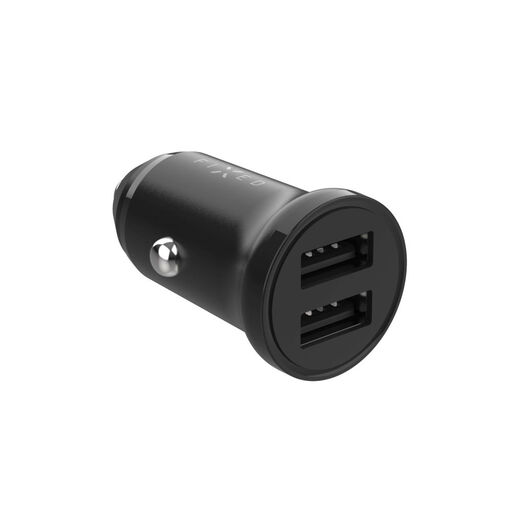
Why we recommend it: The simple, reliable solution for charging a phone and another device (GPS, headphones) without unnecessary features. Its discreet design blends seamlessly into any car interior.
This charger doesn't make unrealistic power claims. It delivers a stable and safe 15W charge, sufficient for daily use, and its design includes the necessary protections against overheating.
Two USB-A ports for broad compatibility; compact and minimalist design; compatible with both 12V (car) and 24V (truck) sockets.
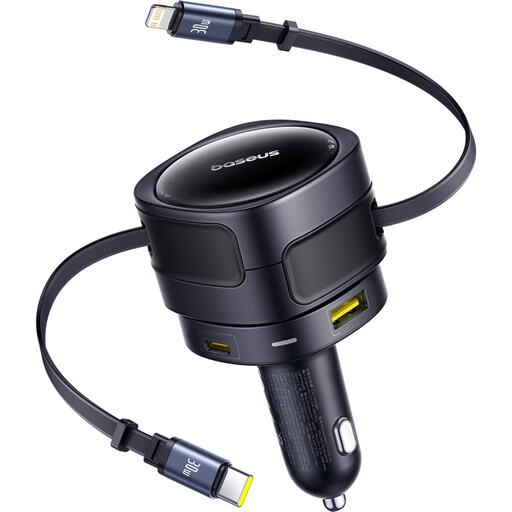
Why we recommend it: The ultimate solution for families or professionals who need to power multiple energy-hungry devices. It can simultaneously charge smartphones, tablets, and even some laptops, all while keeping the car's interior tidy.
It offers a high, verifiable total power of 90W, intelligently distributed across 4 outputs. The integrated retractable cables (Type-C and Lightning) eliminate compatibility issues and the need for low-quality cables.
90W total power; 4 outputs including 2 retractable cables; supports multiple fast-charging protocols for maximum compatibility.
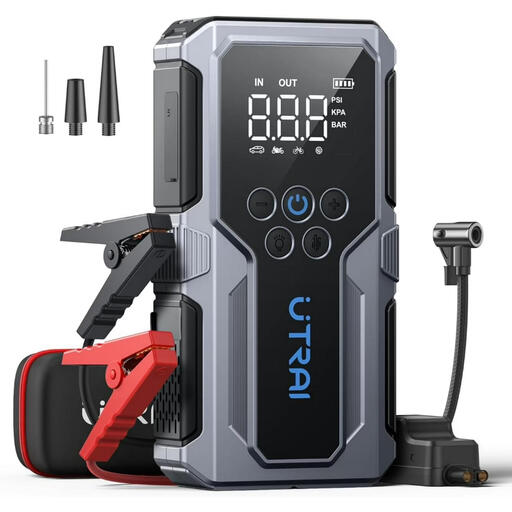
Why we recommend it: This is the driver's Swiss Army knife. For those who take long trips, own an older vehicle, or simply want to be prepared for any eventuality, this device combines a powerful jump starter and an air compressor.
It boasts clear and verifiable technical specs (3000A peak current, pressure up to 150 PSI / 10.3 bar). Its 10 smart safety protections prevent handling errors (reverse polarity, etc.).
5-in-1 function: jump starter, booster with compressor, power bank, and LED flashlight with SOS mode.
We've curated a full selection of products that meet our quality criteria and European safety standards.
Yes, if your cigarette lighter socket remains powered even when the ignition is off. The standby power consumption of modern chargers is minimal, but as a precaution, it's best to unplug it if you leave your car parked for several days.
A cigarette lighter charger (or USB adapter) is designed to charge your portable devices (smartphone, GPS, etc.) via the car's 12V socket. A battery maintainer, on the other hand, connects directly to the vehicle's battery to recharge it or compensate for its natural discharge, especially during winter storage or long periods without driving.
It's simple: you just need to cross-reference two pieces of information. First, check your phone's spec sheet to find its charging protocol (e.g., "Power Delivery 25W" or "Quick Charge 3.0"). Then, make sure the car charger's description explicitly mentions that same protocol and offers at least an equivalent power output on one of its ports.