
Livraison le jour même ou le lendemain

Qualité garantie

Débloquez vos offres de bienvenue: Livraison GRATUITE | Jusqu'à -80 % | 30 jours d'essai gratuits à JoyPlus
Téléchargez l'application
A dead battery? It's every driver's nightmare, especially on a frosty morning or just before an important trip. Instead of relying on a tow truck, owning a car battery charger is a smart investment to maintain your vehicle and extend its battery life.
But with so many options on the market, how do you choose? This guide is here to demystify the choices and help you select the perfect charger for your needs, whether you have a car, a motorcycle, or a seasonal vehicle.
Before diving into our top picks, let's review the key criteria for making the right choice.
Not all chargers are universal—far from it. The first step is to identify the type of battery in your vehicle. The most common technologies are?:
A good modern smart battery charger will often be compatible with several of these technologies, but it's always essential to check before you buy.
A charger's power, measured in amperes (A), determines its charging speed. A model with a higher amperage will charge faster, but the key is to choose a power level that matches your battery's capacity (measured in ampere-hours, Ah). For a standard 12V battery charger, there's no need to aim too high.
Beyond simple charging, certain features can be extremely useful?:
A good charger should be a device you can leave to work unattended. Make sure it includes essential safety features?:
These features guarantee you can plug the device in and forget about it with complete peace of mind.
Our editorial team has analysed the features of dozens of models to bring you a balanced selection that caters to different needs and budgets.
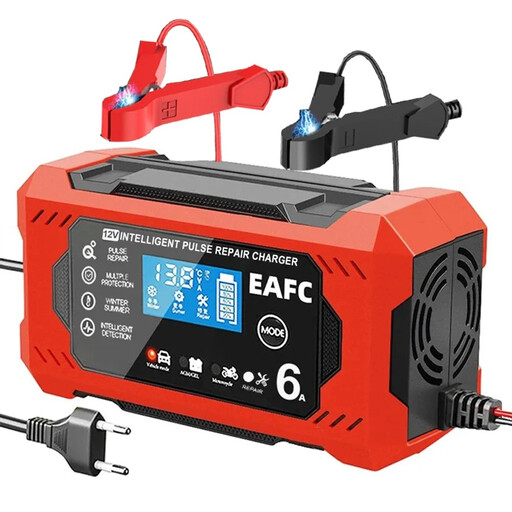
What we like?: This model is an excellent entry-level option. Simple, compact, and effective, it covers the needs of most drivers without any fuss.
Pros:
Who is it for?? Ideal for car and motorcycle owners looking for a "plug-and-forget" solution for regular maintenance or to get out of a tight spot.
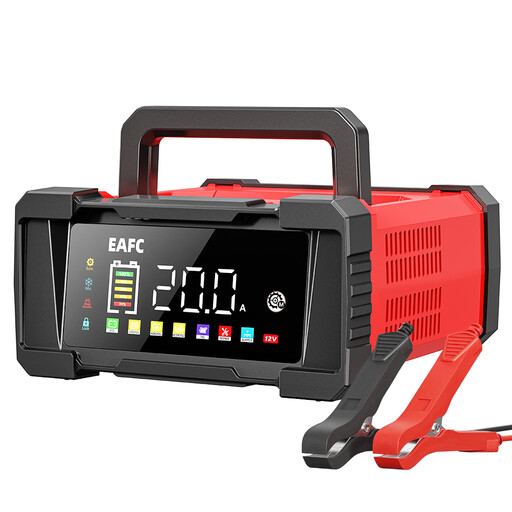
What we like?: More powerful, this charger is also more versatile. Compatible with 12V and 24V, lead-acid, and lithium batteries, it's aimed at those who juggle multiple vehicles, including vans, trucks, or boats.
Pros:
Who is it for?? The Swiss Army knife for mechanics, owners of a small fleet of vehicles (car, van, boat, riding mower), or anyone who needs fast charging and lithium compatibility.
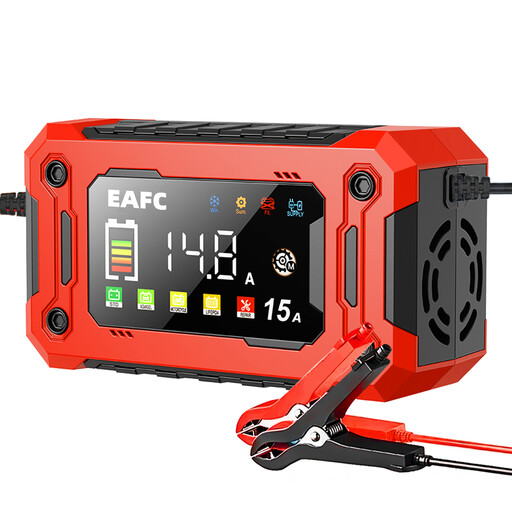
What we like?: This model strikes the right balance between a comfortable charging power (15A) and smart features, like its automatic adaptation to ambient temperature.
Pros:
Who is it for?? An excellent choice for the user who wants a smart battery charger that is powerful, simple, and autonomous, capable of taking care of their battery long-term without having to think about it.
Our selection focuses on versatile models for cars and motorcycles. However, the world of chargers is much broader, with devices designed for very specific needs. If you haven't found what you're looking for, feel free to explore our full category.
? Discover more models in our battery chargers and accessories category
A standard charger is used to recharge a flat battery. A charge maintainer, on the other hand, is designed to stay connected for long periods (during winter storage, for example). It delivers a very low current that just compensates for the battery's natural self-discharge, keeping it ready to start without any risk of overcharging. Today, most smart chargers include this maintenance function.
Yes, but on one key condition: the charger must offer a dedicated "motorcycle" mode. Since motorcycle batteries have a lower capacity (Ah), this mode adjusts the charging current to avoid damaging them. All three models in our selection have this feature.
This function, also known as desulfation, can be useful on lead-acid batteries that have lost performance due to the crystallisation of lead sulphate (a common issue with infrequently used batteries). The charger sends electrical pulses to try and dissolve these crystals and restore some of the lost capacity. Be aware, it's not a miracle cure: it won't do anything for a battery with physically damaged cells or one that is simply at the end of its life. Think of it more as a tool for maintenance and occasional recovery.