
Livraison le jour même ou le lendemain

Qualité garantie

Débloquez vos offres de bienvenue: Livraison GRATUITE | Jusqu'à -80 % | 30 jours d'essai gratuits à JoyPlus
Téléchargez l'application
A dead battery: every driver's nightmare, especially on a freezing morning or just before a critical appointment. Can't wait for a tow truck or rely on help from another driver? There's a solution: the car battery booster. This compact, self-contained device can restart your vehicle in minutes, with no outside help.
But with an overwhelming number of options on the market, it's hard to know where to start. This guide is here to help: we've analyzed the market to help you choose the perfect portable car starter for your needs, whether you drive a small petrol city car or a large diesel utility vehicle.
Before diving into our selection, let's review the essential criteria for making the right choice.
The number one criterion for a booster is its peak current, measured in amps (A). This burst of energy provides the necessary jolt to start the engine.
Always remember to check the booster's compatibility with your engine's displacement (in litres), information that is always provided by manufacturers.
Expressed in milliampere-hours (mAh), the internal battery's capacity determines the booster's autonomy. The higher it is, the more starts you can perform before needing to recharge it.
Many models also double as a power bank to charge your electronic devices (smartphones, tablets) via their USB ports. The most versatile ones even add practical features like:
A good jump starter must include safety features to prevent any damage to your vehicle's electronics or the device itself. Opt for models equipped with smart clamps that protect against:
In case of a wrong connection, these systems emit an audible or visual signal, making the jump-starting process much safer, even for beginners.
We have selected three standout models, each catering to a specific need, from occasional use to heavy-duty and versatile applications.
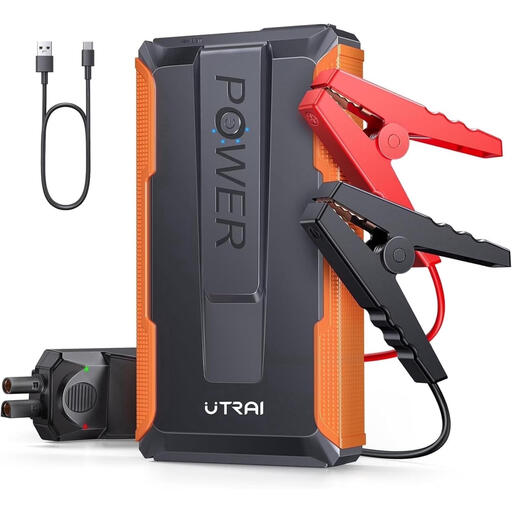
Why it stands out: The UTRAI T1 shines with its excellent balance of power, compactness, and features. Capable of working even in extreme cold and incredibly easy to use, it stands out as a reliable everyday companion.
Pros:
Who is it for?: For the driver looking for a reliable backup solution that's easy to slip into the glove box of their car, SUV, or small van.
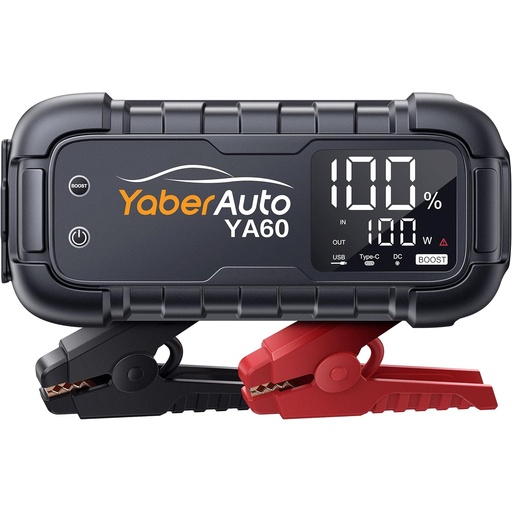
Why it stands out: With its colossal 8,000 A starting power and 65W two-way fast charging, this model is in a league of its own. Capable of recharging in 1.5 hours and even powering a laptop, it's a true powerhouse.
Pros:
Who is it for?: For owners of large vehicles (4x4s, trucks, motorhomes, boats) and professionals who demand uncompromising starting power. It's also the perfect choice for tech enthusiasts who will appreciate its ultra-fast charging.
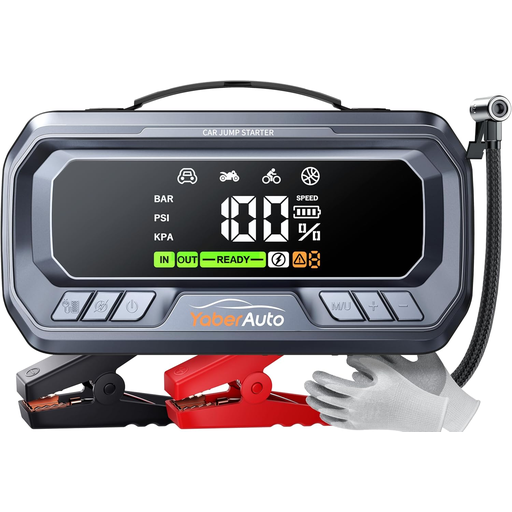
Why it stands out: Much more than a booster, this is a true multi-functional power station. It combines 6,500 A of power, a 160 PSI air compressor, and a continuous power supply, making it the driver's Swiss Army knife.
Pros:
Who is it for?: For long-distance travellers, camping enthusiasts, and anyone who wants an all-in-one automotive safety solution. Its compressor and DC output make it the ideal tool for long journeys and outdoor activities.
Preparing your vehicle for any eventuality is a wise precaution. And if your plans also take you outdoors, why not take a look at our other guides? Feel free to browse our selections, such as the one for Party Tent Rentals, to find the right equipment for all your projects.
For a diesel engine, it's essential to choose a booster with a high peak current, as its compression ratio is higher. Aim for a minimum of 1,500 A. For large engines (over 3.0L), a model with 2,000 A or more, like those in our selection, will give you a comfortable safety margin, especially in winter.
No, and be careful not to confuse a battery booster (or jump starter) with a car battery charger. The booster delivers a very intense, brief pulse of current, just enough to start the engine. Its function ends there: it does not recharge the battery. That's the job of a charger, which is designed to restore a battery's full charge, an operation that takes several hours.
Even when not in use, a booster gradually loses its charge. Most manufacturers recommend recharging it every 3 to 6 months. This ensures its internal battery stays healthy and, most importantly, that it will be ready to go the day you really need it. The best practice is to consult your device's manual for the manufacturer's specific recommendations.