
Livraison le jour même ou le lendemain

Qualité garantie

Débloquez vos offres de bienvenue: Livraison GRATUITE | Jusqu'à -80 % | 30 jours d'essai gratuits à JoyPlus
Téléchargez l'application
A successful photo or video is the alchemy of three elements: composition, subject, and, of course, light. While the first two depend on your eye and creativity, the third is much easier to master with the right equipment. For on-the-go content creators, vloggers, and travel photographers, lugging around heavy lighting gear is a hassle.
Fortunately, today's market is flooded with solutions that are as compact as they are powerful. But how do you navigate the jungle of LED panels, mini-flashes, and other video lights?? This guide is here to shed some light on the subject and help you find the perfect camera light for your needs, without drowning in technical jargon.
Before diving into our selection, here are the essential criteria to keep in mind to make the right choice.
It all depends on your primary use: photography, video, or both??
When you're on the move, weight and size are non-negotiable criteria. The cleverest recent models often weigh less than 100 grams and can slip into any pocket. Also, consider the power source: an integrated battery rechargeable via USB-C is the pinnacle of convenience for travel, but removable batteries can be a welcome backup.
A good LED camera light is recognisable by the precision of its settings. Here are a few terms to master:
Here are a few gems we've selected for their excellent balance of compactness and features, perfectly suited for today's creators.
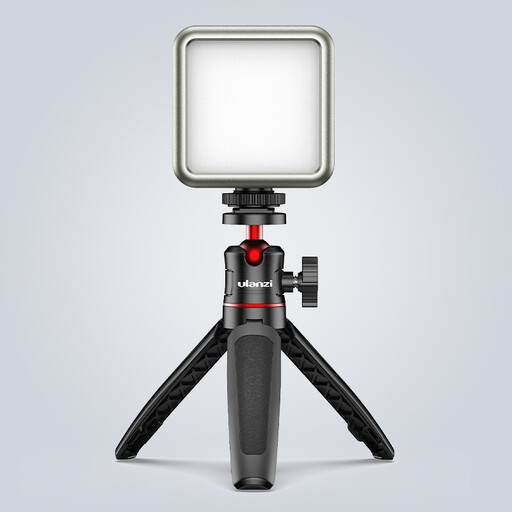
Why we love it?? The VL49 RGB is the ultimate Swiss Army knife of portable video light. Its main strength?? A full RGB mode that gives you access to 360 colours, allowing you to unleash your creativity, whether for videos or product photography.
Key features?:
Who is it for?? For vloggers, TikTok and Instagram creators, or product photographers who want to inject a dose of colourful creativity into their images without sacrificing portability. This Ulanzi light has become a benchmark for its unbeatable versatility.
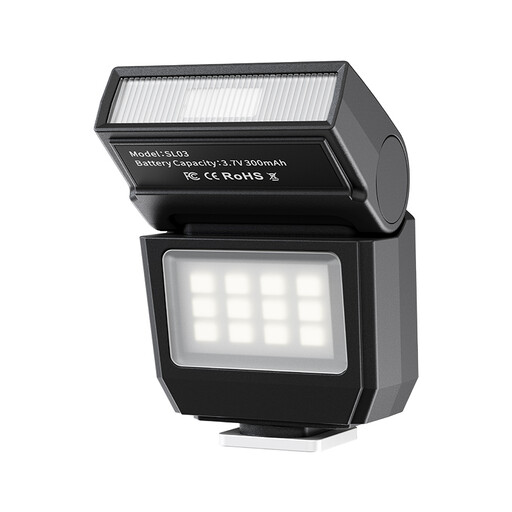
Why we love it?? The SL03 targets a very specific audience: hybrid shooters who constantly juggle between photo and video. It merges a mini speedlight and a fill video light into a single, ultra-compact body.
Key features?:
Who is it for?? For the nomadic photographer or hybrid shooter who wants a fill flash for their shots and a small continuous source for a few video clips, without carrying multiple accessories.

Why we love it?? The SL02 is the champion of minimalism. At 36 grams, it's one of the smallest flashes on the market, and it even has the luxury of integrating a video light function.
Key features?:
Who is it for?? It's the perfect companion for a compact camera, or for anyone who wants a fill flash to keep in their bag at all times, "just in case." Don't be misled by the product title which sometimes mentions Nikon: its single-contact hot shoe makes it compatible with virtually all brands.
This guide focuses on ultra-portable solutions designed for mobility. If you're looking for studio flashes, more powerful models, or more complex setups, our catalogue has what you need.
? Discover Our Full Range of Speedlight Flashes
1. What's the difference between an LED light and a speedlight flash?? An LED camera light emits a continuous stream of light. This is ideal for video, but also for photography to see the lighting effect on the subject live before you even take the shot. A speedlight flash, on the other hand, produces a single, brief, and very intense burst of light at the exact moment of the shot. It's perfect for freezing motion in photos and delivers far more power.
2. Is an RGB light really useful for my videos?? It's not essential, but it's a fantastic creative tool. An RGB light allows you to create colourful atmospheres (blue, red, purple, etc.) for the background of your videos, mimic ambient lights (neon, police lights), or simply add an artistic touch to your shots. For a more classic vlogging light, a bi-colour (warm/cool) light will do the job perfectly.
3. How do I attach a light to my camera?? The vast majority of cameras (DSLRs, mirrorless) have an "accessory shoe" (or hot shoe) on top. Portable lights like the ones in our selection have a corresponding base, the "cold shoe," which simply slides into this mount. All you have to do is tighten a small wheel to lock it in place. It's a nearly universal standard that ensures compatibility with most camera bodies on the market.