
Livraison le jour même ou le lendemain

Qualité garantie

Débloquez vos offres de bienvenue: Livraison GRATUITE | Jusqu'à -80 % | 30 jours d'essai gratuits à JoyPlus
Téléchargez l'application
As a parent or someone close to a young child, choosing a toy can quickly become a headache. The options are overwhelming, and it's often difficult to distinguish a simple gadget from a genuine developmental tool. You're looking for the ideal toy: fun, of course, but also safe, durable, and beneficial for a child's development.
This guide is here to provide clarity. As the head of product recommendations at Joybuy, my mission is to give you clear, objective insights to help you make the right choice, cutting through the marketing hype. Together, we'll break down the essential criteria for choosing a building toy for kids and present our selection of products suited for every age.
Before diving into our selection, let's review the key points that guarantee a smart, safe purchase.
Safety is the non-negotiable criterion. For any toy sold in Europe, the CE mark is mandatory. It certifies that the product complies with EU requirements. Ideally, opt for products that display stricter certifications like the EN71 standards (EN71-1, -2, -3), which regulate mechanical properties, flammability, and the migration of certain chemical elements.
For an educational toy for ages 3 and up, the pieces must be large enough to eliminate any choking hazards. Prioritise non-toxic materials like BPA-free ABS plastic or certified foams, as well as flawless finishes (smooth edges, no small parts that could detach).
Building toys should evolve with the child.
A good construction toy is a long-term investment. Choose robust products capable of withstanding years of intensive play. Versatility is also a major asset: a toy that offers multiple possibilities (free play, following models, etc.) will hold a child's attention for much longer. This is a core principle of the Montessori philosophy, which favours open-ended toys that stimulate autonomy and imagination.
Here are three products that meet different needs, all rigorously compliant with European safety standards.

Why It Stands Out This set transforms any corner of your living room into a truly safe play area. It combines climbing blocks and a ball pit, offering a dual function for motor development and sensory stimulation.
Advantages
Who is it for? This set is particularly suitable for toddlers aged 1 to 3. It's a top-tier option for parents who want to create an active and safe play space at home, as well as for nurseries or childminders.
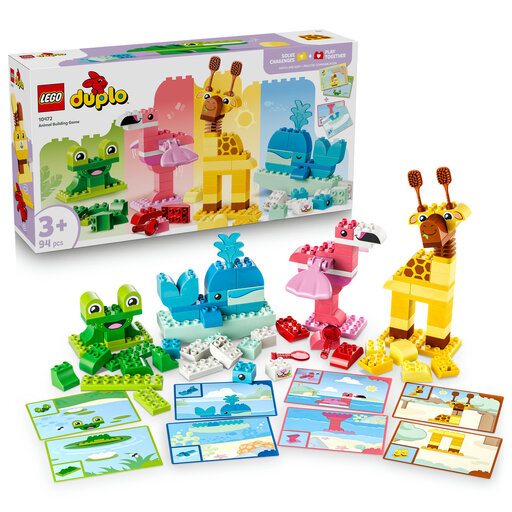
Why It Stands Out LEGO DUPLO needs no introduction, as it's the benchmark for educational toys for ages 3 and up. This set stands out for its both guided and creative approach: it uses illustrated cards to help children build eight different animals, while leaving the door wide open for their imagination.
Advantages
Who is it for? Ideal for girls and boys from age 3 who love animals and building toys. It's a reliable choice for families who appreciate shared building activities and toys with high educational value.
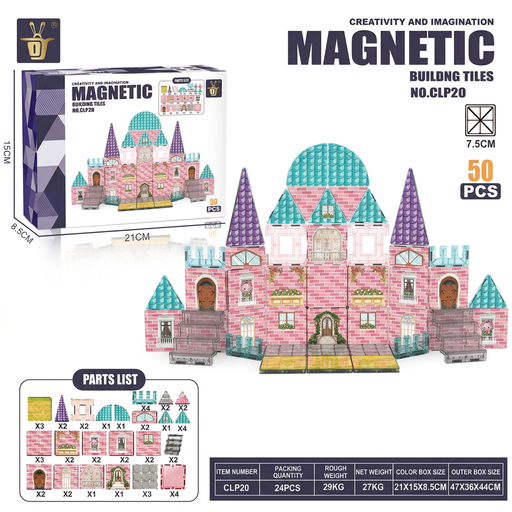
Why It Stands Out This magnetic building set offers another approach to assembly. Thanks to their built-in magnets, the tiles snap together like magic to create 2D and 3D structures. The "princess castle" theme and pastel colours make it particularly appealing.
Advantages
Who is it for? Recommended for children aged 3 and up, this set is for those ready to explore three-dimensional construction. It's an excellent, gentle introduction to the concepts of geometry and engineering.
Our selection is just a glimpse of the immense possibilities offered by building toys. Every child is unique, and so are their interests. If you'd like to explore a wider variety of models, from wooden toys to more complex sets, feel free to browse our complete collection.
Discover our Playset Toy category
You can introduce very simple building toys as early as 12-18 months. At this age, opt for large, soft or wooden blocks that the child will simply learn to stack. Toys with smaller pieces and more complex assembly mechanisms, like interlocking bricks or magnetic tiles, are generally recommended from age 3.
Building toys are incredibly comprehensive. They stimulate:
It all depends on the material. Plastic toys (bricks, magnetic tiles) can be cleaned with a damp cloth and mild soap. Avoid fully submerging them to prevent damaging the magnets or trapping water inside. For foam sets with covers, like our activity playset, simply remove the covers from the modules and machine wash them according to the manufacturer's instructions.