
Livraison le jour même ou le lendemain

Qualité garantie

Débloquez vos offres de bienvenue: Livraison GRATUITE | Jusqu'à -80 % | 30 jours d'essai gratuits à JoyPlus
Téléchargez l'application
Whether you're a calligraphy enthusiast, a dedicated illustrator, or a colouring aficionado, choosing the right brush pen can quickly become overwhelming. With a vast array of tips, inks, and colour palettes, it's hard to know where to start. This guide is here to shed some light and help you discover the pen set that will bring your creative projects to life.
Before diving into our top picks, let's review the essential criteria that will guide your decision.
The ink is the heart of your brush pen. Water-based inks, often found in watercolour markers, offer remarkable versatility. They allow you to blend colours directly on the page, create subtle gradients with a wet brush, or layer colours to build depth. This makes them the ideal choice for illustration, drawing pens, and mixed media techniques. Just remember to use a suitable paper (like Canson Mix-Media or watercolour paper) to prevent buckling or pilling.
The signature feature of a brush pen is its soft, conical tip that mimics a real paintbrush. The flexibility of this tip is a decisive factor.
A 120-colour set is certainly tempting, but is it truly necessary for your craft?? For lettering or monochrome sketching, a few high-quality black and grey pens may be all you need. On the other hand, for complex illustration or colouring, an extensive palette will exponentially expand your creative freedom. Themed sets (e.g., landscape, portrait) can also be a smart choice for targeted projects.
We've selected three standout products, each catering to specific needs.
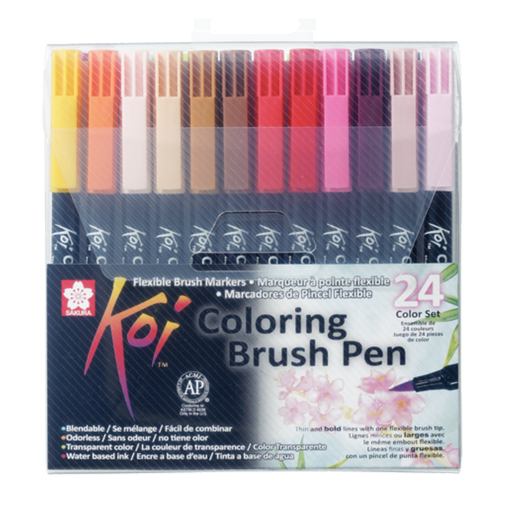
Why it stands out?: This set leverages SAKURA's expertise to deliver a high-quality, water-based ink designed to combine the precision of a marker with the effects of watercolour.
Pros?:
Who is it for?? For artists, illustrators, and lettering enthusiasts who rely on the dependability of a major brand to learn or perfect their watercolour techniques.
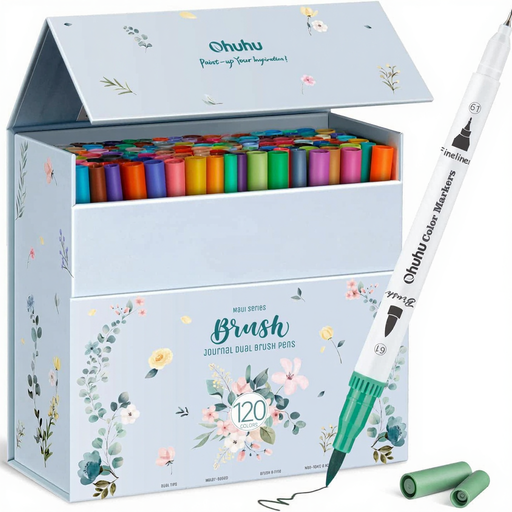
Why it stands out?: It doesn't get more comprehensive than this! This set impresses with its sheer value: 120 colours, an ultra-practical dual tip, and accessories, all delivered in a convenient carrying case.
Pros?:
Who is it for?? Perfect for colouring enthusiasts, art students, and any creative who wants a maximum number of colours at an excellent value.
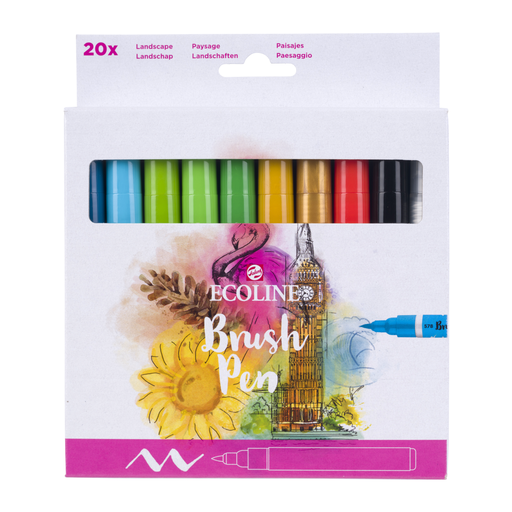
Why it stands out?: An industry benchmark, Ecoline pens feature a liquid ink made from dyes and gum arabic, offering a brilliance and transparency worthy of professional watercolours.
Pros?:
Who is it for?? For illustrators, designers, and watercolour artists who demand maximum intensity and transparency for a finish that rivals traditional painting.
Our selection focuses on specific use cases, but the world of drawing pens is vast. If you'd like to explore a wider range of pens, alcohol markers, or other creative tools, feel free to browse our dedicated category.
? Explore Our Collection of Creative Drawing Pens
The main difference lies in the tip. A regular marker has a rigid tip (fine, medium, or chisel) that produces a line of constant thickness. A brush pen is equipped with a long, conical, and flexible tip made of nylon or felt. By varying the pressure, you can modulate the line width to create thick and thin strokes, just like with a real paintbrush.
To get the most out of your watercolour markers, use thick paper (at least 200 gsm) or paper specifically designed for watercolour. You can apply the colour directly to the sheet and then work it with a clean, damp brush to spread it. Another technique is to apply some ink to a plastic palette, then pick it up with a wet brush, just as you would with pan watercolours.
To preserve the longevity of your pens, it is highly recommended to store them horizontally. This ensures an even distribution of ink and prevents it from pooling at one end—a crucial point for dual-tip markers. Also, be sure to always recap them tightly after each use to prevent the tips from drying out.