
Livraison le jour même ou le lendemain

Qualité garantie

Débloquez vos offres de bienvenue: Livraison GRATUITE | Jusqu'à -80 % | 30 jours d'essai gratuits à JoyPlus
Téléchargez l'application
Navigating the world of brush pens can be challenging. Whether you're an illustrator, calligrapher, or simply a colouring enthusiast, you know the right tool can make all the difference. Our guide is here to help you make an informed decision and choose the perfect pen set for your projects, without drowning you in marketing jargon.
Ink type, tip flexibility, number of colours... we'll cover the essential criteria before introducing our current favourite products.
Before diving into our selection, let's review the key criteria that will help you make the right choice.
The type of ink directly impacts the final look of your creations.
The quality of the tip is the secret to precise and expressive lines.
The size of your drawing pen set will depend entirely on your ambitions. For professional work focused on blending, a quality set of 12 or 24 colours can be more than enough. Conversely, a box set with over 100 colours will delight colouring enthusiasts or beginners, giving them a vast palette at their fingertips without needing to master blending techniques right away.
We've scoured the market and selected four brush pen sets that cater to very different needs and artistic practices.
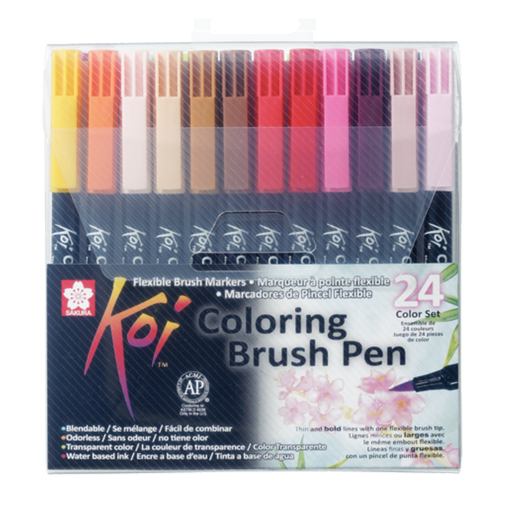
Why it stands out?: The strength of this set lies in its water-based ink, which blends perfectly to create bright, transparent watercolour effects.
Pros?:
Who is it for?? Illustrators, hand-lettering fans, and colouring enthusiasts looking for the fluidity of watercolour with the convenience of a marker.
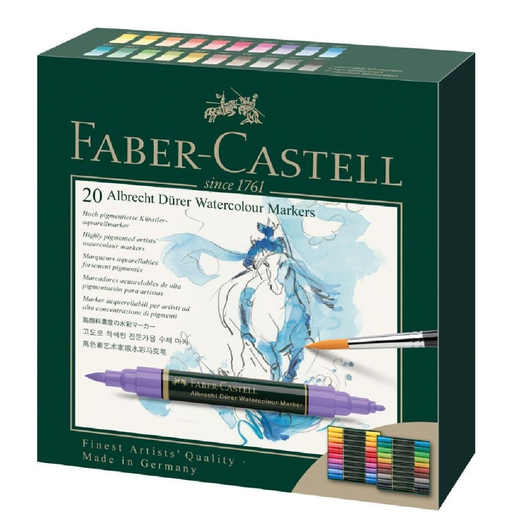
Why it stands out?: A professional-grade choice that combines pigment-rich ink with excellent lightfastness, for artwork designed to last.
Pros?:
Who is it for?? Professional artists, illustrators, or discerning hobbyists who prioritise pigment quality and the longevity of their creations.
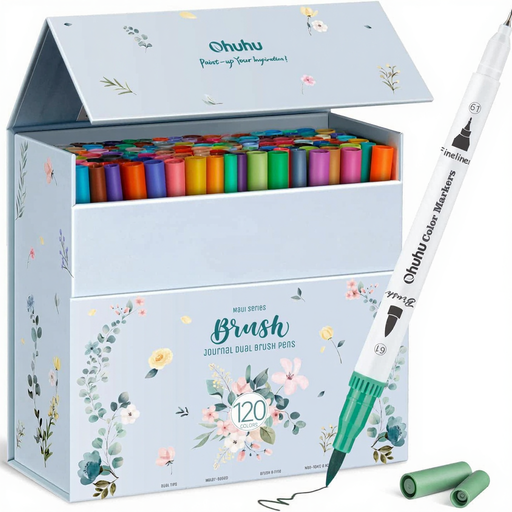
Why it stands out?: It's hard to compete with this XXL set and its 120-colour palette, all at an unbeatable value that explains its popularity.
Pros?:
Who is it for?? Art students, adult colouring fans, and creatives who need a huge range of shades without breaking the bank.
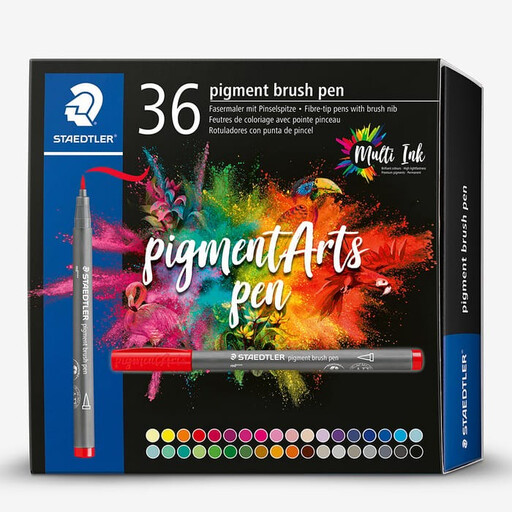
Why it stands out?: Its main advantage is its pigment ink which, unlike dye-based inks, becomes permanent and lightfast once dry.
Pros?:
Who is it for?? Comic book artists, illustrators, and mixed-media artists who need permanent lines that won't dissolve when in contact with other wet media.
Our selection highlights products with very distinct profiles. If you haven't found your match or are simply curious to discover other hidden gems, there are plenty of options.
To explore a wider range, with models suited for every use, feel free to browse our complete category of pigment pens.
1. What paper should I use with a brush pen?? To prevent ink from feathering or bleeding through, it's crucial to use smooth paper with a sufficient weight (at least 160 gsm). Bristol board is an excellent option. For a watercolour marker, watercolour paper (hot-pressed for a very smooth surface) will deliver the best results, as it's designed to absorb water without buckling.
2. How do I care for my brush pens to make them last longer?? The golden rule?: always cap your pens tightly immediately after use to prevent the tips from drying out. Also, remember to store your pens horizontally. This ensures the ink is distributed evenly and feeds both nibs perfectly on a dual-tip marker.
3. Can you really do calligraphy with a brush pen?? Absolutely?! The brush pen is even the tool of choice for brush lettering, a modern form of calligraphy. Its flexible brush tip perfectly mimics the behaviour of a real paintbrush. It allows you to effortlessly create thick downstrokes (by applying pressure) and thin upstrokes (by releasing pressure), which are the very foundation of this lettering art.