
Livraison le jour même ou le lendemain

Qualité garantie

Débloquez vos offres de bienvenue: Livraison GRATUITE | Jusqu'à -80 % | 30 jours d'essai gratuits à JoyPlus
Téléchargez l'application
The brush pen is the perfect companion for any creative who loves to express themselves through drawing, calligraphy, or colouring. Its flexible tip mimics the feel of a traditional paintbrush, but with all the convenience of a marker. Faced with an overwhelming number of options and sometimes exaggerated claims, the risk of ending up with a disappointing product is very real. To avoid buyer's remorse, it's best to know the common pitfalls.
The most common problem? A tip that frays prematurely. After just a few uses, it loses its fine point, and so much for crisp lines! Another classic letdown: ink that bleeds through the paper. Nothing is more frustrating than seeing your illustration ruin the next page of your sketchbook. Finally, watch out for colours that don't live up to their promise, whether they fade in the light or look nothing like the shade on the cap.
This guide breaks down the key factors for finding the perfect pen set for your projects, whether you're a curious beginner or a seasoned artist.
To avoid disappointment, there are three things to watch closely: the tip type, the nature of the ink, and the resilience of the tip itself.
The tip is the heart of your pen. Your choice is crucial and will depend entirely on how you plan to use it.
The ink determines not only the appearance of the colours but also how they behave on paper and hold up over time.
A good tip must be flexible to allow for beautiful stroke effects, but also resilient. Its "shape retention" is its ability to return to its original fine point after each press. This is what ensures the longevity of your brush pen: it will maintain its precision over time, without getting crushed or fraying.
To help guide you, here is our selection of models that check all the boxes, each tailored to a specific need.
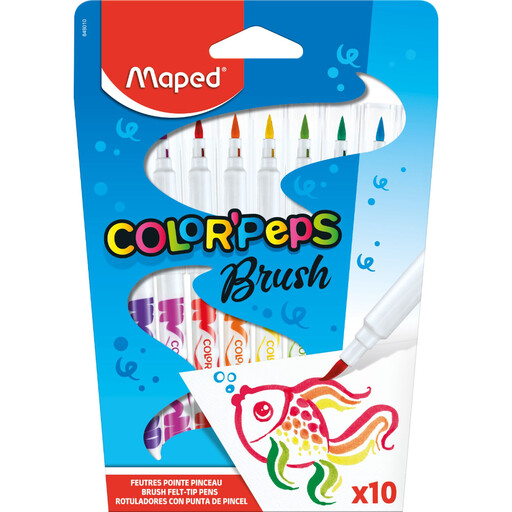
Why we chose it: Perfect for getting started without fear. The washable ink is a real plus, whether for kids or for adults who worry about stains. The grip is designed to be comfortable, even during long colouring sessions.
The tip is designed to be flexible yet sturdy enough to be forgiving for beginners. The water-based, washable ink formula limits the damage from smudges or accidental stains.
Washable ink on most fabrics and skin, ergonomic grip.
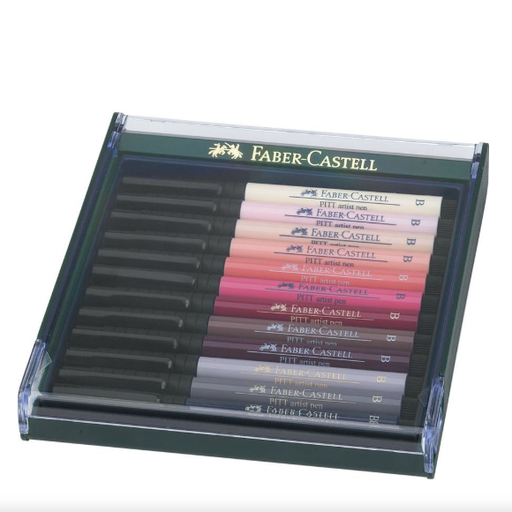
Why we chose it: A benchmark for professionals. These pens use pigmented India ink, renowned for its high lightfastness and permanence once dry. It's the tool of choice for works designed to stand the test of time.
The pigmented ink doesn't bleed through most papers and won't fade, sidestepping the trap of fugitive colours and bleeding ink. The fibre tip is designed for excellent durability.
Archival-quality ink, water- and light-resistant, highly durable brush tip.
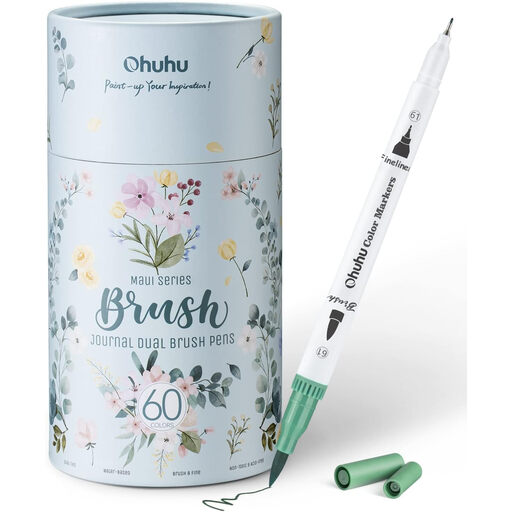
Why we chose it: The creative's Swiss Army knife. With a brush tip for lettering and filling, and a fine tip for details, this set is the perfect partner for bullet journaling. The vast range of 60 colours offers nearly infinite creative freedom.
The dual tip solves the dilemma between precision and coverage. The water-based ink is formulated to minimise bleeding while still allowing for blending, a bonus for creative layouts.
Dual tip (brush and fine) for maximum versatility, very wide palette of 60 colours.
We've compiled a complete, up-to-date list of products that meet our strictest quality criteria.
The golden rule: always recap them tightly immediately after use. For most pens, storing them horizontally is ideal, as it ensures even ink distribution (especially for a dual-tip pen). If the tip of a water-based pen seems dry, you can sometimes revive it by dipping it in a little water for a split second.
Water-based ink is perfect for blending and watercolor effects. It's often less expensive and easier to find. The downside? It can cause thin paper to buckle, and its colours are less light-resistant. Pigment-based ink, on the other hand, is made of solid particles. It is generally permanent, water-resistant, and fade-resistant, making it the top choice for artists creating long-lasting work.
To get the most out of a water-soluble brush pen, your choice of paper is crucial. Paper that is too thin (less than 120 g/m?) is likely to buckle or even tear when it comes into contact with water. Opt for mixed media paper, a fine-grain drawing paper, or, the gold standard, watercolor paper of at least 180 g/m?. These surfaces are specially designed to absorb moisture without warping.