
Livraison le jour même ou le lendemain

Qualité garantie

Débloquez vos offres de bienvenue: Livraison GRATUITE | Jusqu'à -80 % | 30 jours d'essai gratuits à JoyPlus
Téléchargez l'application
Finding the perfect brush pen can be a daunting task. Watercolour or permanent ink? Flexible or dual tip? Faced with an overwhelming number of options, it's easy to get lost. Whether you're a lettering pro, a seasoned illustrator, or an artist searching for the perfect tool, this guide is for you. Our mission: to demystify the market and help you choose the set that truly fits your creative projects—all without the marketing fluff.
Before diving into our top picks, let's review the criteria that make all the difference. Three essential points will help you narrow down your choice.
The ink is the soul of your pen. The choice depends entirely on the effect you're aiming for.
The tip is what gives your stroke its unique character.
To each artist their pen: your practice will determine the ideal set. For a calligraphy pen set or for lettering, you'll want to prioritise a responsive and flexible tip. For illustration, a wide colour palette and good blending potential will make all the difference. For colouring, you'll primarily look for pens that don't bleed through the paper and provide smooth, even colour.
Now, let's move on to our selection of gems, each tailored for specific needs.
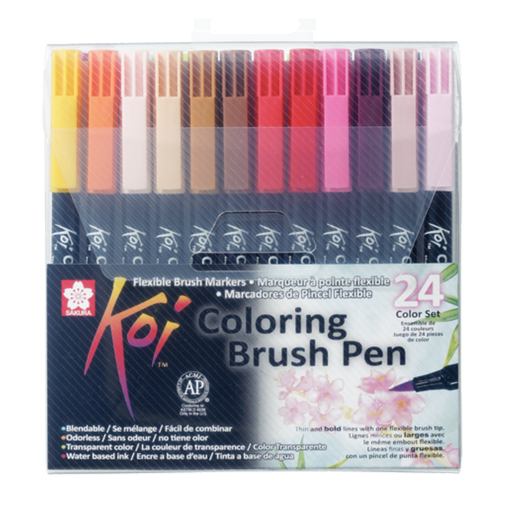
Why we love it: The SAKURA Koi set is a reliable choice for anyone wanting to achieve a watercolour look with the precision of a pen. Its water-based ink is specially formulated for blending, delivering fluid colour transitions and harmonious gradients.
Key features:
Who is it for? For illustrators, sketchbook enthusiasts, and colouring fans who love painterly effects and the ease of blending.
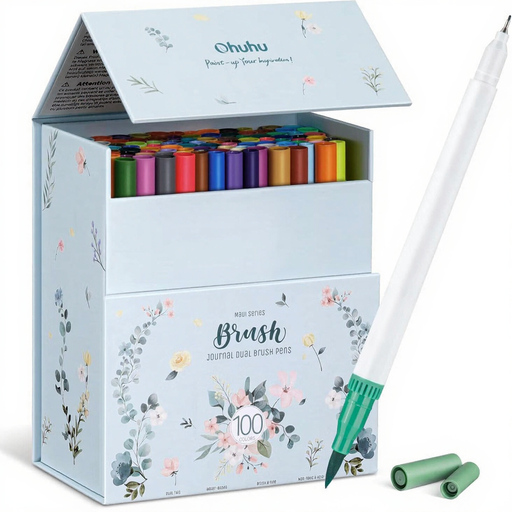
Why we love it: This set impresses with its versatility and unbeatable value. With 100 colours and a dual-tip pen (brush and fine), it covers an extremely wide range of uses, from detailed sketches to colouring large areas.
Key features:
Who is it for? For jacks-of-all-trades, art students, and creatives looking for an XXL palette and the convenience of a dual tip for their drawing markers.
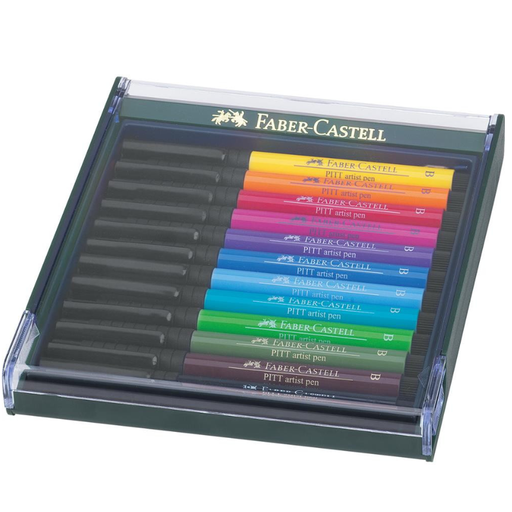
Why we love it: With the Pitt Artist set, Faber-Castell caters to professionals who demand archival quality. Its secret? A pigmented India ink that is highly lightfast and becomes permanent and waterproof once dry.
Key features:
Who is it for? For artists, designers, and illustrators who need a reliable tool for permanent creations, whether for original pieces, commissions, or print work.
Our selection is, of course, just a glimpse of the gems on the market. The world of the brush pen is vast and filled with other great choices. If you haven't found your perfect match yet or are simply curious, don't hesitate to explore further.
Take a look at our complete collection of brush marker pens to discover other sets, colours, and tip types suited for all your creative projects.
It's all in the tip! A brush pen has a flexible, tapered tip, usually made of nylon or felt, that mimics the flexibility of a real paintbrush. It allows you to vary the line thickness (the famous thick and thin strokes) by adjusting pressure and angle—a level of flexibility that a regular marker with a rigid tip (bullet or chisel) cannot offer.
It's very simple. Apply the colour from your watercolour brush pens to suitable paper (watercolour or heavy-grain paper is ideal). Then, before the ink dries, go over it with a clean, damp brush or a blender pen to dilute and work the colour. Another technique: squeeze a little ink onto a plastic palette, then pick it up with a wet brush, just as you would with traditional pan watercolours.
A few simple steps are all it takes to extend the life of your pens. Always remember to cap them tightly after use to prevent the tip from drying out. Storing them horizontally is often recommended: it ensures an even distribution of ink and prevents the tip from either drying out or becoming oversaturated. Finally, keep them away from direct sunlight and extreme temperatures.