
Livraison le jour même ou le lendemain

Qualité garantie

Débloquez vos offres de bienvenue: Livraison GRATUITE | Jusqu'à -80 % | 30 jours d'essai gratuits à JoyPlus
Téléchargez l'application
The brush pen, with its flexible and expressive tip, has revolutionized the toolkit of countless artists, illustrators, and calligraphy enthusiasts. Combining the fluidity of a paintbrush with the convenience of a pen, it seems like the perfect tool. However, the market is saturated with models making tempting promises that can quickly lead to disappointment and wasted money.
Before you dive in, it's best to know the most common pitfalls. An uninformed choice can turn your creative spark into frustration. Here are the three main traps to avoid:
Identifying these problems is one thing. Knowing which technical criteria to rely on to avoid them is another.
To navigate the overwhelming number of options, focus on three technical features that determine 90% of your drawing pen's performance.
The type of ink is arguably the number one criterion, as it dictates the primary use of your pen.
The feel and performance of a brush pen depend entirely on its tip. Its flexibility and durability are paramount.
For those looking to optimize their gear, the dual-tip pen is an ingenious solution. It usually combines a brush tip for filling and creating thick and thin strokes, and a fine tip (fineliner style) for outlines, details, and writing. It's a popular format for on-the-go drawing, illustration, and bullet journaling.
Every artist has specific needs. Here are a few recommended options, chosen to suit distinct uses while avoiding the pitfalls mentioned.
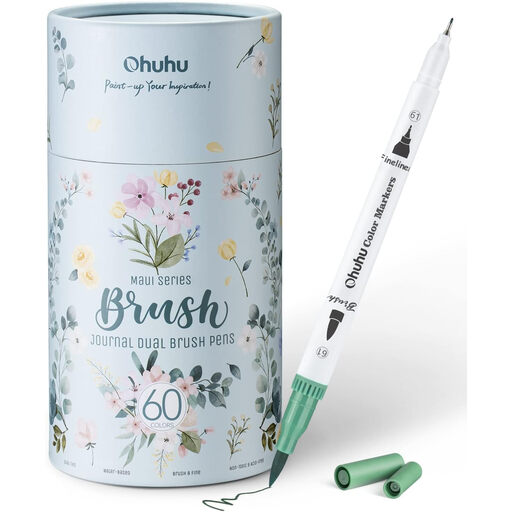
Why we chose it: This set is an excellent starting point. The dual tips (brush and 0.4mm fine tip) offer maximum versatility for drawing, coloring, and journaling. With 60 colors, the palette is broad enough that you'll never feel limited.
The brush tip is flexible and the fine tip is robust, which limits premature wear. The water-based ink is designed to minimize smudging on suitable paper.
Unbeatable value for money. The set even includes replacement tips, a practical detail for extending the life of the pens.
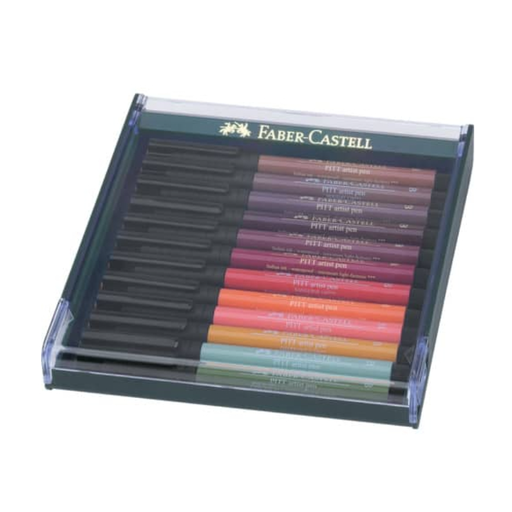
Why we chose it: This is the gold standard for artists who want their work to stand the test of time. The pigmented India ink ensures excellent lightfastness and is waterproof once dry, allowing you to layer colors or combine with watercolour.
It directly tackles the fading color trap with its pigmented ink. The fiber tip is renowned for its durability and holds its shape, preventing fraying.
Permanent, lightfast ink. Ideal for final artwork, comic/manga originals, and professional calligraphy.
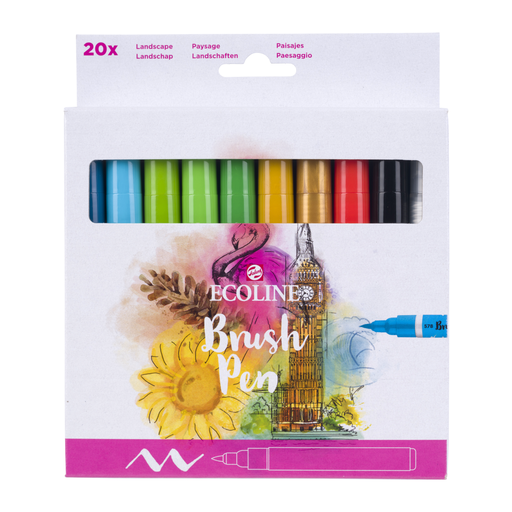
Why we chose it: Ecoline pens are the quintessential watercolour brush pen. Their dye-based colors are incredibly brilliant and blend perfectly with each other or with water. This "Landscape" set offers a curated palette for illustrators and urban sketchers.
It doesn't try to do everything, and that's its strength. It's a specialist's tool. Its ink is designed to be diluted, turning the "flaw" of bleeding ink into a feature for wet techniques.
Exceptional blending and dilution capabilities. The set includes a "blender" pen to create perfect transitions and gradients, just like with a watercolour palette.
We've compiled a comprehensive list of products that meet our strict selection criteria and quality standards.
Most manufacturers recommend storing them horizontally. This allows the ink to evenly saturate both ends of the wick (especially for dual-tip pens) and prevents the tip from drying out prematurely. Also, remember to always cap your pens tightly after each use.
Technically yes, but the results will vary greatly. To prevent the ink from bleeding through or feathering, opt for smooth, heavy paper (at least 160 g/m?). For watercolour brush pens like Ecoline, mixed-media paper or hot-press watercolour paper will give the best results for blending and gradients.
Imagine that dyes dissolve in water like sugar, creating a colored solution that soaks into the paper fibers. Pigments, on the other hand, are like very fine sand suspended in water; they sit on the surface of the paper. This is why pigment-based ink is more opaque, more durable, and waterproof once dry, while dye-based ink is more transparent and can be re-activated with water.