
Livraison le jour même ou le lendemain

Qualité garantie

Débloquez vos offres de bienvenue: Livraison GRATUITE | Jusqu'à -80 % | 30 jours d'essai gratuits à JoyPlus
Téléchargez l'application
Choosing a brush pen can be daunting given the sheer number of options available. Whether you're a lettering pro, a calligraphy enthusiast, a seasoned illustrator, or a bullet journal fan, finding the perfect tool for your creations is crucial. This guide is here to shed light on the subject and help you choose the perfect brush pen set for your needs, without getting lost in marketing jargon.
Before diving into our selection, let's review three essential criteria for making the right choice.
The ink plays a crucial role in the final look of your artwork. There are two main types to consider?:
The tip, or "brush," is what gives the brush pen its magic. Its flexibility allows you to vary the line thickness by adjusting the pressure?: a fine line by lightly grazing the paper, a broad stroke by pressing down more firmly.
Some models offer a dual-tip marker, a clear advantage in terms of versatility. They typically combine?:
This setup is a favourite among bullet journalers, urban sketchers, and detailed illustrators.
Your project dictates the type of pen you should choose.
Let's get down to business?: here are the models that caught our eye, all tried-and-true options for different creative profiles.
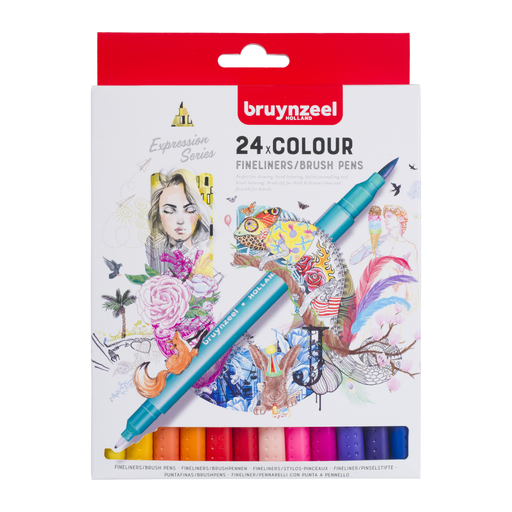
Why it stands out?? The main strength of this set is its versatility. Each marker combines a flexible brush tip and a 0.4?mm fine tip, making it a true Swiss Army knife for multiple uses.
Pros?:
Who is it for?? For all-round creatives who enjoy switching between writing and drawing, such as bullet journal enthusiasts, art students, or sketchers looking for a set that is as practical as it is comprehensive.
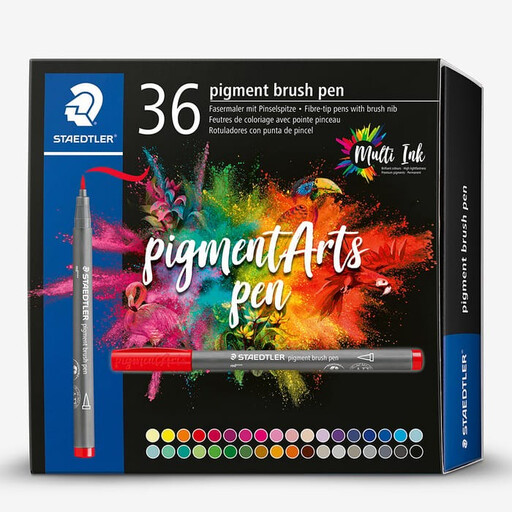
Why it stands out?? This set is distinguished by its high-quality pigment ink, designed to stand the test of time. Its resistance to light and water (once dry) is a guarantee of durability.
Pros?:
Who is it for?? For illustrators, comic artists, and artists who require archival quality for their creations and enjoy mixing media (like ink and watercolour).
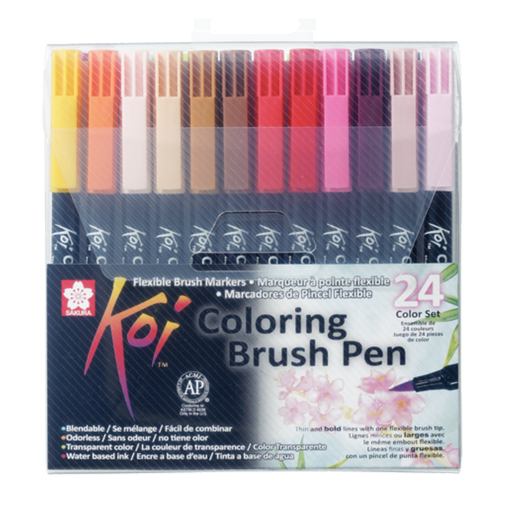
Why it stands out?? The signature feature of SAKURA Koi markers is their stunning watercolour effect. Their water-based ink dilutes and blends with incredible ease, even after it has started to dry.
Pros?:
Who is it for?? For artists and illustrators who want to combine the precision of a marker with the fluidity of watercolour, without the hassle of brushes and paint pans.
This selection is, of course, just a glimpse. The world of art supplies is an endless playground. Specific tips, bold colour palettes, niche uses… there's a tool out there just waiting for you.
? Explore our complete collection of sketching pens and highlighters to find the perfect tool for your style.
It's all in the tip! A brush pen has a flexible, cone-shaped tip (made of felt or synthetic fibres) that mimics the suppleness of a real paintbrush. It allows you to vary the line thickness simply by adjusting the pressure. In contrast, a regular marker has a rigid tip (round or chisel) that delivers a line of consistent width.
The technique for lettering with a brush pen comes down to one word?: pressure. The golden rule is simple?: use light pressure on the strokes that go up (upstrokes) and heavier pressure on the strokes that go down (downstrokes). With a little practice, you'll quickly develop a fluid motion for harmonious lettering.
A few simple habits are all it takes to extend the life of your pens. Always cap them securely after each use to prevent the tips from drying out. Ideally, you should then store them horizontally?: this position ensures the ink is evenly distributed within the pen's barrel and guarantees a consistent flow.