
Livraison le jour même ou le lendemain

Qualité garantie

Débloquez vos offres de bienvenue: Livraison GRATUITE | Jusqu'à -80 % | 30 jours d'essai gratuits à JoyPlus
Téléchargez l'application
The brush pen has become an essential tool for countless creatives. Whether you're passionate about lettering, illustration, or looking to enhance your bullet journal, finding the right set can transform your experience. But with an overwhelming number of options, it's hard to know where to start. Which ink type is best? Should you choose a single tip or a dual tip?
This guide is here to shed some light. Our mission: to give you the keys to choosing the brush pen that's perfectly suited to your artistic projects, all without any unnecessary marketing jargon.
Before diving into our top picks, let's review the essential criteria for making the right choice.
The type of ink is crucial, as it determines the final look of your creations.
The tip is the soul of the brush pen. Its flexibility allows you to vary the line thickness by adjusting the pressure.
The size of your art marker set will obviously depend on your needs. An extensive palette is a huge asset for illustration and colouring, as it multiplies your creative possibilities. Conversely, for calligraphy (calligraphy pen) or technical drawing, a more concise set of primary colours or shades of grey will often be more than enough.
Let's get down to business with our selection of brush pens, chosen for their quality and popularity among creatives.
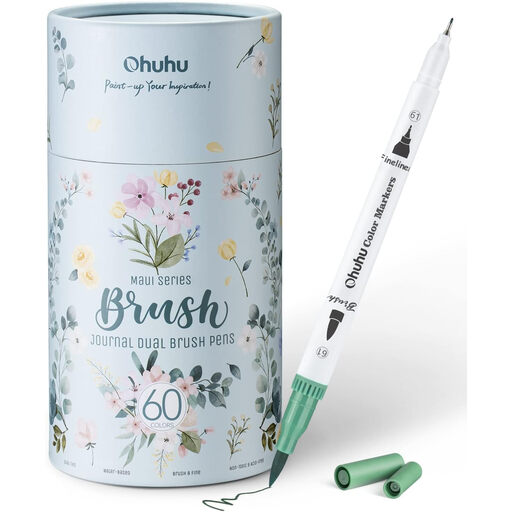
Why it stands out?: This set shines with its versatility. Each pen has a dual tip?: a flexible brush tip (1-6 mm) for broad strokes and varied line weights, and a fine tip (0.4 mm) for outlines and details. With 60 vibrant, numbered colours, it provides a very comprehensive palette. Its non-toxic, water-based ink allows you to create watercolor brush pen effects. The kit even includes replacement nibs—a thoughtful detail that extends the life of the pens.
The pros?:
Who is it for?? This is the ideal kit for budding artists, craft enthusiasts, bullet journal fans, and anyone looking for a complete and versatile first art marker set at a great value.
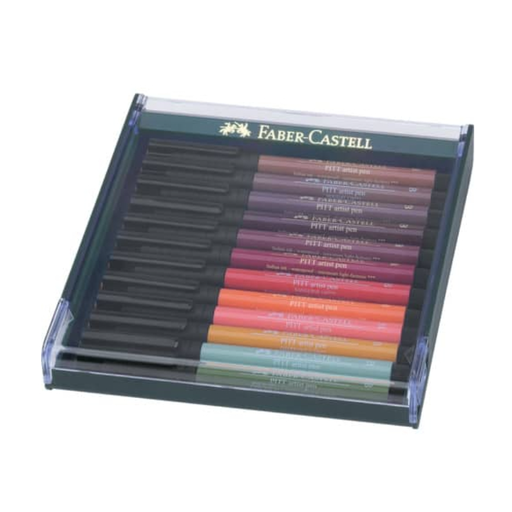
Why it stands out?: Faber-Castell's reputation needs no introduction, and the Pitt Artist Pen range is a perfect example of their quality. Their key feature: pigmented India ink. This ink offers exceptional lightfastness and becomes permanent (water-resistant) once dry. The robust brush tip holds its shape perfectly and allows for very precise line control. The ink is odourless, pH-neutral, and won't bleed through most papers.
The pros?:
Who is it for?? This set is aimed at discerning illustrators, designers, and artists who need permanent, archival-quality ink for their creations. It's a first-class tool for inking comics, on-the-go sketching, and professional illustration.
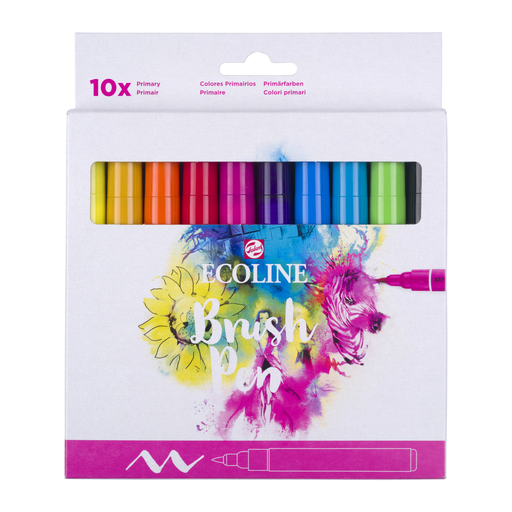
Why it stands out?: Ecoline pens are famous for their brilliant, transparent colours, made from dyes and gum arabic. They capture the fluidity and intensity of liquid watercolour in an ultra-practical pen format. Their flexible brush tip is perfect for modern calligraphy (calligraphy pen) and gestural drawing. The colours are mixable and can be diluted with water to create subtle washes and gradients. A clever feature: a dried-out tip can be reactivated simply by moistening it.
The pros?:
Who is it for?? This set is a favourite among calligraphers, watercolourists, and artists who love to play with bright, adjustable colours. It's the ultimate watercolor brush pen for anyone seeking a vibrant and fluid result.
Our selection doesn't quite match your current needs? Or are you simply curious to discover other hidden gems? We've got you covered. Explore our full range of pens and markers to find the tool that will bring your creativity to life.
Discover our complete collection of Cool Drawing Pen.
The difference all comes down to the tip. A brush pen has a flexible, tapered tip, like a real paintbrush, which allows you to vary the line thickness based on pressure. A classic marker, on the other hand, has a rigid tip (chisel or bullet) that produces a line of constant thickness.
The number one rule: always recap the pen tightly immediately after use. It's also recommended to store them horizontally, especially if it's a dual-tip pen. This ensures an even distribution of ink to each tip and prevents one from drying out prematurely.
For a watercolor brush pen, opt for a fine-grain paper with a high weight (at least 200?gsm), such as watercolour paper, mixed-media paper, or Bristol board. A thick, smooth surface will prevent the paper from buckling when wet and will allow the inks to blend seamlessly without bleeding through the page.