
Livraison le jour même ou le lendemain

Qualité garantie

Débloquez vos offres de bienvenue: Livraison GRATUITE | Jusqu'à -80 % | 30 jours d'essai gratuits à JoyPlus
Téléchargez l'application
The brush pen has become the go-to tool for artists, illustrators, and lettering enthusiasts. A perfect blend of a paintbrush's flexibility and a pen's simplicity, it can do it all, from quick sketches to modern calligraphy. But with an overwhelming number of options on the market, how do you choose the right one??
This guide is here to break down the features that truly matter and present our selection of the best products available. Our goal is to help you find the perfect drawing pen set to bring your projects to life.
To make the right choice, there are a few technical specifications to consider. Your decision will primarily depend on how you plan to use your new pens.
This is arguably the most technical criterion, but it's crucial, as it determines the longevity and final appearance of your artwork.
A brush pen's tip is designed to dance across the page, reacting to the slightest change in pressure. A very flexible tip is ideal for creating the thick and thin strokes characteristic of lettering brush pens or modern calligraphy. Conversely, a firmer tip offers better control, making it more forgiving for beginners and more precise for fine details.
We've tested and compared dozens of models to bring you only the best. Here are our recommendations, whether you're a professional illustrator, a watercolour enthusiast, or a colouring fan.
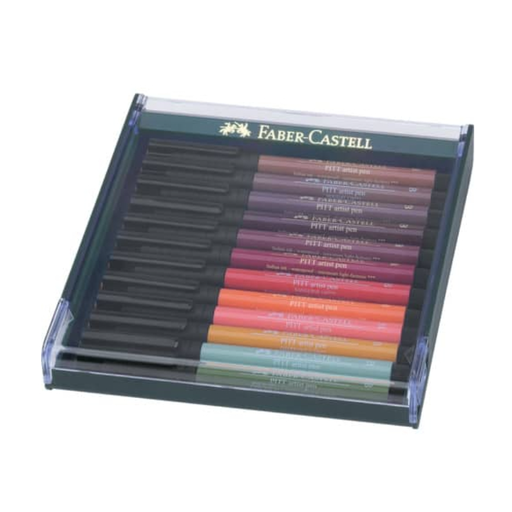
The Faber-Castell Pitt set is a classic for good reason. Artists worldwide praise the quality of its pigmented India ink.
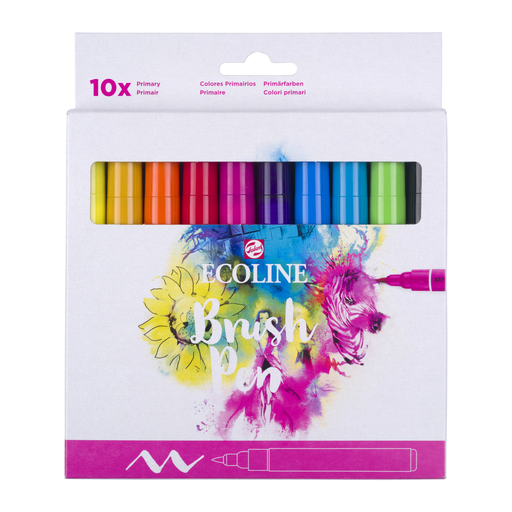
With the Ecoline Brush Pen, you get all the magic of the brand's famous liquid inks in an ultra-convenient pen format.
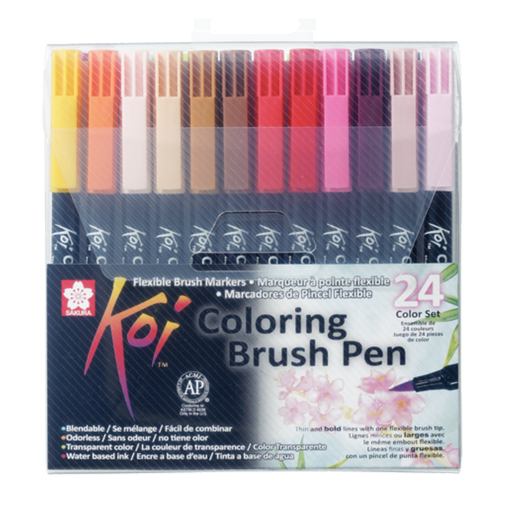
The highly popular Sakura Koi set is a champion of versatility. It checks all the boxes: quality, a wide range of shades, and excellent value for money.
The brush pen is an excellent starting point, but the real magic often happens when you combine tools. To add a touch of light, make a detail pop, or create highlights on a dark background, a white drawing pen is an indispensable ally.
? Discover our selection of white pens and other drawing tools
It's all in the tip! A regular marker has a rigid nib (fine, medium, or chisel) that produces a line of consistent thickness. A brush pen, on the other hand, has a flexible, tapered tip that behaves like a real paintbrush. By varying the pressure, you can endlessly modulate the thickness of your line, from the finest hair-line to the broadest stroke.
Paper choice is crucial to avoid unpleasant surprises like bleeding or feathering. Opt for smooth, fairly thick paper (at least 100 gsm). Special "layout" or marker paper is ideal, as its surface is treated to keep the ink from soaking in. For your watercolour brush pens, watercolour paper (fine grain, hot-pressed) or a multi-media paper (over 200 gsm) will guarantee the best results when you add water.
To make them last as long as possible, follow two golden rules. First, always cap them immediately after use to prevent the tip from drying out. Second, store them horizontally. This allows the ink to distribute evenly within the pen's barrel, ensuring a perfect flow every time.