
Livraison le jour même ou le lendemain

Qualité garantie

Débloquez vos offres de bienvenue: Livraison GRATUITE | Jusqu'à -80 % | 30 jours d'essai gratuits à JoyPlus
Téléchargez l'application
A fraying cable, sluggish charging, unreliable compatibility... We've all been there. The USB-C cable that comes with our devices often shows its limits, wearing out in just a few months. Investing in a good fast-charging braided USB-C cable is no longer a luxury but an investment in your gear, ensuring performance, safety, and longevity.
This guide is here to help you cut through the noise. We'll break down the essential technical specs and present our selection of the most reliable cables on the market, whether for your smartphone, laptop, or gaming console.
To make the right choice, there are three key criteria to consider before you make a purchase.
Charging speed doesn't just depend on your charger. The cable plays an equally crucial role, especially with Power Delivery (PD) technology.
The type of connector on each end of the cable is obviously a deciding factor.
For a quality cable, durability is the name of the game.
To make your life easier, we've selected three models that stand out for their reliability, performance, and rock-solid design.
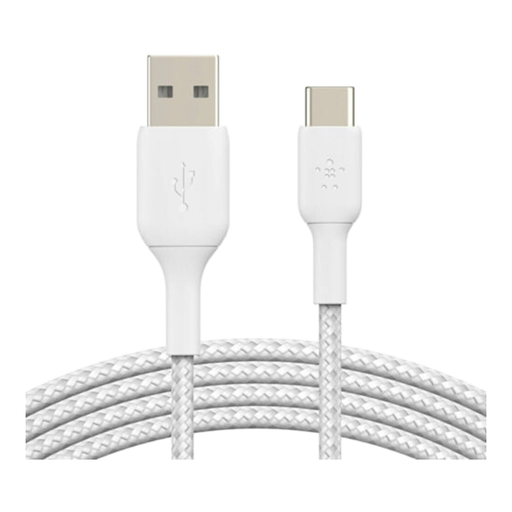
Why it stands out
This cable is the ideal, reliable bridge between your new USB-C devices and older chargers or computers still equipped with classic USB-A ports. Its USB-IF certification ensures safe charging and stable data syncing.
Advantages
Who is it for?
For those who want to connect their new devices to older (USB-A) chargers, computers, or car outlets, while investing in a cable that will stand the test of time.
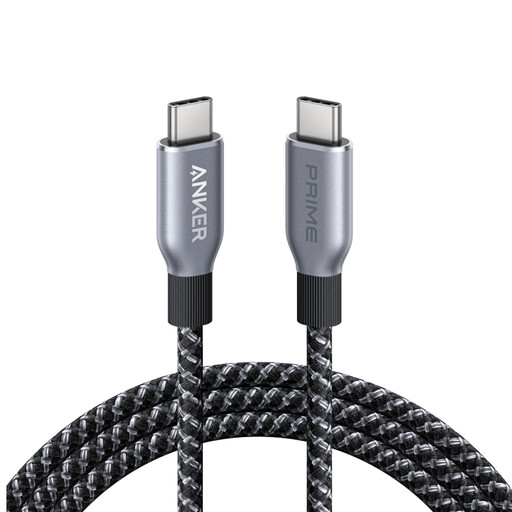
Why it stands out
This durable Anker cable is designed for the most demanding users. With its 240W power capacity, it's ready for today's and tomorrow's most power-hungry devices. Its design incorporates recycled materials, combining performance with an eco-conscious approach.
Advantages
Who is it for?
For pros, creatives, and tech enthusiasts who use power-hungry devices (laptops, graphics tablets) and want an ultra-fast, reliable, and future-proof charging solution.
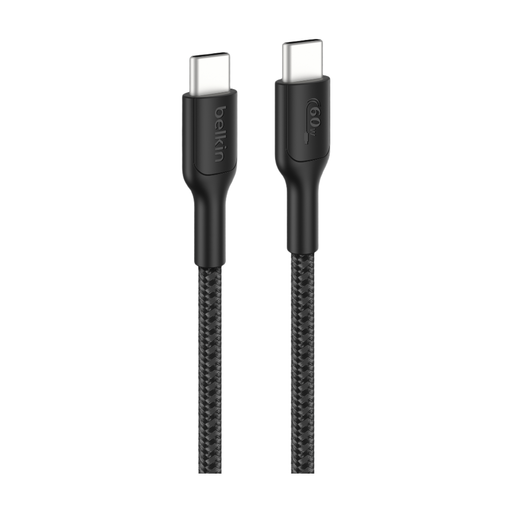
Why it stands out
Designed for gamers, this ultra-durable Belkin cable combines a comfortable 2-meter length with rock-solid durability. Its 60W power output is more than enough to charge most laptops, tablets, and consoles like the Nintendo Switch 2 while you play.
Advantages
Who is it for?
For console, mobile, or PC gamers, as well as anyone looking for a long, nearly indestructible cable for heavy use at home or in the office.
Our selection focuses on highly versatile models, but your needs might be more specific. If you're looking for a different length, colour, or feature set, feel free to explore the rest of the range.
Discover Our Entire Collection of USB Type-C to Type-C Cables
What's the difference between a standard USB-C cable and a braided one? The main difference comes down to durability. The braided nylon sheath protects the internal wires from daily wear, bends, and twists. The result: the cable's lifespan is significantly extended compared to a standard plastic model, which always ends up fraying near the connectors.
Can a 240W cable damage my phone that only needs 25W? No, there's absolutely no risk. Modern USB-C cables, especially certified ones, include a chip (E-Marker) that allows the cable, charger, and device to communicate. The device will only "pull" the power it needs. Using a 240W cable on a smartphone is therefore perfectly safe; it simply won't charge it any faster than what its battery can handle.
How do I know if I need a USB-C to USB-C or a USB-C to USB-A cable? It's simple: look at the ports on your charger and the device you want to connect. The USB-C to USB-C cable has become the standard for fast chargers, laptops, and recent smartphones. The USB-C to USB-A cable is necessary if your power source (charger, computer port, power bank, car adapter...) is still equipped with the older rectangular USB port (USB-A).