
Livraison le jour même ou le lendemain

Qualité garantie

Débloquez vos offres de bienvenue: Livraison GRATUITE | Jusqu'à -80 % | 30 jours d'essai gratuits à JoyPlus
Téléchargez l'application
Running with music is a blast. But between earbuds that cut you off from the world (dangerous on a bike!) and those that start to irritate your ears after an hour of exercise, the enjoyment can be cut short. The solution? Bone conduction headphones for sports.
The principle is simple: instead of blocking your ear canals, this type of headset, also known as open-ear sports headphones, transmits sound through vibrations along your cheekbones. The result: your ears remain open, allowing you to enjoy your playlist while staying alert to traffic sounds or an approaching athlete.
In this guide, we'll break down the key factors to help you make the right choice and present our selection of the best current models for every type of activity.
To find the perfect pair, you need to know what to look for. Here are the three essential criteria to scrutinise to find the bone conduction earbuds that are right for you.
The Ingress Protection (IP) rating is the gold standard for guaranteeing your gear's durability. This international standard assesses protection against solids (the first digit) and, more importantly, liquids (the second digit). For sports headphones, it's this second number that makes all the difference.
There's nothing worse than a battery dying mid-workout. A good pair of sports Bluetooth headphones needs to go the distance. Most current models provide between 7 and 10 hours of listening time, enough to get through several training sessions without needing a recharge.
Also, remember to check the Bluetooth version. Opting for a recent standard (like Bluetooth 5.3 or 5.4) is more than just a detail: it means a more stable connection, better battery management, and reduced latency. A winning combination for truly high-performance wireless sports earbuds.
The choice depends entirely on your athletic habits.
To move from theory to practice, here is our selection of models that caught our eye, each tailored for a specific use case.

What Sets It Apart The Verbex X7S offers the best of both worlds. It combines standard Bluetooth connectivity with a generous 32GB of internal memory, enough to store thousands of tracks for complete autonomy. Add its IPX8 certification, which makes it fully waterproof, and you have the ideal partner for your laps in the pool.
Key Features
Who Is It For? Clearly designed for swimmers and triathletes, it will also appeal to any athlete looking for a versatile audio solution to break free from their phone, whether in the water, on the trails, or on the pavement.
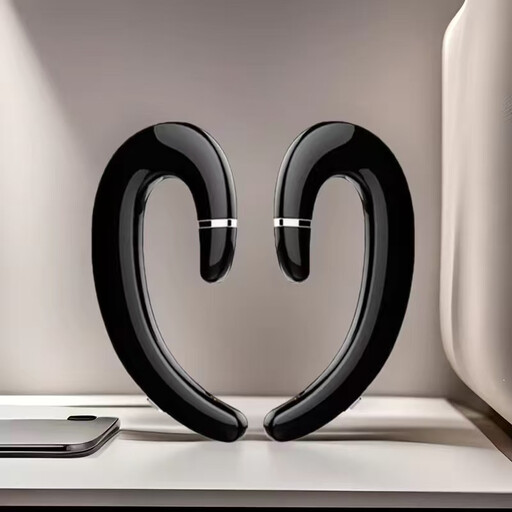
What Sets It Apart The VoxorAI C6 is a game-changer with its dual ear-hook design, an alternative to the classic neckband. Equipped with the latest Bluetooth 5.4, it promises a rock-solid connection. Its intuitive touch controls make it especially convenient to operate while on the move.
Key Features
Who Is It For? An excellent option for those who want discreet, all-rounder headphones that are just as comfortable at the gym as they are on public transport or in the office. Its design will particularly appeal to those who are put off by the traditional neckband style.
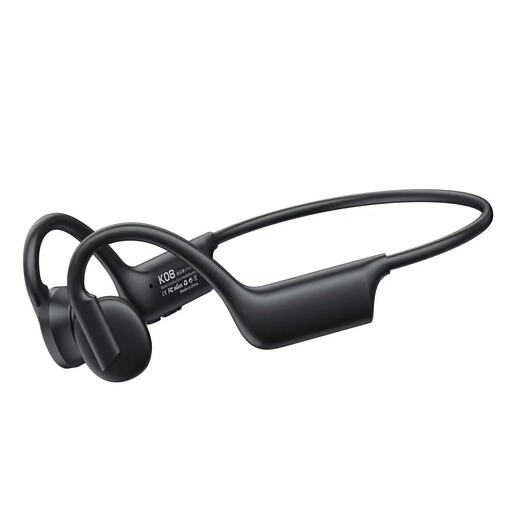
What Sets It Apart With the Verbex K08, it's all about long-lasting comfort. Weighing a mere 25 grams, you'll completely forget it's there once it's on. Its IPX5 certification protects it from sweat and rain, making it the ideal road companion for runners and cyclists.
Key Features
Who Is It For? The go-to headphones for runners, cyclists, and fitness enthusiasts who won't compromise on comfort and lightness, even over long distances. The perfect solution for balancing music and safety outdoors.
While bone conduction reigns supreme for on-the-go listening, your passion for audio might not stop there. For those who step behind the microphone to create, compose, or mix, other tools are essential.
Unleash your creativity by discovering our selection of music production controllers and all the essential equipment to build your home studio.
No, and that's not their purpose. The listening experience is fundamentally different. Bone conduction excels with mids and highs, making it perfect for vocals (podcasts, calls). However, bass is naturally less prominent than with isolating in-ear headphones. The goal isn't absolute audiophile fidelity, but a unique trade-off between your music and awareness of the world around you.
Absolutely. Almost all models are designed to be worn with glasses (prescription or sunglasses) and a bike helmet. The band fits behind your neck and the transducers rest on your cheekbones, just in front of your ears, leaving plenty of room for the arms of your glasses and helmet straps. The final comfort level will depend slightly on your head shape, but compatibility is excellent in most cases.
This is known as "sound leakage." It does exist, but it's generally very limited. At a moderate volume in a quiet office, the person next to you might be able to guess you're listening to something, but not much more. Outdoors or in a noisy environment, it's completely unnoticeable to those around you. Manufacturers are also constantly working to reduce this phenomenon in new models.