
Livraison le jour même ou le lendemain

Qualité garantie

Débloquez vos offres de bienvenue: Livraison GRATUITE | Jusqu'à -80 % | 30 jours d'essai gratuits à JoyPlus
Téléchargez l'application
Whether you're crossing the city or cruising down country roads, one golden rule prevails on a bike: see and be seen. As soon as the light fades, your visibility becomes your best life insurance. The bike helmet with an integrated light has emerged as the perfect all-in-one solution: no more fumbling with removable lights, you're visible in all circumstances.
But with an ever-growing range of options, how do you make the right choice? This guide is here to help you see things more clearly. We've broken down the essential criteria for you—safety, comfort, and features—to find the helmet that perfectly matches your riding style.
Before diving into our selection, let's review the three crucial points to check to make an informed choice.
This is the non-negotiable criterion. In Europe, a bike helmet must carry the CE EN 1078 certification. This is your guarantee that it has successfully passed a battery of impact resistance tests.
But some technologies go even further. The MIPS (Multi-directional Impact Protection System) is the current benchmark. In practice, it's a thin liner inside the helmet that allows for a micro-rotational movement of the skull during an angled impact. The goal? To better dissipate the rotational forces that can cause serious brain injuries during a fall. A MIPS bike helmet therefore offers a superior level of safety—a real advantage in the city, where impacts can come from any direction.
A LED bike helmet can feature a light on the back, the front, or both.
Remember to check the different available modes (steady, flashing, etc.) to adapt to traffic. Without hesitation, opt for a USB-rechargeable bike helmet: it's the standard today, and it's far more practical and eco-friendly than older battery-powered models.
A good helmet is one you forget you're wearing. To achieve this, several points should be inspected:
After the theory, the practice! Here are the models that particularly caught our editorial team's attention.
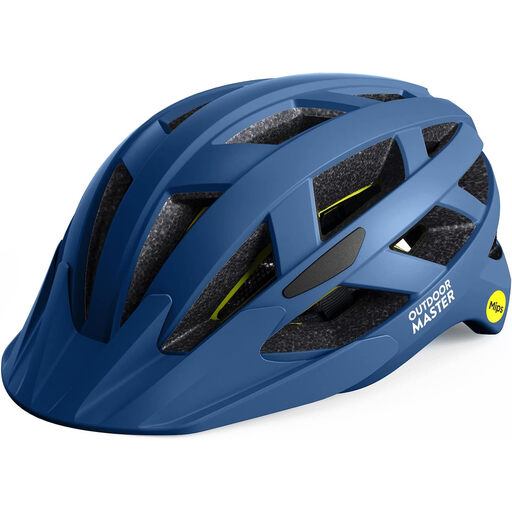
What sets it apart: Here, safety takes precedence over everything else with the integration of the MIPS system. Note that this model does not have an integrated light. It is therefore aimed at those who make protection their number one criterion and who already own their own removable lights. Its versatility makes it a solid choice for many types of riding.
Advantages:
Who is it for? For cyclists (MTB, road, leisure) who won't compromise on MIPS safety and are looking for an ultra-ventilated helmet for sport or daily rides.
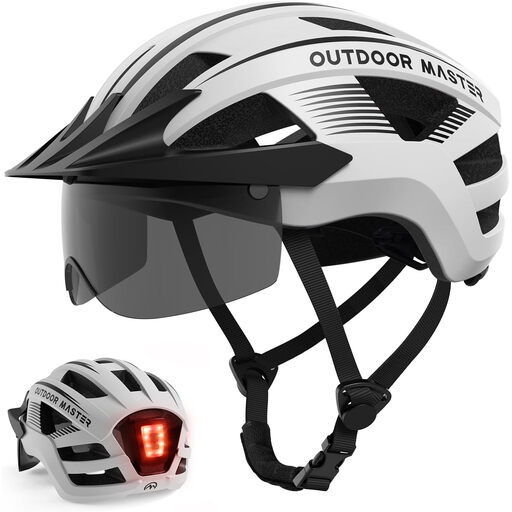
What sets it apart: The RhinoUrban is the archetype of the smart and complete urban bike helmet. It checks all the boxes for the perfect commuter: rear light, magnetic goggles, and a visor. It's hard to get more practical.
Advantages:
Who is it for? The ideal companion for daily commutes, bike-to-work trips, and e-bike rides. For anyone who wants a hassle-free, turnkey solution.
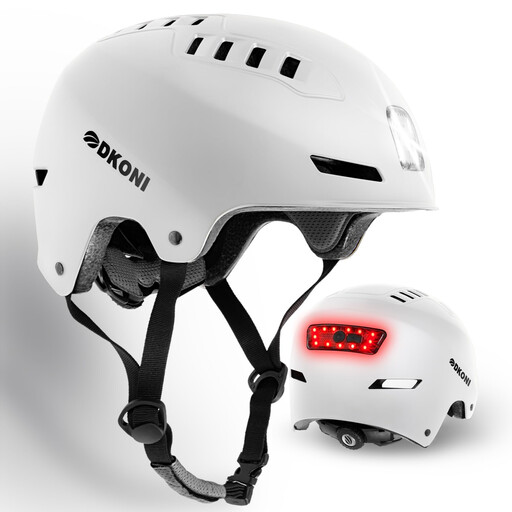
What sets it apart: This helmet's obsession? 360° visibility. By combining a front light and a rear light, it ensures you are noticeable from every angle. This is a decisive advantage in the urban jungle or on poorly lit roads.
Advantages:
Who is it for? For the cyclist who makes visibility their absolute priority. Essential for those who often ride at night, dawn, or dusk, in the city or the countryside.
Our selection highlights models designed for specific needs. But the choice of a helmet remains very personal: it depends on your riding style, the shape of your head, and of course, your taste.
If none of these helmets caught your eye, no worries. There are a multitude of other options out there. Feel free to explore our complete collection of Outdoor Sports Helmets to discover a wider range of styles, colours, and features.
No, French law does not require a light on the helmet. As a reminder, wearing a helmet is only mandatory for children under 12. However, for all cyclists, riding at night (or in poor visibility) requires having regulation lights (front and rear) and reflectors on the BIKE itself. A luminous helmet is therefore an excellent safety supplement, but it in no way replaces the mandatory lights fixed to the bike.
It's very simple. Clean the outer shell with a soft cloth, warm water, and mild soap. Above all, never use solvents or harsh chemicals that could damage the helmet's structure. The inner pads, which are often removable, can be washed by hand. Let everything dry completely before storing your helmet. On the electronics side, just check that the small cover for the USB port is securely in place to ensure it remains waterproof.
While any EN 1078 certified helmet provides basic protection against direct impacts, MIPS technology goes further by addressing the particularly dangerous rotational forces generated during an angled impact. In the city, fall scenarios are numerous and unpredictable: a collision with a car, a door opening, a kerb... In this context, the MIPS system can truly make a difference and reduce the risk of brain injury. It's an investment to seriously consider if you're looking for the highest level of protection for your daily commutes.