
Livraison le jour même ou le lendemain

Qualité garantie

Débloquez vos offres de bienvenue: Livraison GRATUITE | Jusqu'à -80 % | 30 jours d'essai gratuits à JoyPlus
Téléchargez l'application
Want to get (back) into painting, but feeling overwhelmed by all the options?? Gouache or acrylic?? Twelve colours or just the primaries?? Quality or quantity?? Don't panic.
This guide is here to demystify the topic and present our selection of the best sets for beginners, students, or the simply curious. Our goal?: to help you find the perfect kit to unleash your creativity, without getting bogged down in technical jargon.
Before diving into our selection, let's review the key criteria for making the right choice.
This is the first question to ask yourself. For a beginner's paint kit, two options stand out?: gouache and acrylic. Each has its own unique properties.
Gouache paint?: This water-based paint is known for its opaque and matte finish. It's a favourite among illustrators and graphic designers because it creates perfectly flat, even areas of colour. Its biggest advantage?? It can be reactivated with water even after it's dry, allowing for easy touch-ups. It's perfect for paper, cardboard, and all illustration work.
The acrylic paint set?: Here, the pigments are bound by an acrylic resin. The result?: the paint dries quickly and becomes permanent and water-resistant. It's highly versatile, offering a satin or gloss finish. You can use it straight from the tube, dilute it for a watercolour effect, or apply it thickly to create texture. It adheres to a multitude of surfaces, from canvas to wood and even plaster.
A 12-colour set is often an excellent starting point. It includes the primary colours, white, black, and a few secondary or earth tones. It's the best way to push yourself to learn the art of mixing, a key skill in painting.
Other sets take the opposite approach?: fewer colours, but more generous paint tubes (75?ml, for example). This is a smart option if you're working on large formats or prefer to create your entire palette from the primary colours yourself.
A paint set is a great start, but it's not everything. Remember the essentials?: brushes suited to your technique, a palette for mixing, and the right surface (heavy paper for gouache, canvas or canvas board for acrylic).
We've selected three sets that stand out for their quality and value proposition.
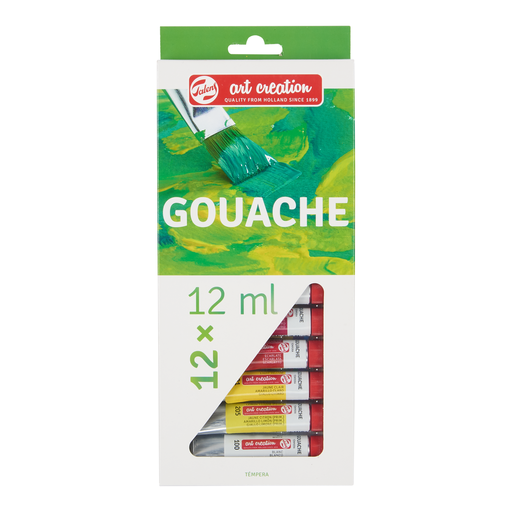
Why We Love It This gouache paint set from the renowned Talens brand is an ideal gateway into the world of illustration. Its defining feature is a perfectly matte and opaque finish, which eliminates glare and brushstrokes for an exceptionally crisp result.
Key Features
Who Is It For? This set is primarily for illustrators, designers, and art students who want a velvety, completely non-glossy finish. It's also the safe choice for those who like being able to rework their pieces.
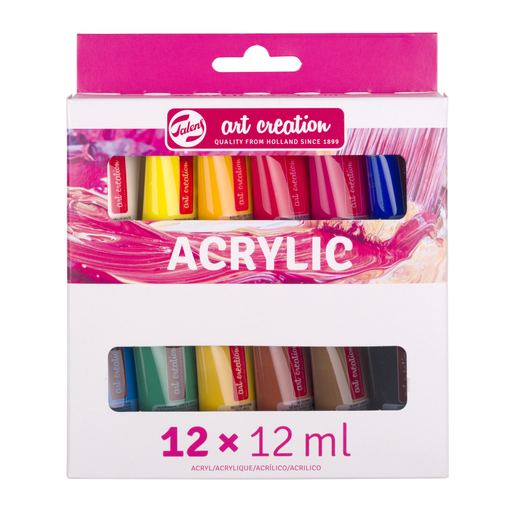
Why We Love It This acrylic paint set is a reliable choice and a true Swiss Army knife for beginners. Once dry, the paint becomes permanent and water-resistant, making it highly durable and compatible with a host of surfaces far beyond just paper. Its satin finish adds a subtle sheen that makes the colours pop.
Key Features
Who Is It For? This is the quintessential beginner's kit, perfect for those who want to dabble in everything?: techniques, surfaces, and more. Ideal for canvas painting, creative hobbies, or mixed media projects, it offers maximum freedom to experiment.
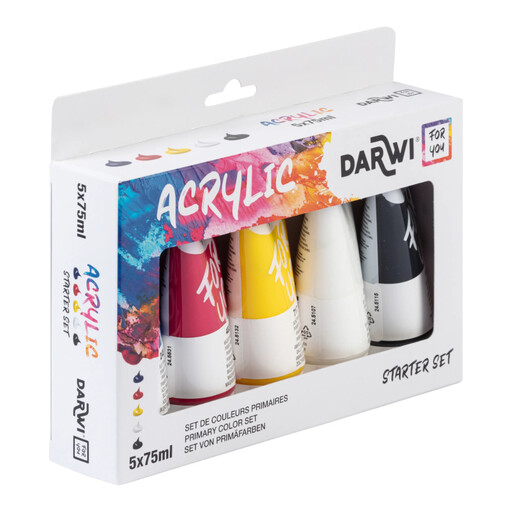
Why We Love It This set takes a different strategy?: fewer colours, but more quantity. With 5?x?75?ml tubes (primary cyan, magenta, and yellow, plus black and white), it's aimed at those who want to become mixing pros and create their own custom palette. Its pure acrylic resin formula is designed to resist yellowing over time.
Key Features
Who Is It For? This set is for artists, from beginners to advanced, who want to master the art of colour mixing. It's also a great fit for fine arts students or anyone who needs a substantial volume of paint.
If our selection doesn't check all your boxes, or if you're looking for more colours, different brands, or even other types of paint (oil, watercolour...), feel free to explore our full catalogue.
? Discover our complete collection of paints.
What's the difference between student-grade and artist-grade paint? It's all about pigment concentration. Artist-grade paint is packed with pigments, resulting in more intense, purer colours and better longevity (lightfastness). Student-grade paint, like the ones in our selection, offers excellent value for money for beginners to practice and master the basics.
Can you mix gouache and acrylic paint? In theory, no. You shouldn't mix them directly on your palette. Why?? Gouache remains water-soluble, while acrylic becomes a thin, insoluble layer of plastic when it dries. However, you can layer them?: applying a layer of acrylic over dry gouache works. The reverse, however, is a bad idea?: the top layer of gouache would likely crack or peel off.
How many colours do I need in a beginner's paint kit? A set of 10 to 12 colours is ideal to start with. It contains everything you need to create most shades through mixing. In fact, starting with a deliberately limited palette is an excellent exercise for truly understanding how colours interact.