
Livraison le jour même ou le lendemain

Qualité garantie

Débloquez vos offres de bienvenue: Livraison GRATUITE | Jusqu'à -80 % | 30 jours d'essai gratuits à JoyPlus
Téléchargez l'application
By our Joybuy product experts, July 21, 2026
It's a classic scene: you turn the ignition key, only to be met with a frustrating click. A dead battery is the most common and frustrating car problem. Fortunately, the days of relying on jumper cables and the goodwill of another driver are over. The battery booster, also known as a portable car jump starter, has established itself as the compact, powerful, and essential accessory to keep in your trunk.
But with an overwhelming number of options on the market, how do you choose the right one? This guide is here to break down the essential criteria and introduce you to the best options, so you can make an informed choice without getting lost in technical jargon.
Before diving into our top picks, here are the three crucial points to check to find the emergency jump starter that perfectly matches your vehicle and your needs.
A booster's power, expressed in amps (A), is the number one criterion. We're interested in the peak current (or Peak Amps): this is the maximum burst of power the device can deliver to start the engine.
Also, verify that the model is compatible with 12V systems, the near-universal standard for passenger cars and motorcycles.
A modern jump starter is no longer just for starting your car. It's a true portable power station.
When it comes to safety, there are no compromises. Good jump starters integrate a full suite of protections: reverse polarity, short circuits, overcharging, overheating... These safeguards ensure risk-free use, even for beginners.
The internal battery technology also plays a key role in the device's performance and longevity. While lithium-ion batteries dominate the market due to their compact size, new technologies like sodium-ion are emerging, promising enhanced safety and better durability in extreme conditions.
We have selected three models that stand out for their performance and versatility, each catering to a specific user profile.
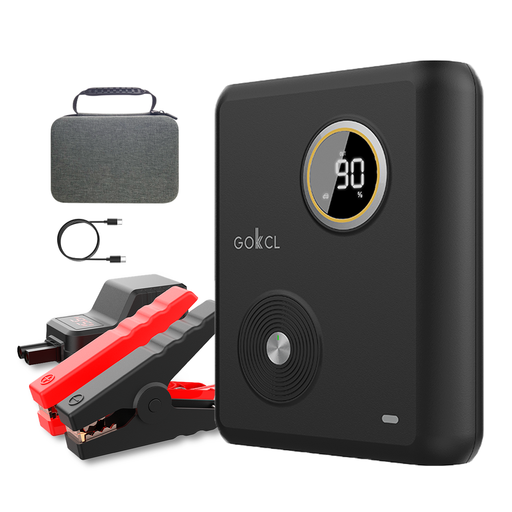
Why it stands out: The GK03 relies on a sodium-ion battery. This technology gives it outstanding resistance to extreme temperatures (from -40°C to 80°C) and a record-breaking lifespan. According to the manufacturer, it can hold a charge for up to 5 years on standby. It's the perfect choice for those who want a "set it and forget it" solution.
Key Features:
Who is it for? For the driver who prioritizes peace of mind, durability, and minimal maintenance. It's ideal if you live in a region with harsh winters or scorching summers and want to leave the booster in your car without a second thought.
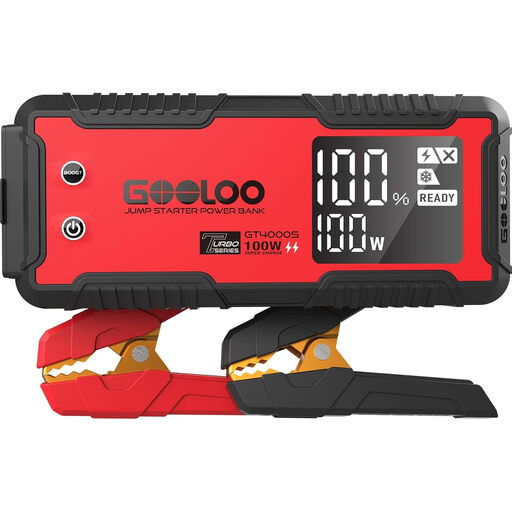
Why it stands out: The GOOLOO GT4000S is a powerhouse. With its 4000A peak current, no large-displacement engine can resist it. Its key advantage? 100W two-way fast charging. According to GOOLOO, it fully recharges in just 1.2 hours and can provide enough juice for a jump-start after only 5 minutes of charging.
Key Features:
Who is it for? For owners of large vehicles (SUVs, 4x4s, RVs, vans) and professionals who need maximum firepower. It's also the perfect companion for digital nomads who will appreciate being able to charge their laptops at top speed.

Why it stands out: The BUTURE BC02 is the quintessential jump starter with a compressor. This 5-in-1 device combines colossal starting power with a 150 PSI digital tire inflator. Simply preset the desired pressure, and the compressor does the work and stops automatically. It couldn't be simpler.
Key Features:
Who is it for? For the pragmatic driver who wants a single tool to tackle the two most common roadside hassles: a dead battery and flat tires. It's the perfect travel companion for families and long road trips.
This selection highlights three very different profiles, but the market is full of other hidden gems. If you have specific needs or simply want to compare other devices, feel free to explore our full catalog.
Explore our range of upgraded portable car jump starters
Diesel engines are more demanding and require a more intense starting current. For a standard diesel car, a booster with a peak current of at least 1500A is a solid baseline. For vans, RVs, or engines larger than 3.0L, it's better to aim for models with 2000A or more to ensure a flawless start, especially in cold weather.
It all depends on the battery technology and the temperatures. Sodium-ion models like the GOKKCL GK03 are designed to withstand extreme temperatures (from -40°C to 80°C) and can therefore be left in the vehicle year-round. For lithium-ion models, it's advisable to avoid leaving them in a superheated car interior during summer, as heat degrades their long-term performance. In winter, most will work, but their efficiency may be slightly reduced in extreme cold.
Thanks to modern safety features, the process is simple and risk-free. Here are the steps: