
Livraison le jour même ou le lendemain

Qualité garantie

Débloquez vos offres de bienvenue: Livraison GRATUITE | Jusqu'à -80 % | 30 jours d'essai gratuits à JoyPlus
Téléchargez l'application
A dead battery: every driver's nightmare, especially on a freezing morning or in the middle of nowhere. Waiting for a tow truck or relying on the kindness of another driver for a jump-start can turn a minor inconvenience into a major ordeal. Fortunately, there's a simple solution to regain your independence and peace of mind: the battery booster.
This compact device, also known as a portable jump starter or simply a jump starter, is a powerful ally. But with an overwhelming number of options on the market, how do you find your way? This guide is here to break down the key criteria and help you choose the perfect model for your vehicle and your needs, without getting lost in marketing jargon.
Before diving into our top picks, let's review the key points for making an informed choice.
Power, measured in amps (A), is THE number one criterion. A high peak current (or Peak Amps) is essential for starting an engine, especially for a jump starter for diesel vehicles or large-engine models.
The internal battery's capacity, measured in milliamp-hours (mAh), determines the device's autonomy. The higher it is, the more starts you can perform or the more you can recharge your electronic devices.
Many of today's models are true Swiss Army knives:
A good jump starter must include multiple protection features to prevent any incidents: reverse polarity, short circuits, overheating, sparks... Sturdy, well-insulated clamps, along with a screen that clearly displays the charge level and alerts, are hallmarks of safety and user-friendliness.
Here is a selection of models that stand out for their performance and versatility, designed for different types of users.
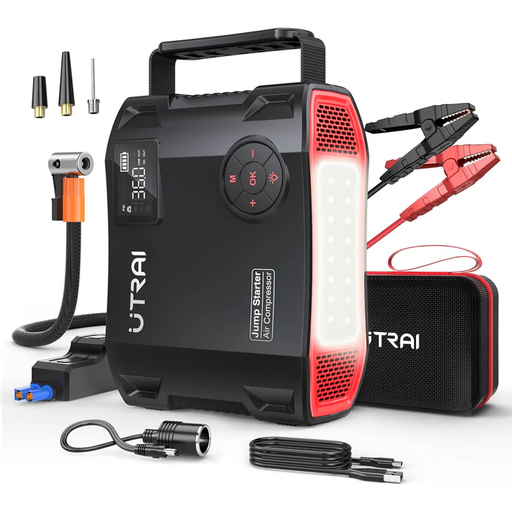
The Verdict: A true portable power station. Its colossal starting power is backed by an efficient air compressor and a DC output capable of powering devices up to 160W. An ultra-comprehensive tool for the road and for outdoor recreation.
The Highlights:
Who is it for? Ideal for drivers of large vehicles (SUVs, vans, motorhomes) and adventurers looking for an all-in-one solution for starting, inflation, and portable power.
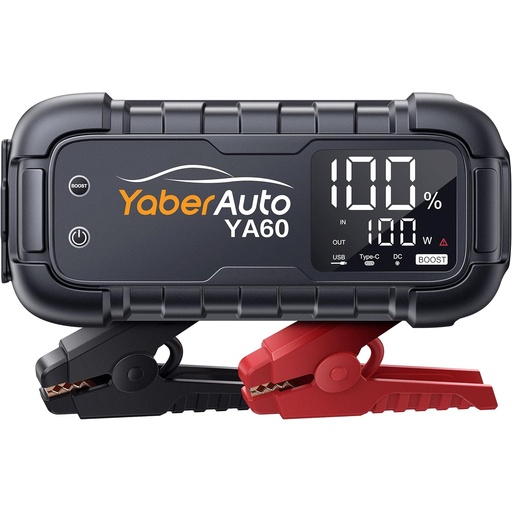
Its Key Feature: Massive peak power (8,000A!) and 65W two-way fast charging. It recharges to 100% in just 1.5 hours and can itself rapidly charge a laptop, a feature still rare in this segment.
The Highlights:
Who is it for? For owners of power-hungry vehicles (large diesels, farm equipment, boats) and professionals who demand maximum firepower and ultra-fast charging for their gear.
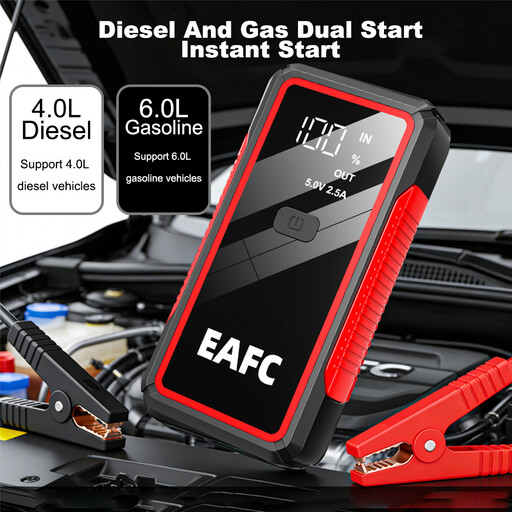
The Smart Choice: The perfect balance of compactness, power, and price. It delivers 2,000A, more than enough power for the vast majority of cars on the road, all in a format that slips into the glove box.
The Highlights:
Who is it for? For the forward-thinking driver looking for a reliable and simple portable jump starter for their car (city car, saloon, small SUV), without the bulk of advanced features like a compressor.
Our mission: to find the best products for you, no matter the category. Discover other expert selections, like our guide to men's care sneakers.
It all depends on your engine. For a standard petrol car, 1,500 to 2,000A is sufficient. For an SUV or a diesel engine, aim for at least 2,500 to 3,000A. For very large engines (trucks, boats), models with 4,000A or more are recommended, especially in cold weather when batteries lose performance.
Yes, most models are designed to withstand temperatures from -20°C to +60°C. However, it's not advisable to leave it in direct sunlight behind the windscreen in summer: extreme heat can reduce the lifespan of its lithium-ion battery. The glove box or the boot are the best places to store it.
A good battery booster can hold its charge for 6 to 12 months thanks to its low self-discharge rate. However, to ensure you can count on it when you need it most, it's wise to check its battery level and fully recharge it every 3 to 4 months, even if it hasn't been used.