
Livraison le jour même ou le lendemain

Qualité garantie

Débloquez vos offres de bienvenue: Livraison GRATUITE | Jusqu'à -80 % | 30 jours d'essai gratuits à JoyPlus
Téléchargez l'application
The dreaded click. The deafening silence of the engine. A dead battery?: every driver's nightmare, a recipe for stress and missed appointments. Fortunately, the days of relying on a good Samaritan with jumper cables are over. The battery booster, also known as a portable car starter, is a game-changer?: this compact, self-contained device lets you get back on the road in minutes, all on your own.
This guide breaks down the essential criteria and presents our selection of the best models on the market. Whether you drive a small city car, a family SUV, or a diesel utility vehicle, you'll find the right booster to say goodbye to breakdowns for good.
Before you jump on the first model you see, let's review the key technical specifications that will make all the difference for your vehicle.
The most critical factor for a battery starter is its peak amperage, measured in amps (A). This determines the "punch" the device can deliver to revive a stubborn engine.
Always check the compatibility stated by the manufacturer (e.g., "up to 9.0?L gas / 6.5?L diesel") to ensure the booster is properly sized for your engine.
Modern boosters are true Swiss Army knives for drivers.
One of the biggest advantages of modern boosters is their smart jumper clamps. They incorporate a full suite of safety features (against reverse polarity, short circuits, overheating, overcharging...) that make connection errors virtually impossible. This keeps the user, the vehicle, and the booster perfectly protected. An indicator light confirms that the connection is correct before you start the engine, providing complete peace of mind.
Here is our selection of models that stand out for their performance and versatility.
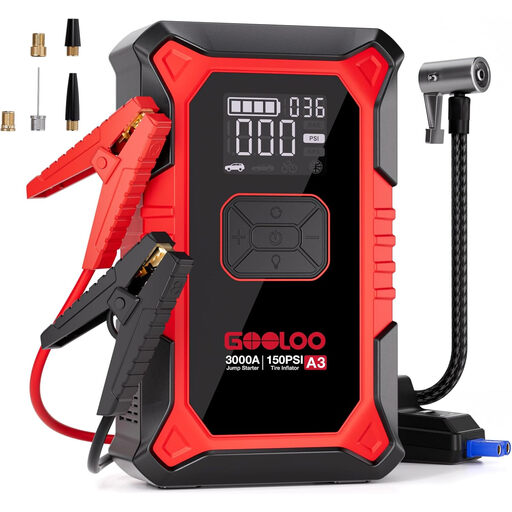
Why it stands out?: The GOOLOO A3 is a 7-in-1 device that combines a powerful portable car starter with a digital air compressor. Its versatility makes it the ultimate road trip companion.
Pros?:
Who is it for?? For drivers looking for an all-in-one solution to handle not only dead batteries but also under-inflated tires, without cluttering their trunk with multiple devices.
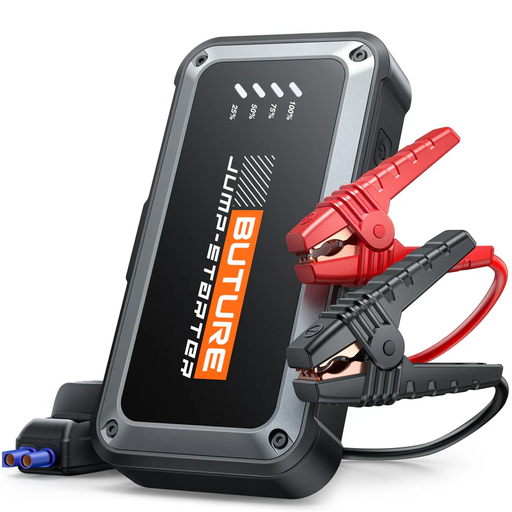
Why it stands out?: The BUTURE Beta08 focuses on high starting power and a lighting feature that is exceptionally well-designed for roadside safety.
Pros?:
Who is it for?? Ideal for drivers of large engines (SUVs, utility vehicles) and those who prioritize safety, especially thanks to its advanced lighting system for emergency situations.
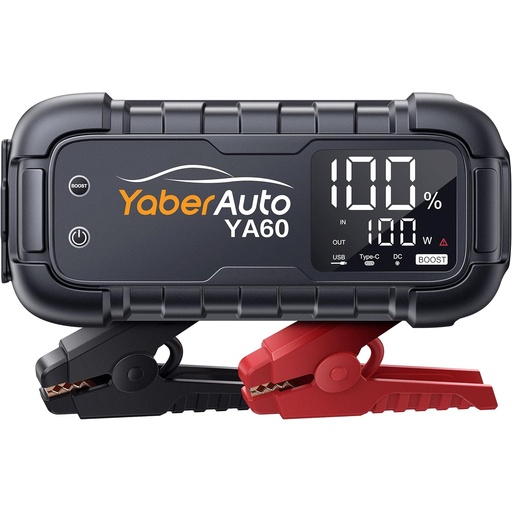
Why it stands out?: The YaberAuto YA60 is designed for the most extreme needs, with colossal starting power and ultra-fast, two-way charging technology.
Pros?:
Who is it for?? Aimed at owners of very powerful vehicles (large 4x4s, trucks, RVs) or professionals who demand a no-compromise starting solution and a high-performance portable power source.
A well-prepared vehicle is one less thing to worry about. And for an even smoother daily routine, why not take the opportunity to optimize your living and working spaces too?? Discover our selection of practical storage solutions.
? Browse our range of file boxes and other organizational accessories
Thanks to the built-in safety features, using one is incredibly simple. Turn off the vehicle's ignition and make sure the booster is off. Connect the red clamp to the positive (+) terminal of the battery, then the black clamp to the negative (–) terminal. Wait for the confirmation signal (often a solid green light) on the clamp unit, then try to start the engine. Once the engine is running, remove the clamps in the reverse order (black first, then red).
It all depends on your engine. For a mid-size gasoline car, a 1500?A booster is a good starting point. For a diesel engine or a large SUV, aim for at least 2000?A to 3000?A. When in doubt, it's better to opt for a slightly more powerful model: it's better to have more power than you need. Always consult the maximum engine displacement (in liters) recommended by the manufacturer.
Yes, that's what they're designed for! They are built to withstand a wide range of temperatures (e.g., from -20?°C to 60?°C). However, you should still avoid leaving it to bake in direct sunlight behind the windshield during summer. To preserve its internal battery, remember to recharge it every 3 to 6 months, even if it's not being used.