
Livraison le jour même ou le lendemain

Qualité garantie

Débloquez vos offres de bienvenue: Livraison GRATUITE | Jusqu'à -80 % | 30 jours d'essai gratuits à JoyPlus
Téléchargez l'application
Choosing a basketball? At first glance, nothing seems simpler. Yet, the wrong choice can quickly lead to disappointment: a ball that constantly deflates, an unpredictable bounce, or a cover that falls apart after just a few games on the neighbourhood court. To avoid these hassles, you just need to know a few essential criteria that make all the difference.
This guide breaks down the key points for choosing a ball that is both durable and high-performing, whether it's for a child just starting out, a teen who plays game after game with friends, or an amateur player looking for reliable gear.
Before you head to the checkout, let's review the classic mistakes that can ruin your enjoyment of the game and make you throw your money down the drain.
To make the right choice, two criteria are fundamental: size and cover material.
The International Basketball Federation (FIBA) has defined official sizes to ensure the sport is adapted to each age group. Choosing the right one is essential for proper development, whether for dribbling or shooting.
The ball's cover material is crucial for its durability, grip, and the type of court you can play on.
Here are a few models that tick all the boxes, selected for specific needs while keeping the criteria of size and material in mind to avoid the common pitfalls.
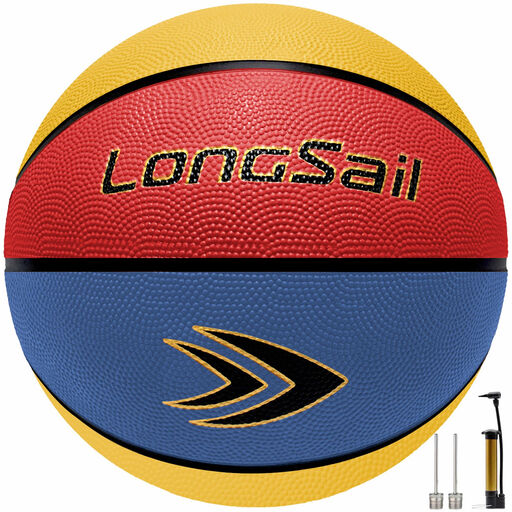
Why we recommend it: This size 3 ball is perfectly calibrated for small children's hands. Its rubber construction makes it ideal for worry-free fun in the schoolyard or garden.
It solves the size problem by offering a format adapted to the youngest players, promoting a learning experience that is both correct and fun.
Delivered as a complete kit with a pump and needles, it's ready to use right out of the box. Its waterproof design even allows for play in wet weather.
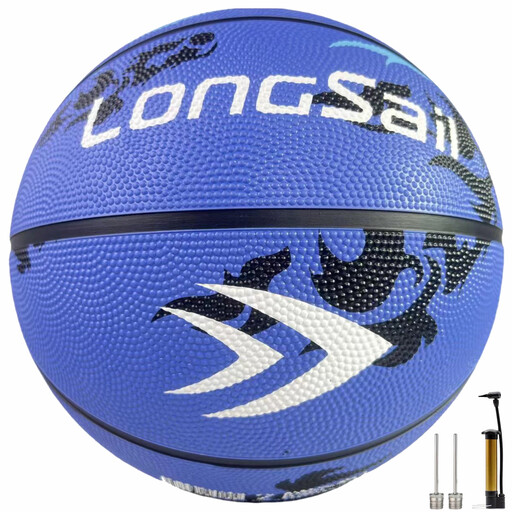
Why we recommend it: With its size 5, this ball is perfect for pre-teens and teens. Its robust rubber cover is designed to withstand heavy use on all courts, from the gym to the asphalt.
It tackles the problem of an unsuitable cover. Its abrasion- and water-resistant surface makes it an excellent outdoor basketball that won't wear out prematurely.
Its textured surface with deep channels ensures excellent *grip*, even in rainy weather. The kit includes a pump and a practical carrying bag.

Why we recommend it: This size 7 basketball is aimed at players aged 13 and up who are looking for a better feel for the game. Its composite leather (PU) cover offers a *grip* and touch far superior to rubber.
It offers a higher level of performance for players who take basketball a bit more seriously, without the maintenance hassles of a genuine leather ball.
Its reinforced structure ensures a reliable bounce and good longevity, whether indoors or outdoors. Its soft touch significantly improves ball control.
We have put together a complete selection of products that meet our selection criteria and current standards.
The lifespan of a durable basketball made of rubber depends on the frequency of use and, most importantly, the type of court. On an asphalt playground, a good ball used regularly will last between 1 and 3 years. To make it last longer, avoid leaving it in direct sunlight or rain and remember to check its pressure from time to time.
Most balls are delivered deflated. To inflate it without causing damage, always remember to moisten the pump needle before inserting it into the valve. Inflate to the recommended pressure, which is indicated on the ball (usually between 7 and 9 PSI). The trick to check? Drop the ball from a height of 1.80 m: it should bounce back up to your waist (about 1.20 m).
This is a very bad idea. A ball designed for hardwood (often made of genuine or premium composite leather) will have its cover destroyed at lightning speed on asphalt. Its grip will disappear, and it will lose all its playing qualities. For mixed use, opt for a durable composite leather model or a high-quality rubber basketball.