
Livraison le jour même ou le lendemain

Qualité garantie

Débloquez vos offres de bienvenue: Livraison GRATUITE | Jusqu'à -80 % | 30 jours d'essai gratuits à JoyPlus
Téléchargez l'application
At two years old, the world opens up and the urge to move becomes unstoppable. To channel this energy and foster independence, the balance bike—that famous first pedal-less bike—is an excellent choice. Its superpower? Teaching balance without them even realising it, turning the transition to a "big kid's bike" into child's play.
But faced with a jungle of available models, how do you make the right choice? Don't worry, our guide is here to help you see things more clearly and to present our selection of the best balance bikes on the market today.
Before you fall in love with a particular model, let's review the key points that will ensure your little rider's comfort and safety.
The golden rule for a child to feel confident is this: they must be able to place both feet flat on the ground while seated on the saddle. This gives them the assurance they need to get going... and to stop!
A balance bike for a 2-year-old should be as light as possible. Your toddler needs to be able to pick it up on their own and manoeuvre it effortlessly.
Safety is non-negotiable. Look for the CE marking, which guarantees compliance with European safety standards. Also, take a look at the finishing touches: no small parts that could detach, grips with protective ends to prevent hands from slipping, and rounded edges to minimise bumps and scrapes in case of a fall.
Enough theory, let's get practical! Here is our selection of models that caught our eye, for all budgets and preferences.

Why it stands out: This model is the balance bike in its purest form. Lightweight and streamlined, it focuses on the essential: learning to balance. No frills, just the effectiveness of an excellent first pedal-less bike.
Advantages:
Who is it for? The perfect choice for parents looking for a simple, effective, and hassle-free balance bike for a 2-year-old. Its unisex design will appeal to all children, whether you need a girl's balance bike or a boy's balance bike.
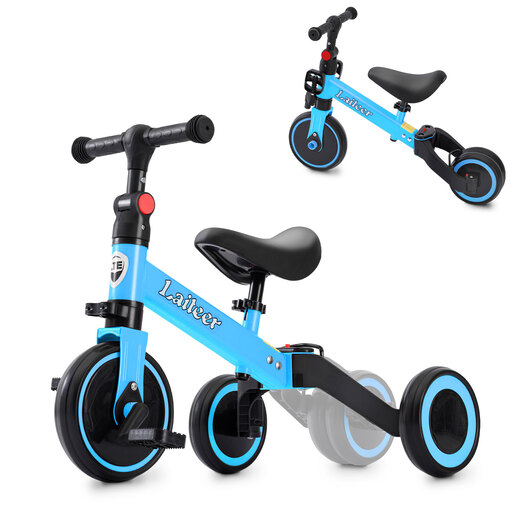
Why it stands out: The Swiss Army knife of kids' mobility! This 2-in-1 model is the perfect example of a convertible balance bike. It starts as a reassuring tricycle for their very first rides, then transforms into a balance bike as soon as the child feels ready to defy the laws of balance.
Advantages:
Who is it for? Ideal for families looking for a smart, durable, and versatile investment. It's the ultimate gift for a 2-year-old, promising several years of play and discovery in a single purchase.
What if a balance bike isn't for everyone? A scooter is an excellent alternative. While the former is the king of balance, the latter develops coordination and leg strength in a completely different way.

Why it stands out: Its key feature? Rock-solid stability thanks to its three wheels, and an awesome look with LED lights that illuminate while riding. The lean-to-steer system is ultra-intuitive and fun for young children.
Advantages:
Who is it for? For kids from age 3 who have a need for speed! It's a great alternative, or a perfect complement to a balance bike, to add variety to outdoor adventures.
The world of toys is a gold mine. If you're looking for a gift for a younger child, or if you're simply seeking inspiration, feel free to browse our selection of toys for 1-year-old girls to unearth other gems.
1. At what age can a child start using a balance bike? Most children are ready between 18 months and 2 years old. The main criterion is physical: the child must be tall enough to touch the ground with their feet flat while sitting on the saddle at its lowest setting. Their coordination should also allow them to walk confidently.
2. How do I correctly adjust the saddle height? Have your child sit on the saddle. Ideally, both of their feet should rest flat on the ground with their knees slightly bent. This is the perfect position to allow them to push off powerfully with their legs and feel in control of their speed and stops.
3. Does a balance bike for a 2-year-old need brakes? For the youngest riders (ages 2-3), brakes are often unnecessary. Their natural and most effective reflex is to brake with their feet, which is more than enough at their speed. A handlebar brake can even be a source of confusion, as the required coordination is still complex at this age. It becomes truly useful on a balance bike for a 3-year-old and up, as a first step before moving on to a pedal bike.